

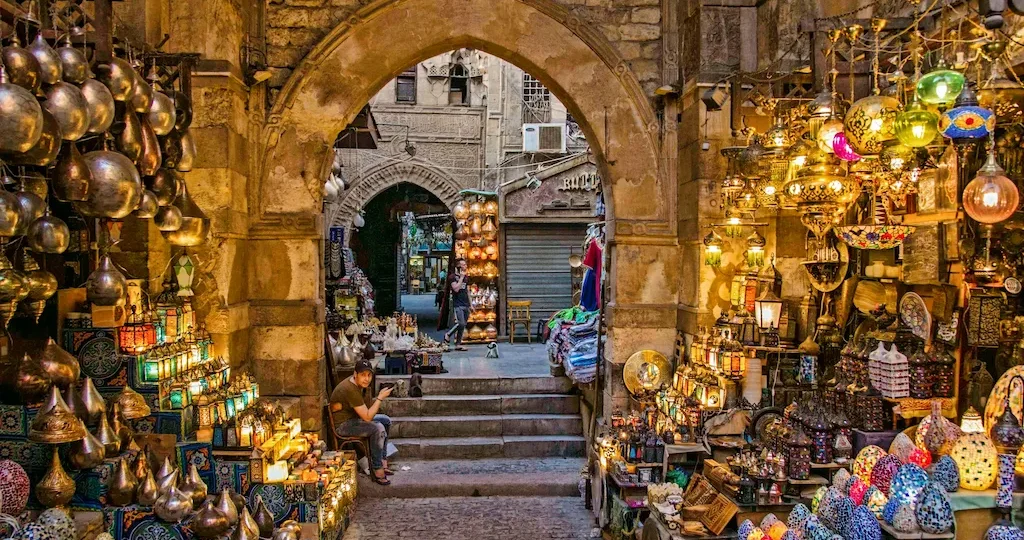
Khan El Khalili Bazaar: A Local’s Guide to What to Buy in Cairo’s Historic Souk
Staring down the entrance of Khan El Khalili for the first time, most travelers freeze on one question: what should actually come home in the suitcase? Between gold sellers, spice stalls, and lantern-makers stacked shoulder to shoulder, knowing Khan El Khalili what to buy — and what to politely walk past — turns a dizzying maze into the best hour of any Cairo trip.
What Should You Actually Buy in Khan El Khalili?
The souk rewards buyers who know its specialties rather than those who wander in blind. A handful of categories consistently deliver the best value and the most authentic craftsmanship:
- Gold and silver jewelry from the Sagha (goldsmiths’ row), priced by weight rather than guesswork.
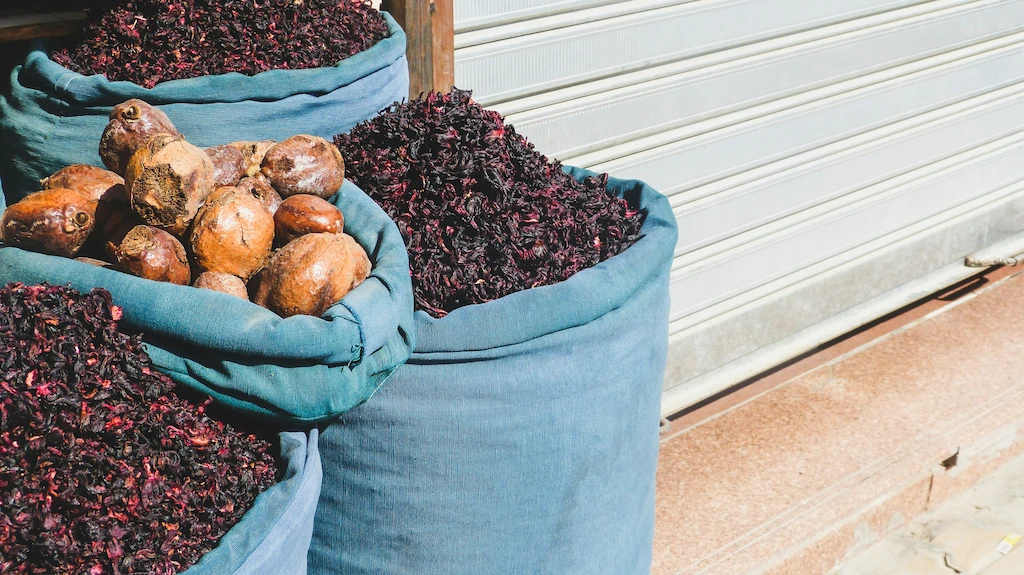
- Spices, saffron, and loose teas, sold by the gram or the bag near the market’s eastern lanes.
- Perfume oils from the Khan Al-Attarine shops, blended on the spot without alcohol.
- Brass and copper lanterns, trays, and coffee pots, some hand-hammered in back workshops.
- Alabaster carvings and small stone statues, though quality varies sharply by shop.
- Papyrus art, best bought from licensed workshops that show the leaf-pressing process.
- Embroidered galabeyas, scarves, and linens.
- Inlaid backgammon boards and wooden boxes, a favorite gift item that packs flat.
Prefer a guided route through the souk instead of wandering alone? Our Cairo tours can build in a private shopping stop with a local guide who already knows which stalls are worth the walk.
How Much Should You Really Bargain Down the Price?
Bargaining isn’t optional here — it’s the expected rhythm of every sale. The opening price is rarely the real one, and the gap between the two depends on what you’re buying.
| Item Category | Typical Opening Offer | Realistic Closing Price |
|---|---|---|
| Spices & loose teas | 50% of asking price | 65–75% of asking price |
| Silver jewelry | 40% of asking price | 55–65% of asking price |
| Brass lanterns & trays | 35% of asking price | 50–60% of asking price |
| Papyrus art | 30% of asking price | 45–55% of asking price |
| Galabeyas & textiles | 40% of asking price | 55–65% of asking price |
Gold is the exception: it’s priced against the daily market rate per gram, so haggling focuses on the workmanship fee, not the metal itself.
Where Inside the Souk Should You Shop for Each Item?
Khan El Khalili isn’t one shop — it’s a cluster of specialized lanes, and knowing which one to walk into saves real time. The Sagha holds the gold and silver dealers.
The spice row sits closer to Al-Azhar, its sacks of cumin and hibiscus visible from the street. Khan Al-Attarine handles perfume oils and incense. A separate copper-and-tin alley is where the hammered trays and lanterns are made and sold.
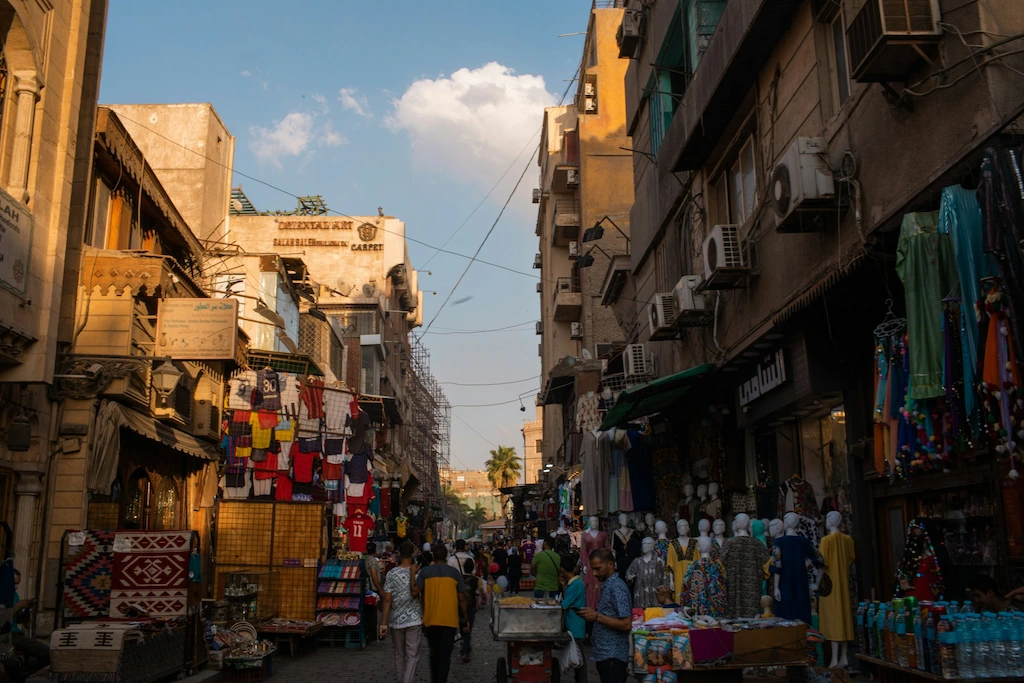
Papyrus workshops and general souvenirs cluster near the area around El Fishawy. There’s no single official Khan El Khalili bazaar map to hand out at the gate, so regulars navigate by landmark instead — using El Fishawy café, the Sagha gold row, or Al-Hussein Mosque as fixed points whenever the alleys start looking the same.
Ready to explore Islamic Cairo beyond the souk itself? Our Cairo tours pair a Khan El Khalili shopping stop with the historic monuments lining Al-Muizz Street just outside its gates.
A Cairo Guide’s Take: What Locals Buy vs. What Tourists Buy
“Locals come for the gold and the spices; tourists remember the lanterns,” says Mahmoud, one of Nile Travel Machine’s Cairo-based guides, who has walked the souk with visitors for over a decade.
His field tip for first-timers: buy spices in small, sealed bags rather than open sacks — they travel through customs more easily and stay fresher on the flight home. He also recommends carrying small EGP notes, since breaking a large bill mid-negotiation weakens your bargaining position.
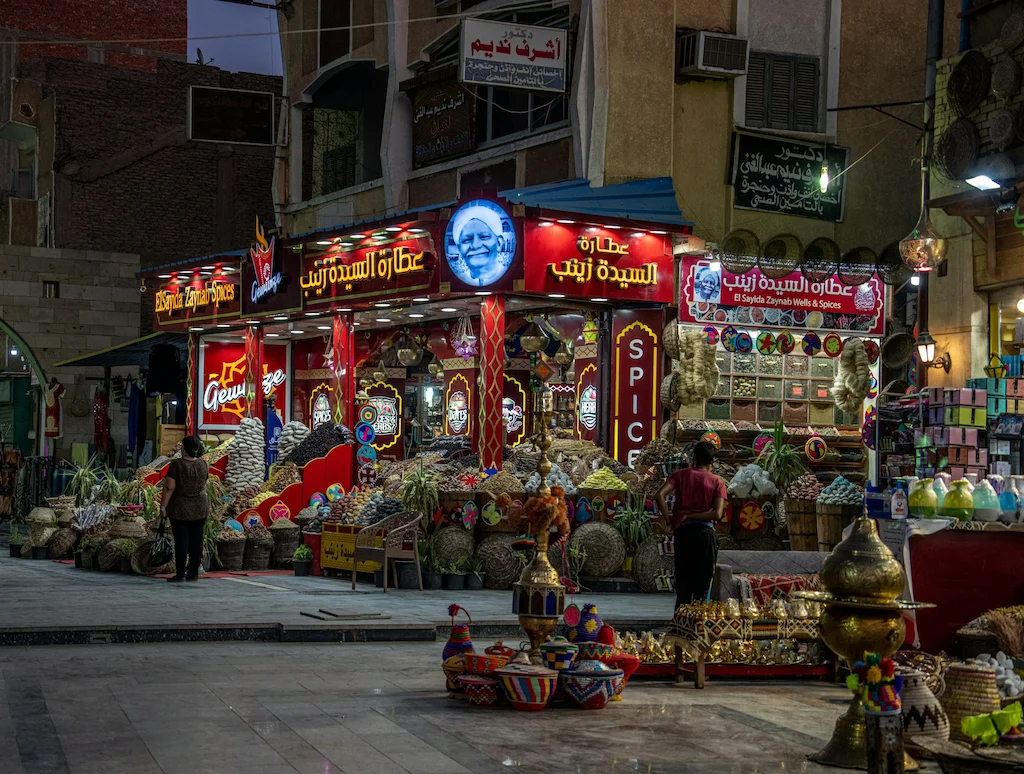
His other tip: come back after dark. Khan El Khalili bazaar at night runs on a different rhythm than during the day — lantern stalls glow instead of just sitting on shelves, the crowds thin out to more locals than tour groups, and sellers tend to relax on price once the day’s rush is over.
Is It Safe to Pay by Card, or Should You Bring Cash?
Cash in Egyptian pounds is still the currency of the souk. Small stalls rarely accept cards, and the few that do often add a service fee. Some larger shops take US dollars, but at a weaker exchange rate than paying in EGP.
The nearest reliable ATMs sit close to Al-Hussein Mosque, a short walk from the market’s main entrance. As for scams, the two to watch for are silver jewelry stamped to look like sterling without a real hallmark, and vendors who rush you to decide before you’ve compared a second stall.
Khan El Khalili is usually just day one of a longer Egyptian story. Many travelers pair Cairo’s souk with the temples on our Luxor tours, a Nile cruise stop through our Aswan tours, and a few relaxed days by the Red Sea through our Hurghada tours.
The 600-Year-Old Gold Test Every Local Buyer Still Uses
Khan El Khalili was built in 1382 by Emir Jaharkas al-Khalili, a stable master under the Mamluk sultans, on a site once tied to the Fatimid Caliphate.
The gold row inside it still runs on a centuries-old rule: never buy a piece without a visible government hallmark stamp (damgha), and always ask the seller to weigh it on a digital scale in front of you.
Locals shopping near Al-Muizz Street learned this the hard way generations ago, and the habit has simply never gone out of style.
For readers who want the fuller history and atmosphere of the market beyond shopping, Lonely Planet’s guide to Khan Al Khalili is a useful companion read.
Khan El Khalili Shopping: Quick Answers
Can I pay with a credit card in Khan El Khalili?
Rarely, and mostly only in larger fixed-price shops. Small stalls run on cash, so bring Egyptian pounds in small denominations to keep bargaining simple.
What is the easiest souvenir to bring home from the souk?
If you’re still deciding Khan El Khalili what to buy first, spices and perfume oils are the simplest choice — they’re lightweight, inexpensive, and far less likely to be counterfeit than gold or silver.
Is Khan El Khalili open on Friday mornings?
Most shops stay closed or open late on Friday mornings out of respect for prayer time, then reopen by early afternoon. Sunday mornings can be quieter too, though many souvenir stalls still operate daily.
How do I avoid overpaying as a first-time visitor?
Price the same item at two or three stalls before committing, and start your counter-offer well below the asking price. A calm, friendly tone gets a better final number than a rushed one.
What are Khan El Khalili’s opening hours?
Most shops open by mid-morning, around 10 a.m., and stay open until 10 or 11 p.m., since the souk does much of its business after dark. Friday mornings are the main exception, when many stalls open later out of respect for prayer time.
What Egyptian souvenirs count as good luck buys?
Scarab amulets and Eye of Horus (Wedjat) pieces are the classic good luck souvenir from Egypt, sold in silver, gold, or inexpensive stone versions across the Sagha and the surrounding souvenir stalls.
Your Souk Shopping List, Sorted
Khan El Khalili rewards travelers who walk in with a plan: know which lane sells what, expect to bargain, and carry cash in small notes. Handled that way, the souk shifts from overwhelming to genuinely enjoyable — and the souvenirs mean more once you know their story.
Ready to add it to your itinerary? Explore our Cairo tours and let Nile Travel Machine build the souk stop around exactly what you want to buy.
