

Felucca vs Dahabiya: Which Nile Sailing Trip Fits You?
Two boats, one river and very different ideas of a good day on the Nile. A felucca is a simple sailboat you board for an hour or a night, while a dahabiya is a small floating hotel that sails for days. This guide to felucca vs dahabiya shows which one fits your time, comfort and budget.
What Really Separates a Felucca From a Dahabiya?
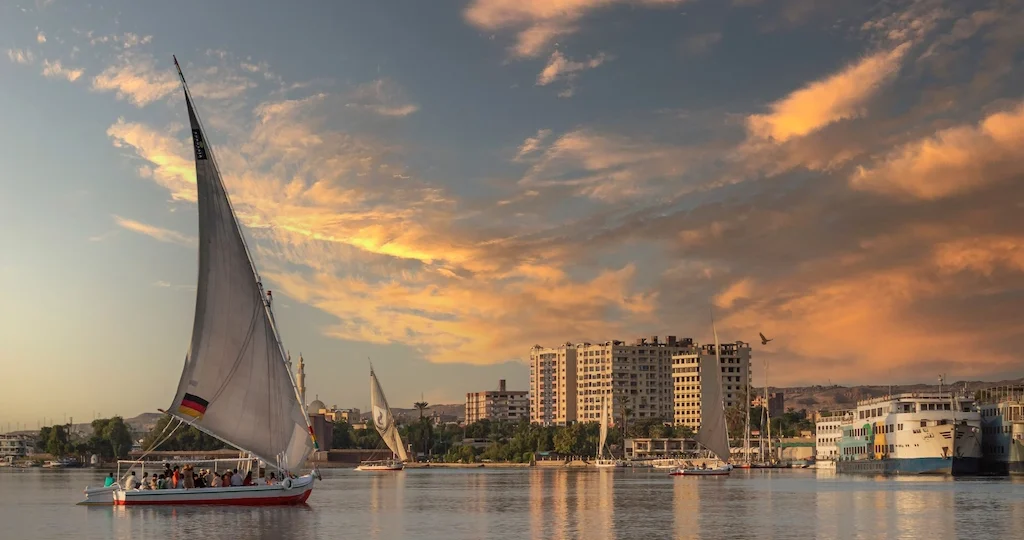
A felucca is the traditional Nile sailboat: a wooden hull, one large triangular sail and a captain who reads the wind by instinct. It is built for short sails and, on some routes, for simple overnight trips with mattresses laid out on deck.
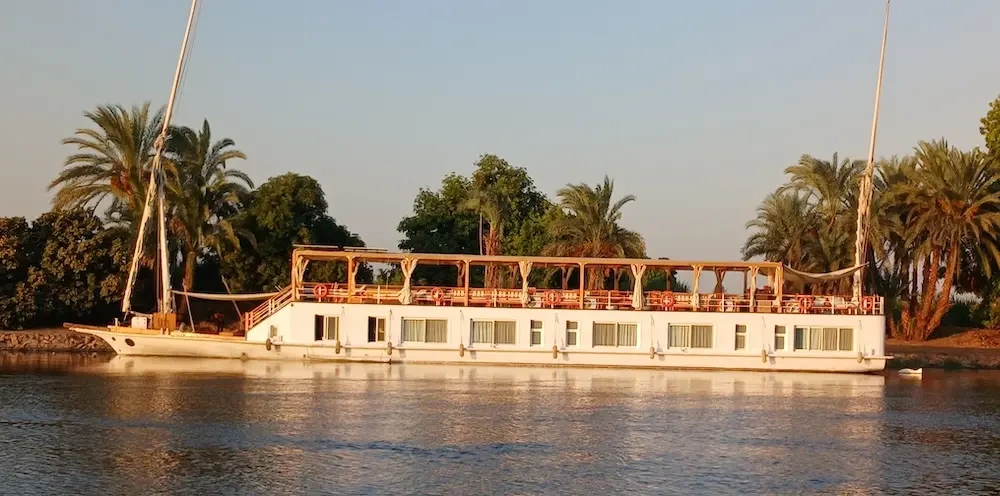
A dahabiya is a larger, twin-masted sailing houseboat with private cabins, a dining area and a shaded sun deck. Its crew sails, cooks and cleans, so the boat works as your hotel for the whole journey.
The simplest way to see the gap is purpose. A felucca is an experience you add to a day, and a dahabiya is the trip itself. That single difference shapes everything that follows: comfort, cost, route and the kind of traveller who will enjoy each boat most.
What Is It Like to Sail on a Felucca?
Sit low, trail a hand in the water and let the wind do the work. In Aswan a felucca usually carries a handful of passengers, with cushions or mats on the deck and shade only if the captain rigs a cloth.
When the breeze is good there is no engine noise at all, and the river feels wide, slow and strangely private.
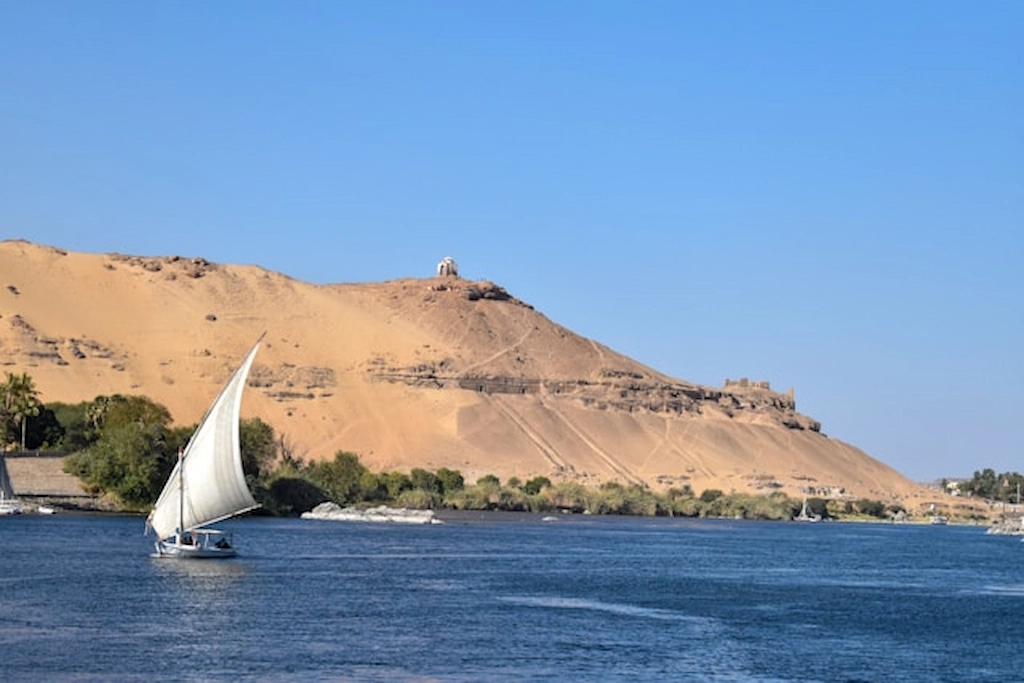
Most sails are short. Expect about an hour for a classic loop around the islands, or up to two hours if you leave in time for the sunset.
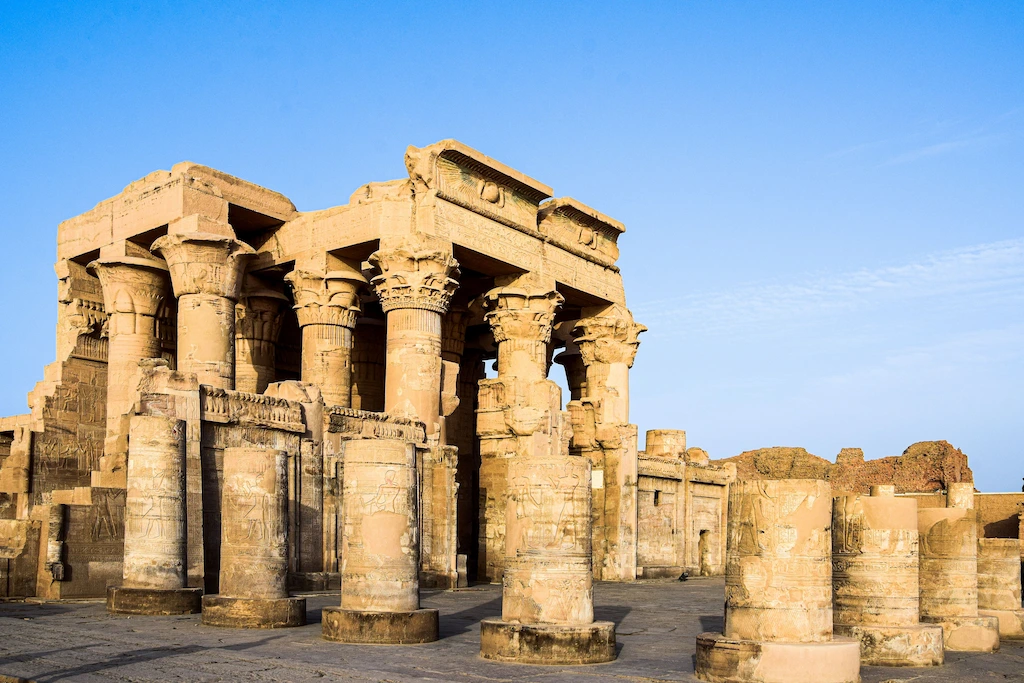
Longer options exist too, such as a three-day, two-night sail from Aswan toward Luxor that moors at riverbank beaches after dark and often finishes the last stretch by road, with stops at the temples of Kom Ombo and Edfu.
Facilities are basic by design. Passengers sleep on deck, bathroom access on overnight trips is limited, and you should ask exactly what is on board before you pay.
If a short, flexible sail is what you want, our guide to a felucca ride in Aswan covers routes, timing and fair prices, and our felucca ride in Luxor tour shows how the same idea works on the northern stretch of the river.
What Does a Dahabiya Offer That a Felucca Cannot?
Comfort, space and time. A dahabiya is a double-deck, twin-masted sailing boat, traditionally without an engine of its own, with roughly four to ten cabins depending on the vessel.
Cabins normally have an en-suite bathroom, and many boats add solar panels, fans and daytime air-conditioning so the heat never spoils the afternoon.
Most dahabiya cruises run between Luxor and Aswan and last four or five nights. Sailing upstream is helped by the prevailing wind, while the return north usually relies on a tow.
Because the hull sits so shallow in the water, the boat can tie up almost anywhere, which means quiet riverbank stops, village walks and sunset drinks away from the busy docks.
If you want a closer look at how this differs from a large ship, read our comparison of a dahabiyah vs a Nile cruise.
Evenings are the real reward. Dinner is served on deck, lanterns replace spotlights and the only soundtrack is the river. When you are ready to see how that works in practice, our team can walk you through a dahabiya Nile cruise from start to finish.
How Do They Compare Side by Side?
| If you care about… | The better fit |
|---|---|
| A quiet hour or two on the water, no overnight stay | Felucca |
| A private cabin with its own bathroom | Dahabiya |
| Sleeping under the stars on a simple deck | Overnight felucca |
| Cooked meals, a guide and planned temple visits | Dahabiya |
| Booking at short notice and paying per boat | Felucca |
| A slow, multi-day journey from Luxor to Aswan | Dahabiya |
| Travelling with young children or limited mobility | Dahabiya, or a short daytime felucca |
| Golden-hour photos on a single evening in Aswan | Felucca |
Which One Fits Your Kind of Trip?
Think about how you want the hours to feel, not only what the boat looks like. A felucca suits a traveller who values spontaneity and a low-commitment sail:
- You already have a hotel and only want a taste of the river.
- You are happy with basic seating, limited shade and no cabin.
- You want the freedom to choose the day, the hour and the route with the captain.
A dahabiya suits a traveller who wants the river to be the whole holiday:
- You want a bed, a bathroom and a hot meal waiting at the end of each day.
- You prefer a small group or a private charter over a crowded deck.
- You would rather sail between temples than race between them by road.
How Do Time, Comfort and Cost Really Differ?
Time is the clearest divider. A felucca asks for an hour, an evening or a short overnight, while a dahabiya asks for four or five days. If you only have a free afternoon in Aswan, the choice is made for you.
If the Nile is the centrepiece of your trip, the longer boat gives temples and scenery room to breathe.
Cost works differently as well. Short felucca sails are usually priced per boat and negotiated on the spot, so a larger group splits the bill and the price per person drops.
A dahabiya is normally priced per person for the whole cruise and covers the cabin, meals and a guide, although temple entrance fees are often extra.
Always ask what is included before you compare two quotes, because a cheap price that leaves out meals and tickets is rarely cheap in the end.
Comfort and wind complete the picture. Both boats depend on the breeze. A felucca captain will row or start a small motor when it drops, and a dahabiya may be towed to keep the schedule.
The difference is that a calm afternoon on a felucca simply means a slower sail, while on a dahabiya it never costs you a comfortable bed or a proper dinner.
Can You Do Both on the Same Trip?
Yes, and many travellers should. Sail a dahabiya from Luxor to Aswan, then book a one-hour sunset felucca on your last evening in the city.
You get the slow, staffed journey first and a lively, close-to-the-water finale second, without paying for a multi-day felucca you might find uncomfortable.
If you are planning the Aswan end of the trip, our guide to what to see in Aswan shows where a sail fits between Philae, the Nubian villages and the High Dam. Not sure how to sequence it all? Our team is happy to help you plan the order around your dates and energy.
What Should You Check Before You Book Either One?
A few questions save most of the regrets:
- Season: October to April is the comfortable window, while summer afternoons on an open deck are punishing.
- What is included: meals, drinking water, bedding, guide and temple tickets.
- Safety: life jackets on board, a licensed captain and a clear plan for where you moor overnight.
- Group size: a full felucca can feel crowded, and a small dahabiya can be booked as a private charter.
- Flexibility: what happens to your route if the wind drops or the weather turns.
For a wider view of how these small boats sit beside the big ships, Lonely Planet’s guide to cruising the Nile is a useful read, and our own Upper Egypt travel guide maps the full Luxor to Aswan corridor.
Quick Answers Before You Choose
Which is better for a first visit to Egypt, a felucca or a dahabiya?
If you have only a few days, take a short felucca sail and keep your time for temples. If you can give the Nile four or five days, a dahabiya shows you far more of the valley and is easier on first-time visitors who want comfort and a guide.
Do feluccas have toilets and cabins on overnight trips?
Usually not in the way a hotel does. Overnight feluccas are simple boats with mattresses on deck, and bathroom access is limited or relies on riverbank stops. Ask your captain or operator exactly what is on board before you commit.
Can a dahabiya really reach places a big Nile cruise ship cannot?
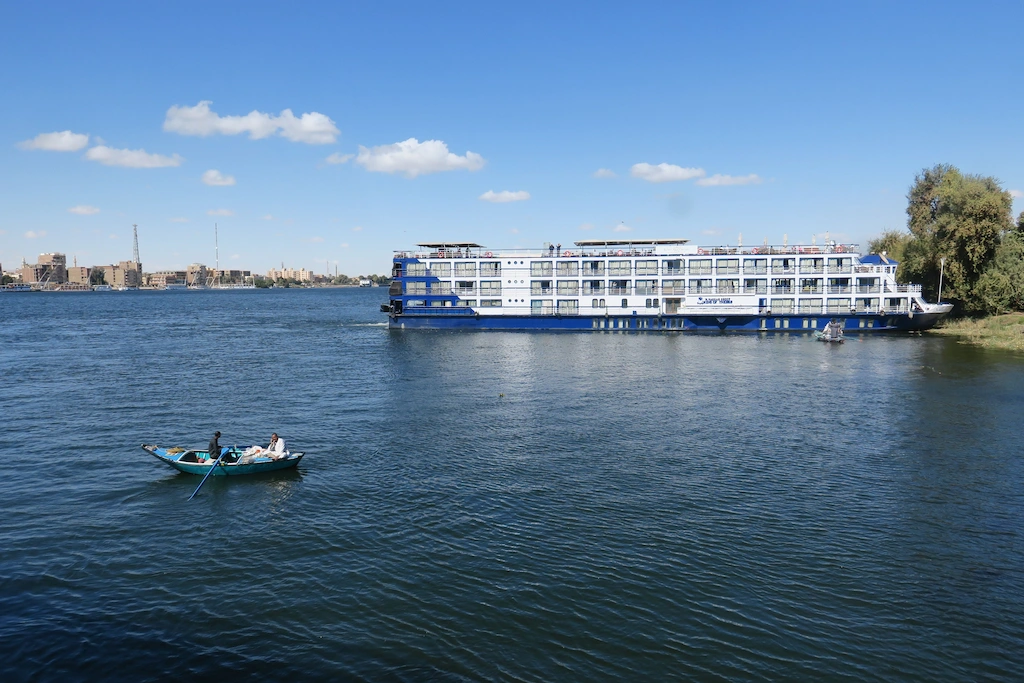
Often, yes. A dahabiya draws very little water, so it can moor at quiet riverbanks and small villages that large ships skip. The temples on the main route are the same, but the stops between them feel much more personal.
Is it worth paying more for a dahabiya if I only have two days in Aswan?
Probably not. A dahabiya is a multi-day commitment, so two days in Aswan are better spent on a sunset felucca and a few land sights. Save the dahabiya for a trip where the river is the main event.
Pick the Pace First, Then Pick the Boat
Choose the felucca when you want an hour or a night of simple, windblown calm, and choose the dahabiya when you want the Nile to carry you from temple to temple in comfort. Whichever you pick, ask what is included, travel in the cooler months and leave room to slow down. The river does the rest.
