

Inside Abu Simbel Temple: A Journey into the Heart of Pharaonic Ambition
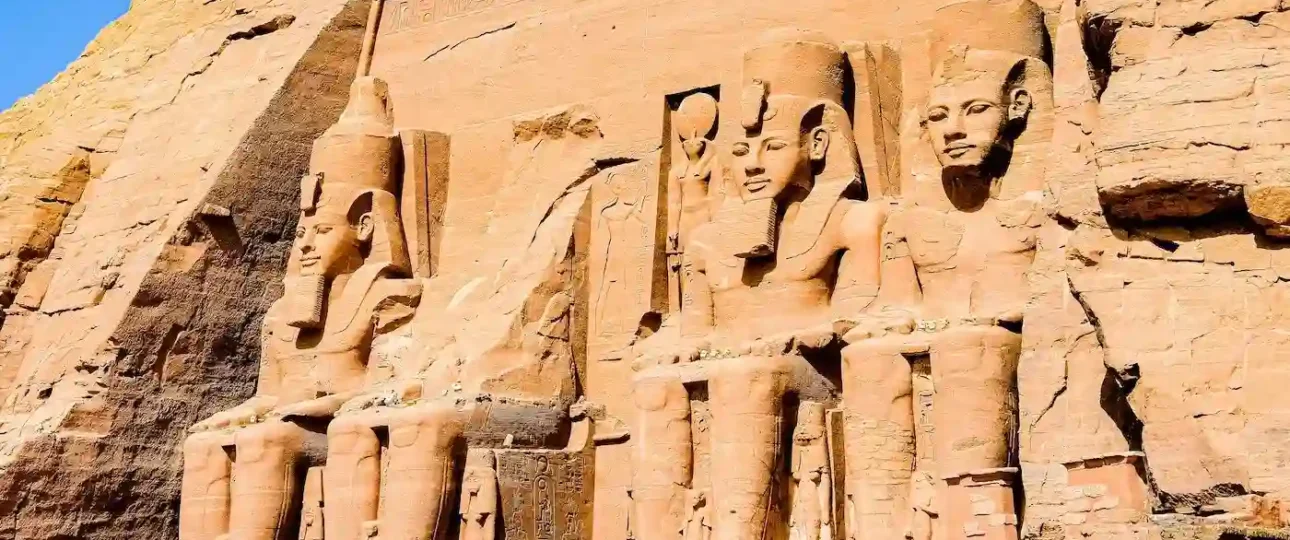
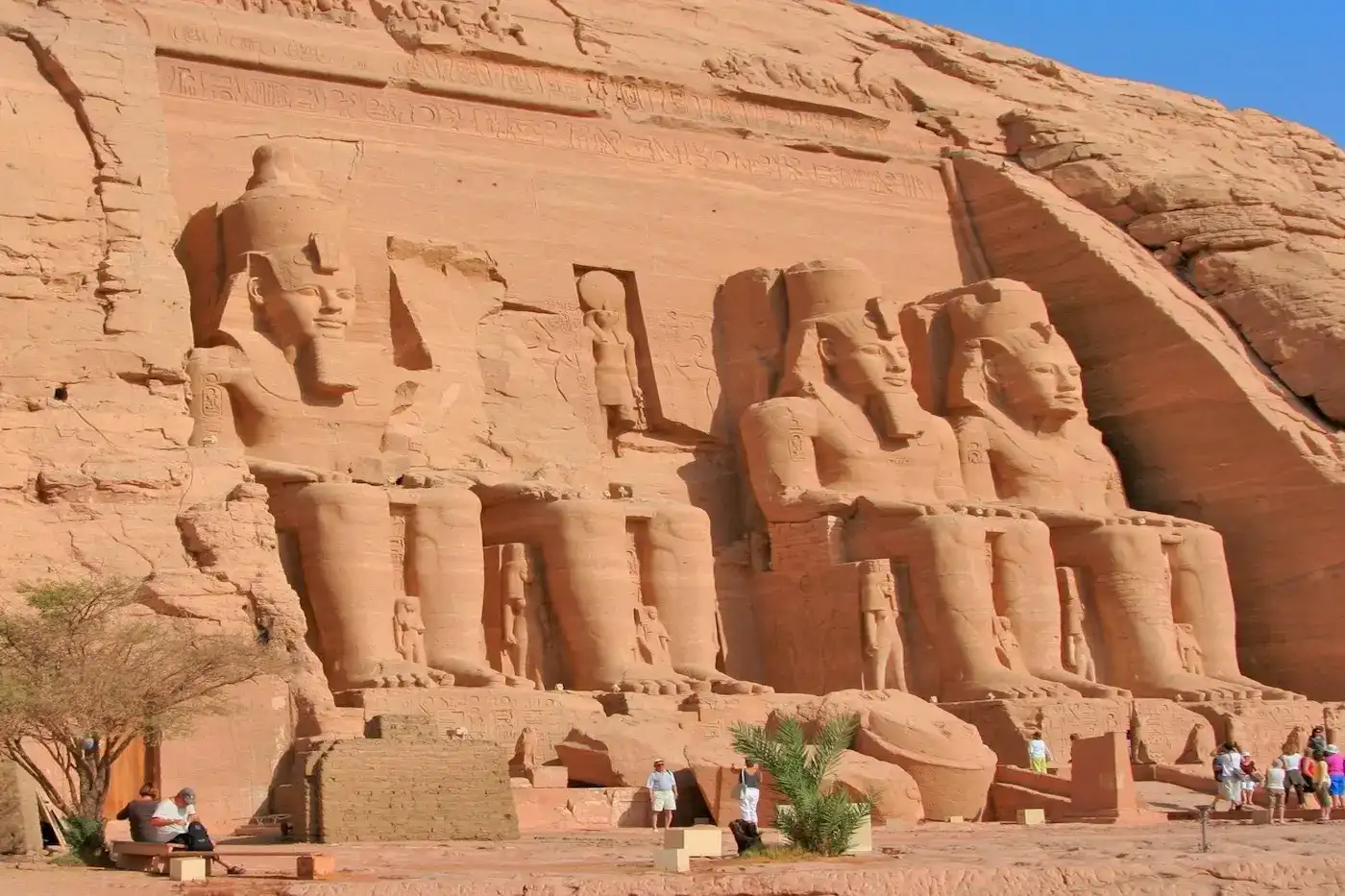
You don’t just visit Abu Simbel; you surrender to it. As you stand before the four seated giants, the desert heat of Aswan fades, replaced by a cool, ancient silence that pulls you toward the dark entrance. Stepping inside Abu Simbel Temple is a transition from the blinding Egyptian sun into a 3,000-year-old masterpiece of propaganda and piety.
The Grand Entrance: Crossing the Threshold of Time
While the bustling markets of Cairo or the modern luxury of Hurghada offer their own charms, Abu Simbel provides something rarer: a direct, physical connection to the ego and divinity of the New Kingdom’s greatest Pharaoh.
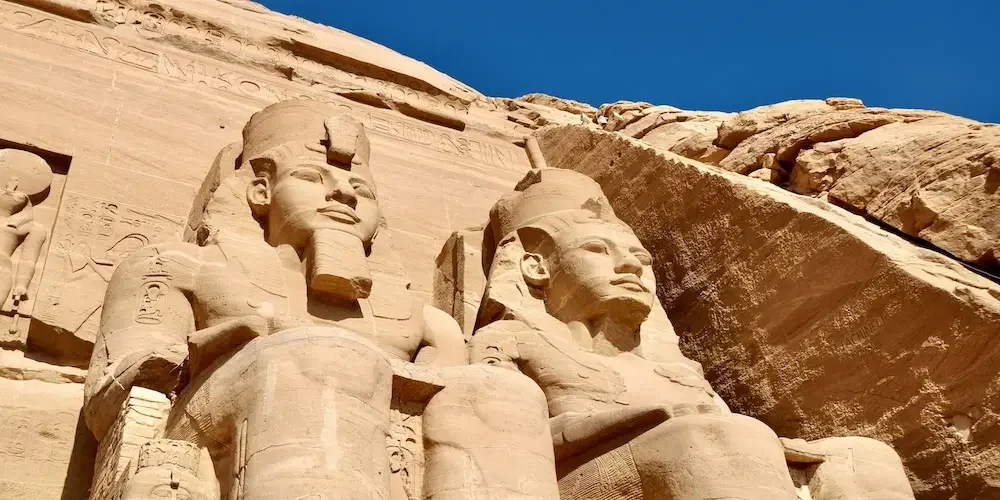
Standing before the Great Temple of Abu Simbel is an experience of pure verticality. Four seated colossi of Ramesses II, each towering 20 meters high, guard the entrance with an eternal, stony gaze. As you leave the searing heat of the Aswan desert and step through the narrow portal, the temperature drops, and the atmosphere shifts from the mundane to the sacred.
The Great Hypostyle Hall: The Guardians of Osiris
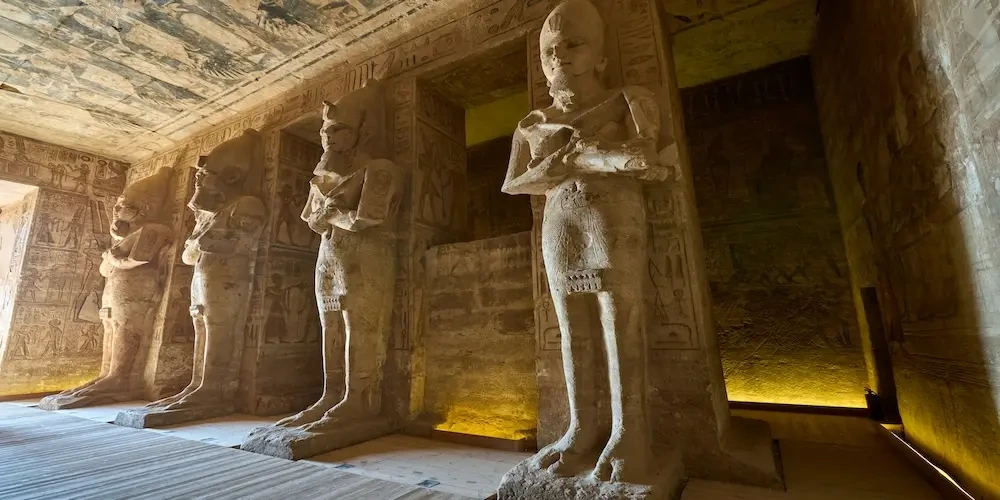
Once inside Abu Simbel Temple, the first chamber—the Great Hypostyle Hall—overwhelms the senses. Eight massive pillars, four on each side, depict the King in the guise of Osiris, the god of the dead. These “Osirid” statues, 10 meters tall, hold the crook and flail, symbolizing absolute authority over life and the afterlife.
The ceiling above is a masterpiece of celestial symbolism, adorned with soaring vultures representing the goddess Nekhbet, protecting the Pharaoh’s spirit. Unlike the static art found in some parts of Luxor, these reliefs are cinematic. You can see the tension in the horses’ muscles and the chaos of the Hittite retreat—a brilliant piece of ancient propaganda designed to intimidate any foreign dignitary who dared to travel south into Egypt.
🚢 Experience the dawn light at Abu Simbel. Book your expert–led Aswan excursion now.
The Sanctuary: A Masterclass in Ancient Physics
Beyond the secondary halls lies the “Holy of Holies”—the innermost sanctuary. This small, unadorned room is the heart of the temple’s architectural genius. It houses four seated statues: Ra-Horakhty, the deified Ramesses II, Amun-Re, and Ptah.
The most searched question about what’s inside Abu Simbel Temple is the “Sun Miracle.” Twice a year (February 22 and October 22), a perfectly aimed beam of light penetrates 60 meters deep into the temple.
- The Targets: The light illuminates the statues of Ramesses II, Amun-Re, and Ra-Horakhty.
- The Mystery: It carefully leaves Ptah, the god of the underworld, in total darkness.
This isn’t just luck; it’s a masterclass in astronomy and architectural precision that ancient builders achieved without computers or GPS.
The Echo of Love: Inside the Temple of Nefertari
Just a few meters north of the Great Temple lies the smaller Temple of Hathor, a rare and touching tribute to Queen Nefertari. While the Pharaoh’s temple is a monument to martial power, Nefertari’s temple is a sanctuary of grace. Stepping inside, you are greeted by pillars topped with the serene face of Hathor, the goddess of joy and love.
The reliefs here show the Queen taking a primary role, making offerings and playing music for the gods. It serves as the perfect emotional counterpoint to the colossal scale of Ramesses’ temple, reminding visitors that even the mightiest Pharaoh was a man of deep devotion.
Geopolitical Strategy: The Gatekeeper of the South
To understand why Ramesses II chose this remote location, one must look at the map. Positioned near the Nile’s Second Cataract, Abu Simbel served as a psychological “border control.” It was meant to overawe travelers coming from Nubia and Africa, signaling that the Pharaoh’s power was as unyielding as the rock itself.
While many travelers focus their journey on the classic temples of Luxor, making the trek to the deep south reveals the true extent of the Pharaonic empire’s reach. Abu Simbel was the ultimate “Keep Out” sign, carved in 50,000 tons of sandstone.
🗺️ Combine history with luxury. Explore our Nile Cruise itineraries from Luxor to Aswan.
The 1960s Resurrection: A Modern Engineering Miracle
The story of Abu Simbel didn’t end in antiquity. In the 1960s, the construction of the Aswan High Dam threatened to submerge this wonder under the rising waters of Lake Nasser. In a feat of international solidarity that inspired the world, UNESCO dismantled the entire complex into 1,042 massive blocks, some weighing 30 tons, and reassembled them 65 meters higher and 200 meters back from the original site.
Engineers meticulously recreated the temple’s interior to maintain the exact solar alignment, ensuring that the sun would still find the Pharaoh in his new home. Today, the concrete dome that supports the artificial mountain is hidden from view, allowing visitors to experience the temple exactly as it appeared to the ancient scribes.
Inside the Chambers: A Layout of Divine Hierarchy
The architectural plan inside Abu Simbel Temple is a deliberate journey from the human world to the divine. As you move deeper into the mountain, the floors rise and the ceilings lower, creating a physical sense of “compression” that heightens the spiritual tension.
- The Second Pillared Hall: Smaller and more intimate than the first, this chamber features four pillars decorated with scenes of the King offering sacrifices to the gods. It acts as a transitional space, preparing the visitor for the sanctuary.
- The Vestibule: A narrow transverse room that leads directly to the heart of the temple. The reliefs here are remarkably preserved, showing Ramesses and Nefertari before the barks of Amun-Re and Ra-Horakhty.
- The Side Chambers: Often overlooked, eight smaller rooms branch off the main hall. These were likely used as treasuries or storerooms for sacred temple equipment, and their walls are covered with less formal, yet fascinating, administrative scenes.
Preserving the Miracle: 1,042 Pieces of History
What makes the experience inside Abu Simbel Temple even more profound is the knowledge that it shouldn’t be here. The 1964 UNESCO relocation was a “Herculean” task that combined ancient aesthetics with 20th-century technology.
- The Concrete Dome: Above the temple’s ceiling sits a massive reinforced-concrete dome. This “artificial mountain” supports the weight of the rocks above, ensuring that the interior remains stable for another 3,000 years.
- Precision Cutting: Engineers used specialized saws to cut the temple into blocks weighing up to 30 tons. If you look closely at the walls inside, you can occasionally spot the faint, hair-thin lines where the blocks were reassembled with surgical precision.
- Acoustic Integrity: Despite being moved, the interior still retains its unique “hollow” silence—a soundscape unchanged since the days of the Pharaohs.
🏖️ Swap the waves for the wonders. Book your day trip from Hurghada to Abu Simbel today.
Maximizing Your Visit: Expert Travel Insights
To truly appreciate what is inside Abu Simbel Temple, you need to plan beyond the standard “tourist rush.”
- The Cairo-Aswan Connection: Most travelers start in Cairo to see the Pyramids, but the flight to Aswan is the essential second step. From Aswan, a short flight or a desert drive brings you to the temple gates.
- Timing is Everything: While the Solar Miracle dates (February and October) attract thousands, visiting during the “off-peak” months allows you to stand alone in the sanctuary—a rare moment of personal connection with antiquity.
- The Nile Cruise Route: Integrating Abu Simbel as the grand finale of a cruise from Luxor to Aswan provides the best historical context, as you see the evolution of Pharaonic architecture along the riverbanks.
🏛️ History is better when shared. Join our guided tours from Cairo to the heart of Nubia.
FAQ: Quick Answers for the Modern Traveler
How long does it take to see the inside of Abu Simbel?
A thorough exploration of the interior takes about 45 to 60 minutes. This allows time to examine the Battle of Kadesh reliefs and the side treasuries.
Is there an entrance fee for the inside?
Yes, the ticket covers both the exterior and the interior of the Great Temple and the Temple of Nefertari.
Can you see the statues in the sanctuary clearly?
While the sanctuary is deep inside the mountain, subtle artificial lighting (and the sun during the miracle dates) makes the four statues clearly visible.
A Legacy Carved in Stone
Stepping inside Abu Simbel Temple is a reminder that some things are truly eternal. From the terrifying giants in the First Hall to the silent, dark sanctuary 60 meters deep, the temple remains the ultimate testament to human ingenuity. Whether you are traveling from the bustling streets of Cairo, the historic temples of Luxor, or the sunny shores of Hurghada, Abu Simbel is the one destination that promises to change your perspective on history forever.
👉 Ready to walk where Kings walked? Start your Egyptian adventure with Nile Travel Machine.
