

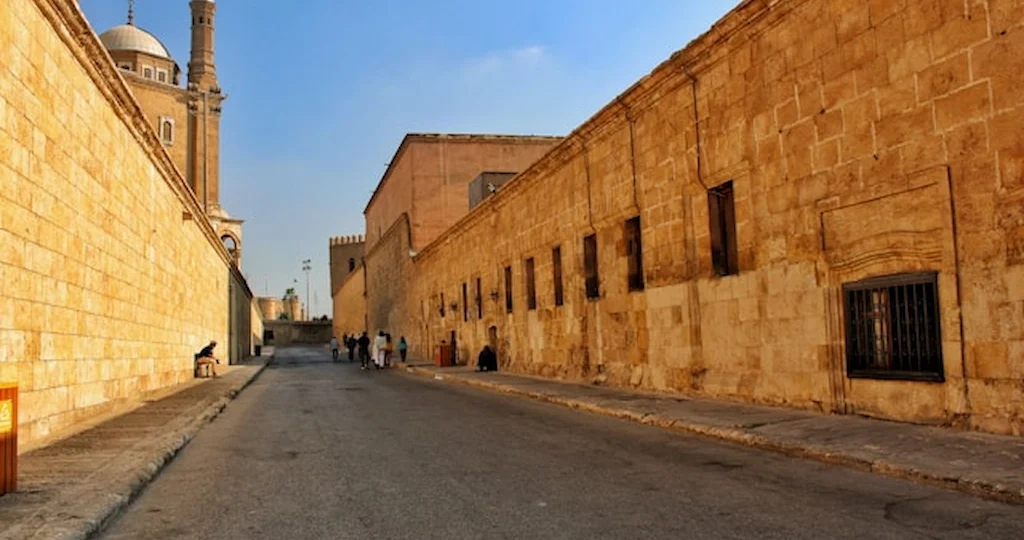
Medieval Alleys of Islamic Cairo: A Walking Guide to Al-Muizz Street
What if the most photographed street in Cairo was never built with tourists in mind at all? The medieval alleys of Islamic Cairo still run exactly where Fatimid engineers laid them out more than a thousand years ago, and local families still live, pray, and trade along them today.
What Exactly Are the Medieval Alleys of Islamic Cairo?
They are a dense network of narrow stone-paved lanes anchored by one central spine: Al-Muizz Street. Founded in 969 AD by the Fatimid Caliph Al-Muizz li-Din Allah, the street once carried a much grander nickname among Cairenes.
| Fact | Detail |
|---|---|
| Founded | 969 AD, by Fatimid Caliph Al-Muizz li-Din Allah |
| Historic nickname | Al-Sharii al-Aazam, “The Greatest Street” |
| Length | Roughly 1 kilometer end to end |
| Boundaries | Bab al-Futuh (north gate) to Bab Zuweila (south gate) |
| UNESCO status | Inscribed in 1979 as part of Historic Cairo |
Curious how this fits into a full day of sightseeing? Our Cairo tours can weave this stretch into your itinerary alongside the pyramids.
Why Every Alley Bends Instead of Running Straight
First-time visitors often assume the crooked lanes grew by accident. They didn’t. Medieval builders curved each passage on purpose, breaking the sightline of the desert sun and channeling shade across the stone for most of the day.
The same bends slowed hot wind and dust, kept market lanes cooler for shopkeepers, and made it harder for anyone to rush through a residential quarter unnoticed after dark.
It’s a thousand-year-old piece of passive engineering that still keeps these alleys walkable at noon, long after modern Cairo’s open streets turn into a furnace.
Which Landmarks Still Line These Alleys Today?
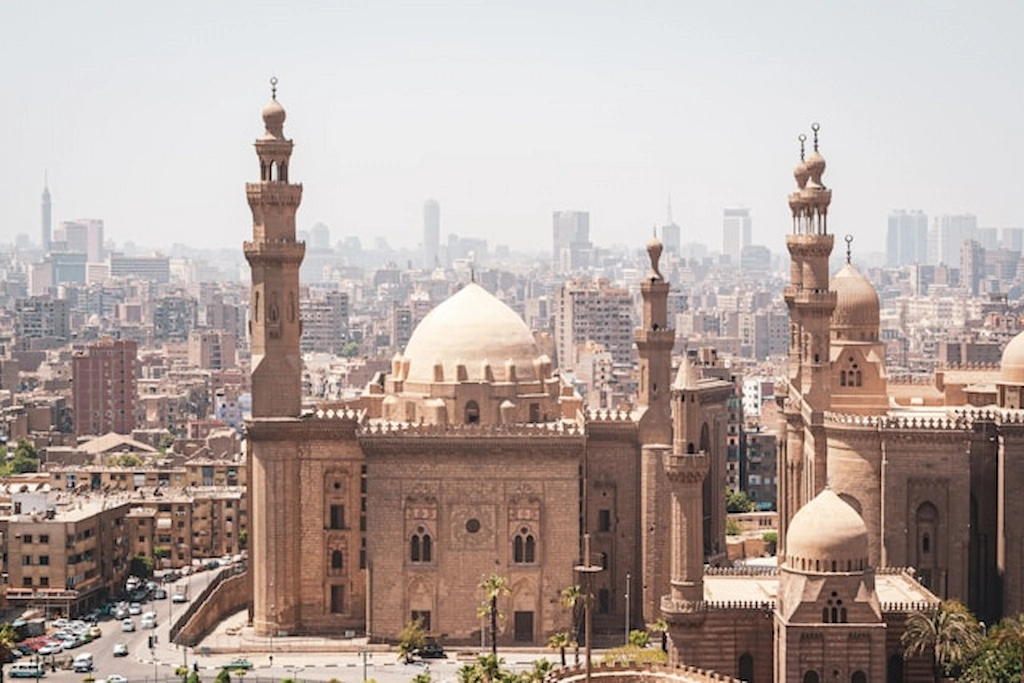
Walking the full stretch means passing some of the highest-density Islamic architecture anywhere in the world.
| Landmark | Why It’s Worth the Detour |
|---|---|
| Al-Hakim Mosque | One of Cairo’s oldest surviving Fatimid mosques, just inside Bab al-Futuh |
| Qalawun Complex | A 13th-century hospital, mausoleum, and school built in under thirteen months |
| Bab Zuweila | The only Fatimid gate visitors can still climb for a rooftop view over the alleys |
| Khan el-Khalili edge | Where the medieval alleys spill directly into Cairo’s most famous bazaar |
These mosques, gates, and monuments belong to Cairo’s shared heritage, and they welcome visitors of every nationality and religious background, not only Muslims.
Outside of prayer times, non-Muslim guests are generally free to step inside several of these mosques if modestly dressed, and caretakers are often happy to point out details in the architecture to anyone who asks.
We’ve already mapped exactly what to buy and where inside Khan El Khalili, right where this walk naturally ends.
What Traditional Crafts Can You Still Watch Being Made?
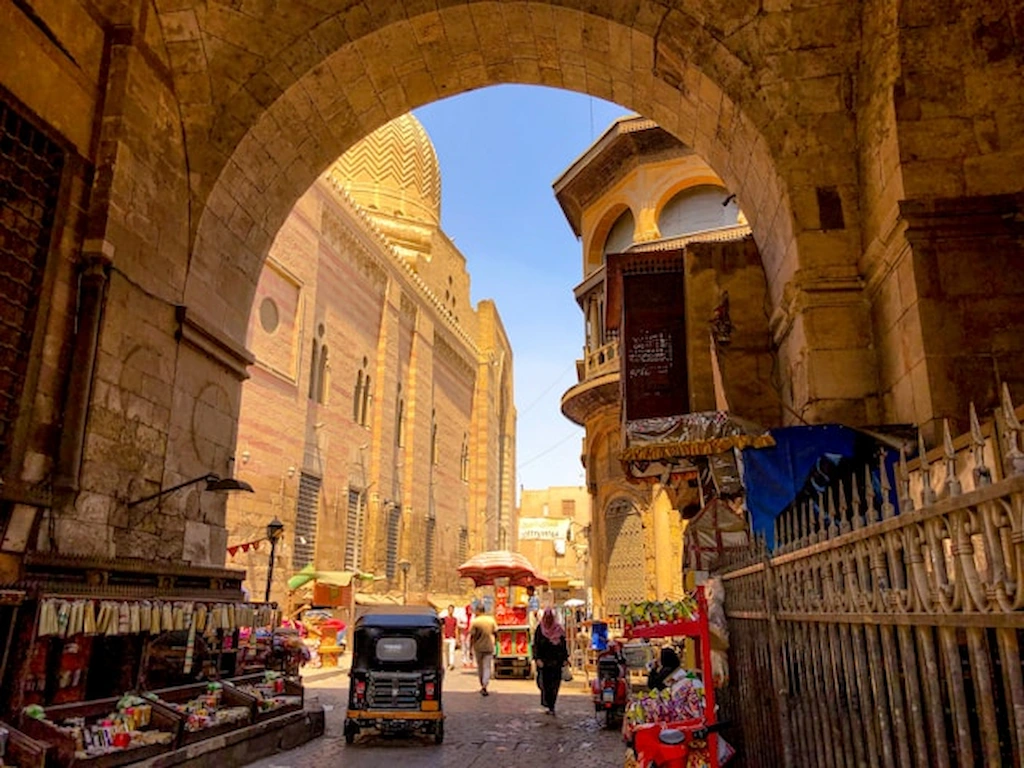
Long before Khan El Khalili became a shopping destination, these alleys were a working craft district, and much of that identity survives today.
Coppersmiths still hammer trays, lanterns, and cookware by hand in small open-fronted workshops, using techniques passed down through several generations of the same family.
Walking the medieval alleys of Islamic Cairo also means passing woodworkers who cut and fit the same interlocking geometric lattice patterns once used for mashrabiya screens, now resized into lamps, mirrors, and small furniture that travelers pack home.
Textile workshops nearby produce khayamiya, Cairo’s hand-appliqued tentmaker fabric, stitched into cushion covers, wall hangings, and quilts.
None of these crafts require a purchase to enjoy; most workshop owners are used to visitors pausing to watch a few minutes of work in progress, and they welcome everyone equally, whether you live in Cairo or arrived that same morning.
How Should You Walk These Alleys Without Getting Lost?
Start at Bab al-Futuh in the cooler morning hours and walk south toward Bab Zuweila; the route is close to a straight line, so getting turned around is harder here than in the souk itself.
Budget 45 to 60 minutes for the walk alone, longer if you stop at each mosque facade. Late afternoon light works best for photos, and flat, closed-toe shoes matter more than in almost any other part of Cairo, since the original stone paving is uneven in places.
A Cairo Guide’s Take: The Detail Most Visitors Walk Past
“Everyone looks up at the minarets and completely misses the mashrabiya screens right above eye level,” says Khaled, a Nile Travel Machine guide who has walked this route for over a decade. “Those carved wooden lattices let women watch the street without being seen from below.
It’s medieval privacy design, and it’s still sitting there on buildings people photograph every single day.” His tip for guests: pause under any surviving wooden screen and look for the hand-carved geometric patterns before moving on.
Ready to see these details in person rather than in a photo? Our Cairo day tours can build this walk around your own pace.
For a deeper academic record of the street’s protected status, the UNESCO World Heritage listing for Historic Cairo is a useful reference.
Travelers pairing Cairo with the rest of the Nile often continue on to Luxor and Aswan, or extend the trip with a few coastal days through our Hurghada tours.
Medieval Alleys of Islamic Cairo: Quick Answers
What is the oldest street in Cairo’s Islamic quarter?
Al-Muizz Street is the oldest and most significant, founded in 969 AD by the Fatimid Caliph Al-Muizz li-Din Allah and still following its original route today.
Where do the medieval alleys of Islamic Cairo begin and end?
The main stretch runs about one kilometer between two surviving Fatimid gates: Bab al-Futuh in the north and Bab Zuweila in the south.
Are the alleys of Islamic Cairo still used by local residents?
Yes. Beyond the tourist-facing sections, families still live above the old workshops, and many craftsmen still work from the same buildings their families have used for generations.
What should I wear to walk through Islamic Cairo’s alleys?
Modest, breathable clothing and flat closed-toe shoes work best, since the route passes several working mosques and the original stone paving is uneven.
A Living Street, Not a Museum Piece
The medieval alleys of Islamic Cairo were never designed to be admired from a distance; they were built to be lived in, and a thousand years later, they still are.
Visitors of every background are welcome to walk them, watch the craftsmen at work, and step into the mosques along the way. Ready to walk them for yourself? Explore our Cairo tours and start where the Fatimids did.
