

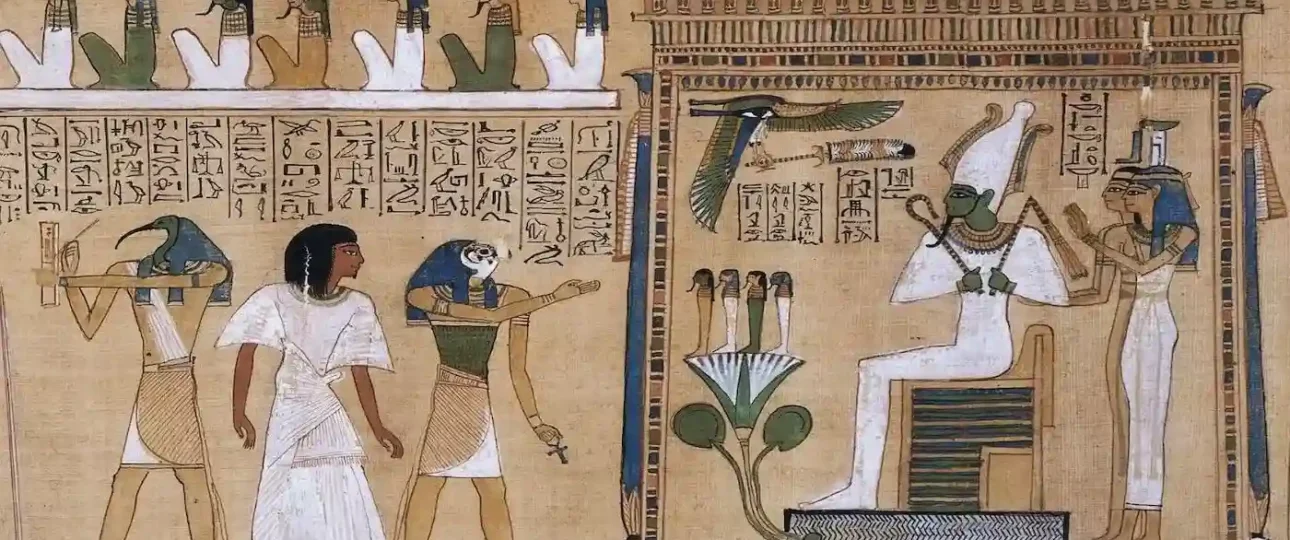
The saga of Isis and Osiris Story: More Than a Myth, It’s the Soul of the Nile
If you ask a farmer in Upper Egypt about the secret of his lush fields, he might smile and speak of “Osiris.” To us at Nile Travel Machine, the Isis and Osiris story isn’t just ink on ancient papyrus; it is the reason the Nile flows, and the sun rises. It is the original epic of “First Love” facing “First Betrayal”—a saga that transforms your visit to Egypt’s temples from mere sightseeing into a quest for eternity.
While the Isis and Osiris story is a fictional myth born from ancient imagination, its power is very real. It has been etched into the hearts and minds of Egyptians for millennia, serving as a cultural compass that defines our concepts of loyalty, justice, and the afterlife to this very day.
✨ Experience the Legend: Don’t just read history; walk through it. Book our “Path of the Gods” Private Tour and see the myths of Abydos and Philae come to life with expert guides.
Kemet vs. Deshret: The War Between Green and Red
At its core, this myth is a geographical struggle. Osiris wasn’t just a king; he represented “Kemet” (the fertile Black Land). His brother Set, however, embodied “Deshret” (the harsh Red Desert).
When Set trapped Osiris in that infamous chest, he wasn’t just committing murder; he was attempting to choke life itself and stop the Nile’s pulse. You can still see this struggle today when standing in Luxor: where the vibrant greenery abruptly meets the barren, jagged mountains. Every temple we visit in our tour programs is a silent witness to this ongoing victory of life over drought, and greenery over desolation.
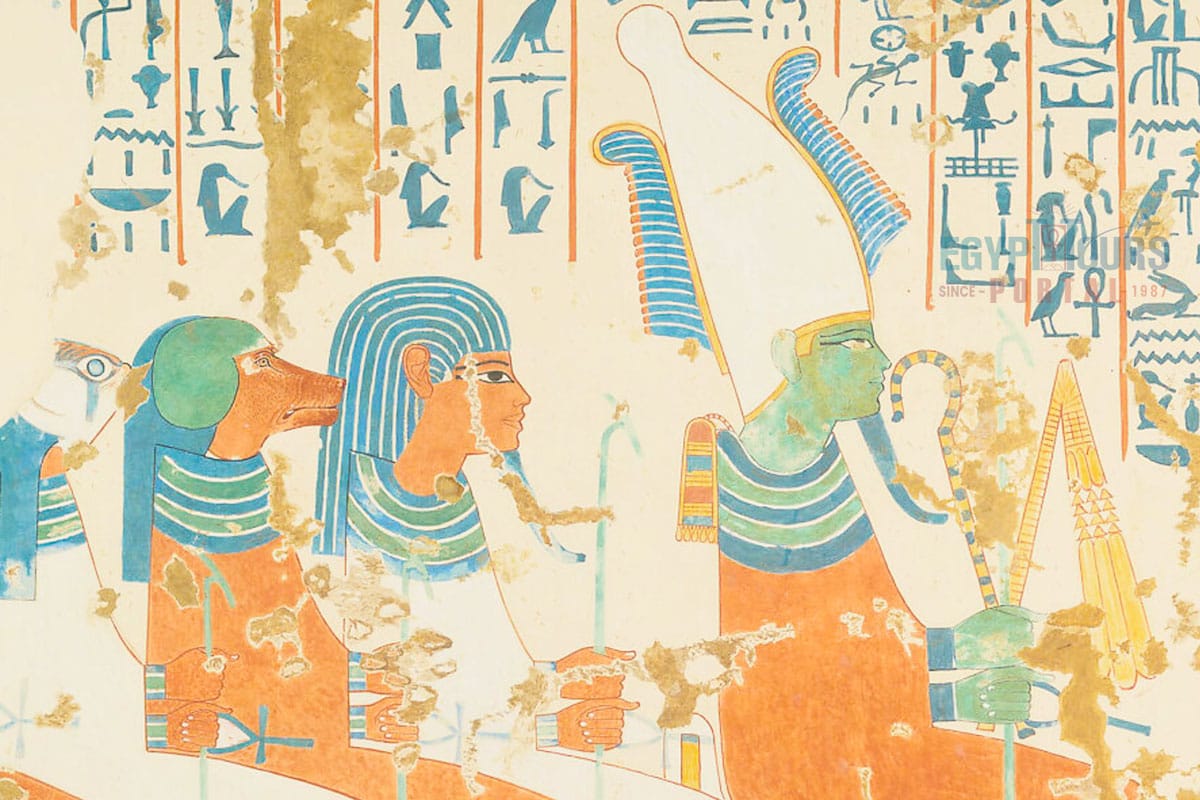
The 42 Pieces: A Spiritual Map of Egypt
The most tragic and fascinating part of the Isis and Osiris story is when Set tore Osiris’s body into 42 pieces and scattered them across the land. Ever wondered why Ancient Egypt had exactly 42 provinces (Nomes)?
Legend says that every spot where a piece of Osiris fell became sacred ground, and Isis built a shrine there. This means when you travel with us from Aswan to Alexandria, you are literally retracing the footsteps of Isis. In Abydos, his “head” was said to be buried, making it the holiest pilgrimage site in antiquity. This geographic link makes the myth “tangible” beneath your feet—it’s not just a bedtime story; it’s the map of the country.
Isis: The Architect of Hope and Magic
If Osiris was the king, Isis was the “engine” of the epic. She wasn’t a grieving widow waiting for a miracle; she was the world’s first “archaeologist” and “magician.” She refused to accept defeat, traveling as far as the coast of Byblos to recover her husband’s remains.
At the Philae Temple in Aswan, you can almost feel her presence. It was there, among the cataracts, that she hid and performed the magic to breathe life back into Osiris. Her resilience is the lesson that shaped the Egyptian spirit: that hope can be rebuilt, no matter how scattered the pieces. When you stand before her sanctuary in Aswan, remember you are standing where the idea of “Love defeating Death” was born.
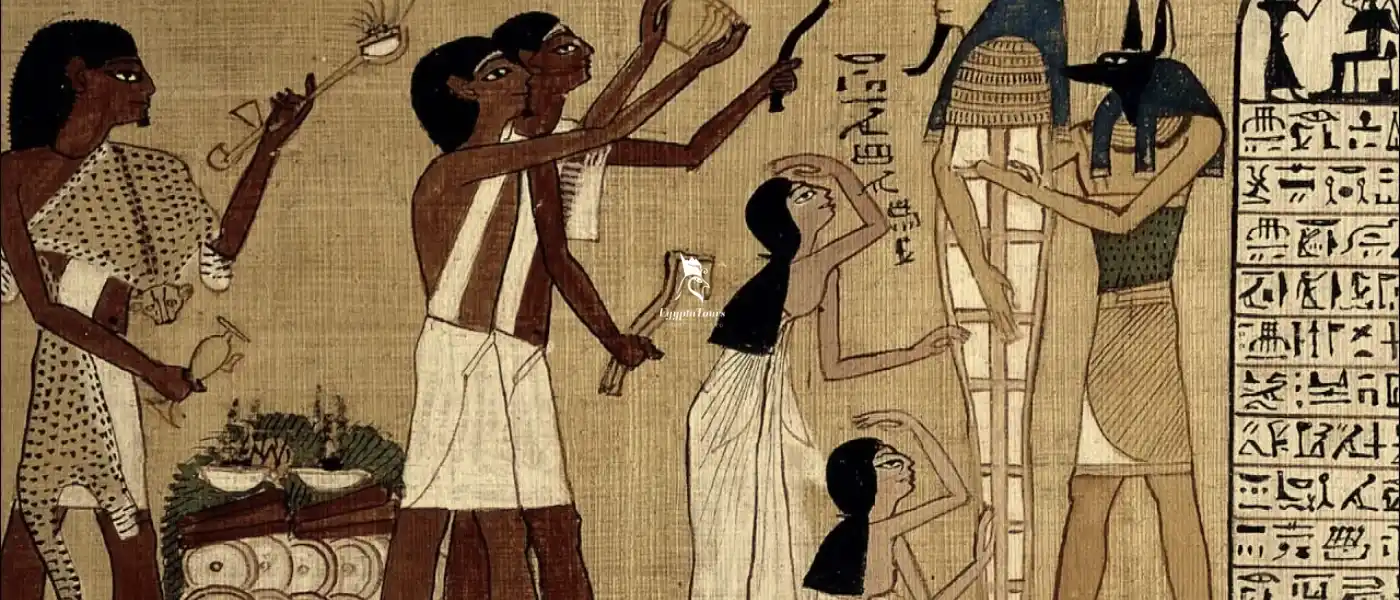
The Marshes of the Delta: Birth of a Legend
While the Isis and Osiris story often focuses on the afterlife, its most “human” chapter happens in the Nile Delta. After resurrecting Osiris just long enough to conceive a child, Isis fled to the papyrus thickets of the Delta (known as Chemmis) to hide from the wrath of Set.
The Mother’s Struggle: This part of the myth resonates deeply with the Egyptian spirit. Isis, once a queen, lived as a fugitive to protect her son, Horus. This is why she is revered as the ultimate protector of children.
The Combat of Ages: As Horus grew, the story shifted from a family tragedy to a battle for the soul of the country. The legendary battles between Horus (representing order) and Set (representing chaos) were not just physical fights; they were legal battles held before the council of gods. Eventually, Horus emerged victorious, becoming the first “Pharaoh,” which is why every living King of Egypt was seen as a “Living Horus.”
The Hall of Ma’at: Weighing the Heart against a Feather
Perhaps the most lasting legacy of the Isis and Osiris story is the invention of the “Moral Conscience.” Because Osiris became the Lord of the Underworld, he became the ultimate judge of the dead.
When you visit the tombs in the Valley of the Kings, you will see scenes of the “Weighing of the Heart.” The deceased’s heart was placed on a scale against the Feather of Ma’at (Truth and Justice).
The 42 Negative Confessions: Remember the 42 pieces of Osiris? They correlate with the 42 sins the deceased had to deny committing. This shows that for the ancient Egyptians, the afterlife wasn’t a gift; it was something earned through a life of integrity and kindness.
The Modern Link: This concept of a “final judgment” based on one’s deeds influenced almost every major religion that followed. It all started here, in the heart of the Nile Valley.
🧭 Discover the Afterlife: See the vivid judgment scenes for yourself. Explore our West Bank & Valley of the Kings Tours, and let our Egyptologists decode the spells of the Book of the Dead for you.
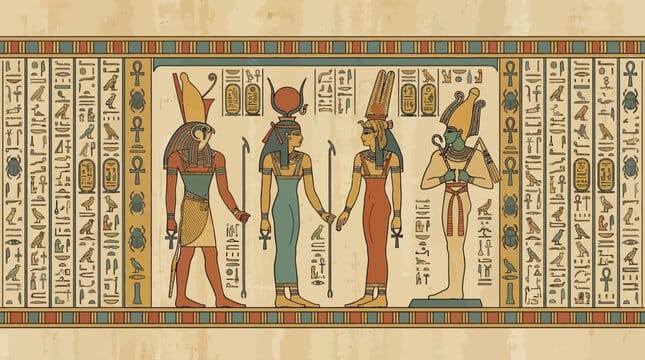
Isis and Osiris FAQ: Everything You Need to Know
Who killed Osiris and why?
Osiris was killed by his brother, Set, the god of chaos. Set was jealous of Osiris’s throne and his success in bringing civilization and agriculture to Egypt.
How did Isis bring Osiris back to life?
Isis used her supreme magical powers, along with the help of her sister Nephthys and the god Anubis, to find the 42 scattered pieces of Osiris. She performed the first ritual of mummification to reassemble him, breathing life back into him long enough to conceive their son, Horus.
What is the moral of the Isis and Osiris story?
The myth teaches that life is a cycle of renewal. It emphasizes that love and loyalty can overcome betrayal, and that justice (Horus) will eventually triumph over chaos (Set). It also provided the ancient Egyptians with a guarantee of life after death.
Where are the main temples of Isis and Osiris located?
The two most important sites are the Philae Temple in Aswan (dedicated to Isis) and the Temple of Seti I in Abydos (the legendary burial place of Osiris’s head). Both are essential stops for any traveler interested in Egyptian mythology.
A Story Written in Stone and Water
The Isis and Osiris story is more than a relic of the past; it is the blueprint of the Egyptian soul. From the green fields of the Delta to the silent tombs of the South, their presence is everywhere. When you travel through Egypt, you aren’t just looking at ruins; you are walking through the chapters of a love story that redefined eternity.
Ready to see where the magic began? Let Nile Travel Machine guide you through the temples, myths, and mysteries of the land of the Pharaohs.
Plan Your Mythological Journey to Egypt Now by contacting us.
Talk to an Expert Egyptologist Today – Tailor-made.
