The Ultimate Valley of the Queens tour: Luxor’s Best Kept Secret
While the crowds rush to the Valley of the Kings, Egypt’s most vibrant colors are hidden in silence. A Valley of the Queens tour is your gateway to Nefertari’s tomb—the ‘Sistine Chapel of Egypt’—without the noise. Discover why seasoned travelers consider this the true crown jewel of Luxor’s West Bank.
What Is the Valley of the Queens?
The Valley of the Queens — known in Arabic as Wādī al-Malekāt and in ancient Egyptian as Ta-Set-Neferu (“The Place of Beauty”) — is one of Egypt’s most significant archaeological sites. Carved into the desert hills along the western bank of the Nile in Upper Egypt, this ancient necropolis served as the sacred burial ground for the royal wives, princes, and high-ranking officials of the New Kingdom period, spanning roughly 1560 BC to 1130 BC.
With over 90 rock-cut tombs discovered so far, the valley forms a crucial part of the greater Theban Necropolis. This UNESCO World Heritage landscape also includes the Valley of the Kings and the Temple of Hatshepsut.
Why the Valley of the Queens Deserves a Spot on Your Egypt Itinerary
Most travelers rush to the Valley of the Kings and never make it here. That’s exactly what makes the Valley of the Queens so special: quieter, less crowded, and equally — if not more — stunning.
While the Valley of the Kings is undeniably grand, the Valley of the Queens offers something rarer: intimacy. You’re not fighting tour groups for a glimpse of a wall painting. You’re standing in silence before some of the most finely detailed funerary art ever created in the ancient world.
And then there’s Queen Nefertari’s tomb — a game-changer.
🏛️ See the Valley of the Queens Before the Crowds Arrive. Our early-morning West Bank tours begin at 9 AM — the moment the gates open and the site is at its quietest. Certified Egyptologist guide included. All tickets handled for you. Book Your West Bank Tour.
Valley of the Queens vs. Valley of the Kings: Which Should You Visit?
Visit both if you can, the honest answer. It’s the most frequent question our guests ask. But if you’re weighing your options, here’s a clear breakdown:
Feature
Valley of the Queens
Valley of the Kings
Crowds
Quieter, more intimate
Very busy with large tour groups
Art Quality
World-class (especially Nefertari)
Impressive, grand-scale
Tombs Open
~4 regularly
~8–10 regularly
Best For
Art lovers, detail seekers
History buffs, monument seekers
Time Needed
1–1.5 hours
2–3 hours
Entrance Fee
From EGP 220 (Nefertari extra)
Separate ticket required
Our recommendation: Combine both valleys into a single Luxor West Bank full-day tour — the two sites are less than 10 minutes apart, and pairing them with Hatshepsut’s Temple and the Colossi of Memnon makes for an unforgettable day in ancient Thebes.
🌅 The Best West Bank Day — Designed Around You. Valley of the Queens at dawn → Hatshepsut’s Temple → Valley of the Kings → Colossi of Memnon. Private vehicle · Certified Egyptologist · Your pace entirely.View Full Itinerary & Prices.
Practical Guide: Everything You Need to Know Before You Visit
Location
The Valley of the Queens is located on the West Bank of the Nile, approximately 5 km southwest of the city center of Luxor, Egypt. It sits within the greater Theban Necropolis, a short drive from Hatshepsut’s Temple at Deir el-Bahari and Medinet Habu.
Entrance Fees
Standard ticket: Start from EGP 220 (includes access to 3–4 open tombs)
Tomb of Nefertari (QV66): Separate premium ticket — confirm current rates before visiting
Children under 6: Free entry
Opening Hours
Generally open 9:00 AM – 5:00 PM daily. Hours may vary seasonally — always verify before your visit.
Valley of the Queens: Tickets & Hours at a Glance
Standard entrance ticket
From EGP 220 (access to 3-4 open tombs)
Tomb of Nefertari (QV66)
Separate premium ticket – confirm current rate before visiting
Children under 6
Free entry
Opening hours
9:00 AM – 5:00 PM daily (seasonal changes possible)
Best visiting window
October-April, arrive at opening or late afternoon
Time needed
1-1.5 hours (add extra time for Nefertari’s tomb)
Best Time to Visit
October through April is ideal — mild temperatures and manageable crowds. Arrive at opening (9 AM) or in the late afternoon to avoid the midday heat and the peak tour-group rush.
How Long Do You Need?
Allow 1 to 1.5 hours for a comfortable visit. If you’re adding Nefertari’s tomb, budget extra time to properly absorb the experience.
How to Get There?
Forget the hassle of haggling with taxis. A professional Valley of the Queens tour with Nile Travel Machine includes private, air-conditioned transport and an expert Egyptologist who handles all the ticket logistics—including the premium Nefertari permit.
Or you can cross the Nile by local ferry or tourist boat to the West Bank, then take a taxi or join an organized tour. Most visitors combine this with other West Bank sites in a single day.
The Valley of the Queens in the Broader Context of Luxor’s West Bank
No visit to the Valley of the Queens exists in isolation. The West Bank of Luxor is one of the densest concentrations of ancient monuments on earth — and the valley is its hidden gem.
A well-planned West Bank day might include:
Valley of the Queens — morning, beat the heat
Hatshepsut’s Temple at Deir el-Bahari — mid-morning
Colossi of Memnon — quick photogenic stop
Valley of the Kings — afternoon
Medinet Habu — late afternoon, stunning and often empty
The Tomb of Queen Nefertari (QV66): Why It’s Worth the Premium Ticket?
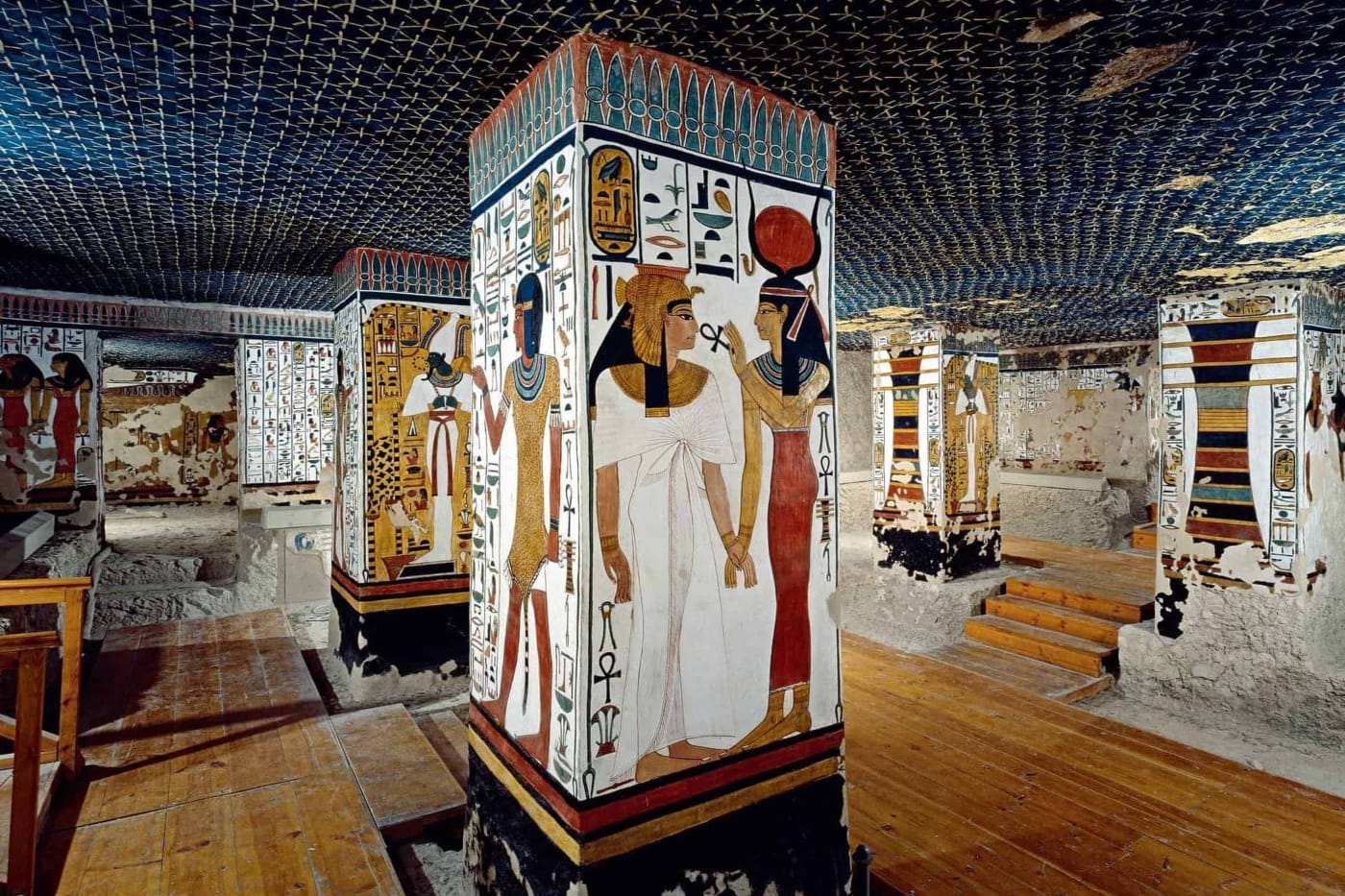
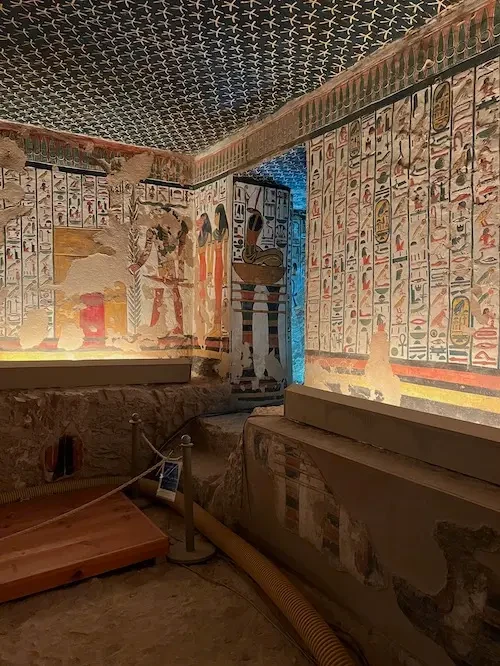
Yes, no Valley of the Queens tour is complete without stepping into (QV66). The colors here are so vivid they look like they were painted yesterday, not 3,200 years ago. We ensure our guests have the best experience by providing deep historical context before you step inside, as time inside this fragile masterpiece is strictly limited.
Often called the ‘Sistine Chapel of Ancient Egypt,’ the tomb of Queen Nefertari is the crown jewel of the Valley of the Queens. The entrance fee is separate and considered ‘premium,’ but it is the single most impressive interior in all of Egypt. Our private West Bank tours are timed perfectly to ensure you enter when the lighting is best and the site is at its quietest.
What You’ll See Inside QV66?
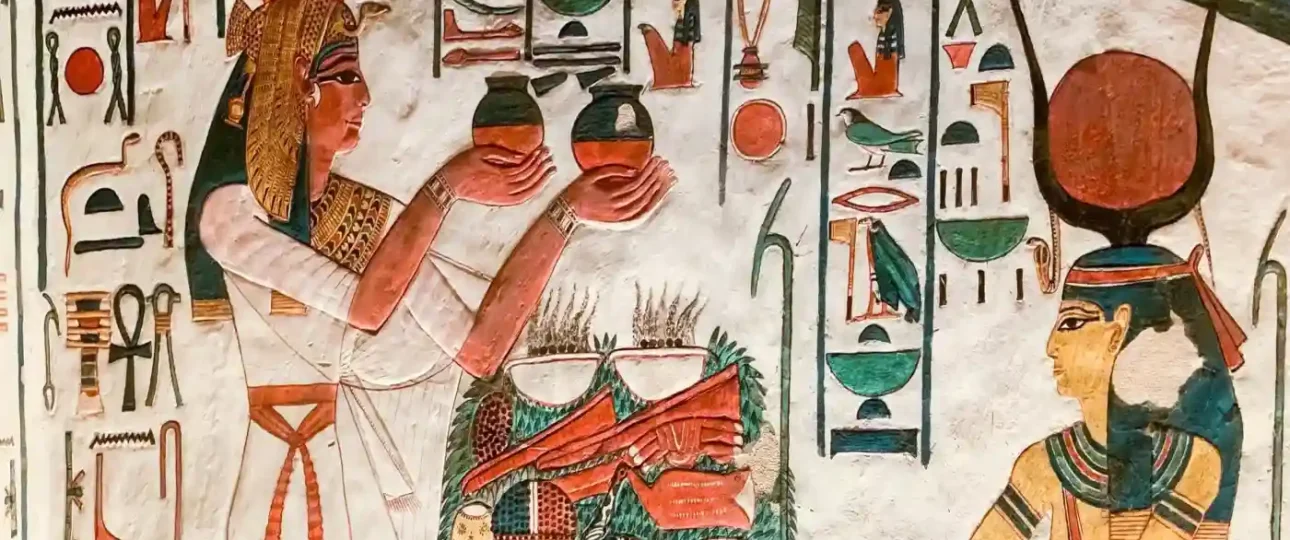
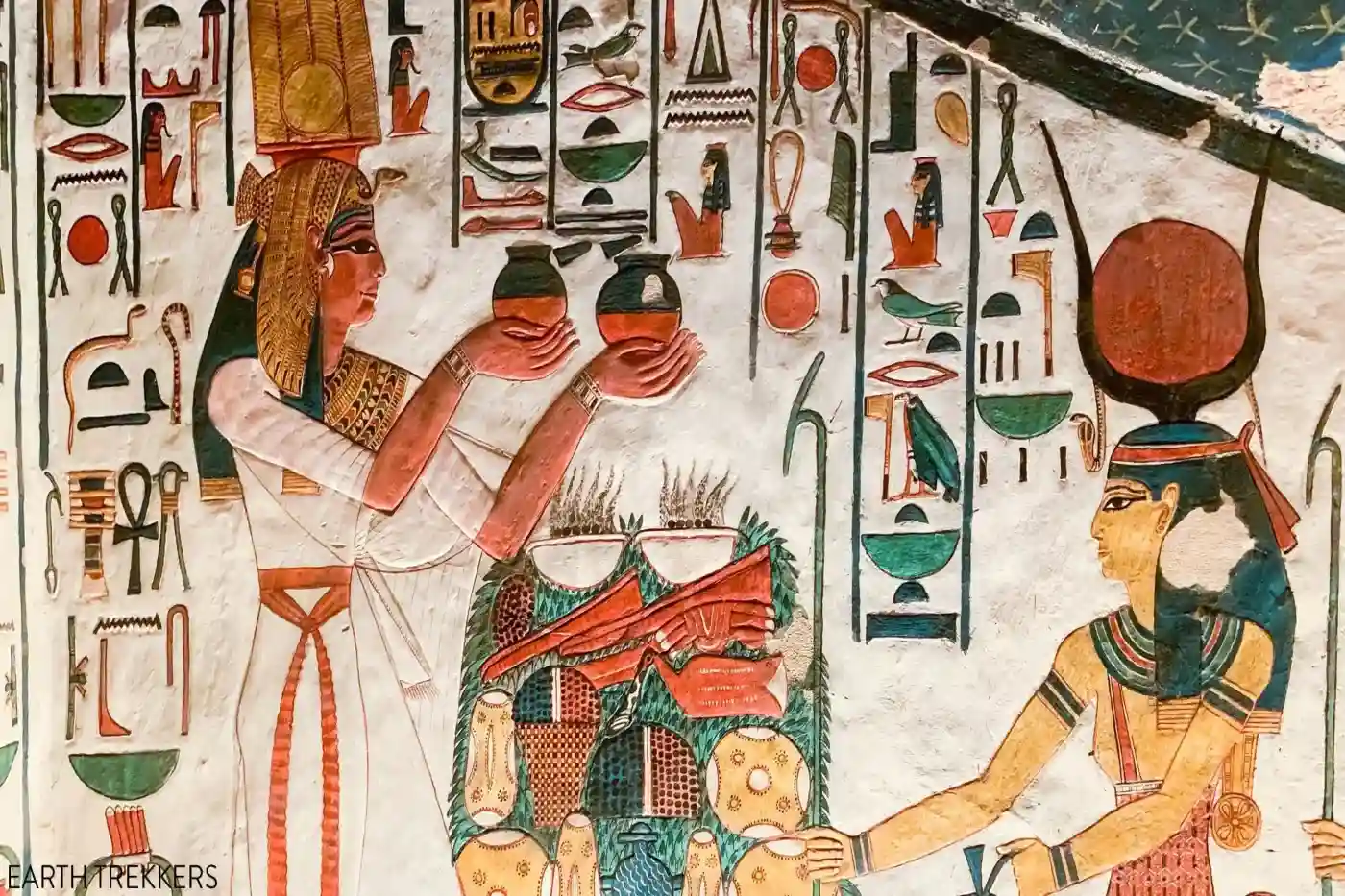
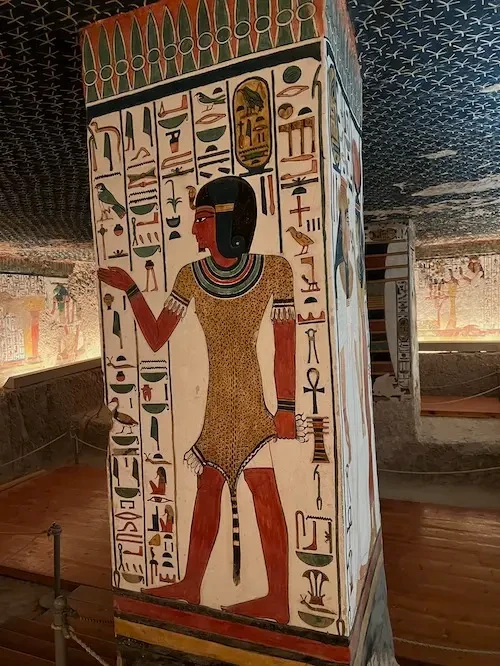
Queen Nefertari depicted in her tomb (QV66) — the finest example of ancient Egyptian funerary art
The walls are covered floor-to-ceiling in vivid scenes depicting Nefertari’s journey through the afterlife — guided by Osiris, Anubis, and Isis — rendered in pigments of cobalt blue, ochre gold, and lush green that somehow survived three millennia. Every inch is filled with hieroglyphic inscriptions drawn directly from the Book of the Dead, ensuring her safe passage to eternity.
What makes this tomb truly extraordinary is not just its preservation — it’s the humanity behind it. Nefertari is depicted not as a passive figure, but as an active participant in her own immortality. She plays senet, offers to the gods, and stands equal to the divine.
✨ Stand Inside QV66 — Before the Daily Limit Fills. Nefertari’s tomb allows only a limited number of visitors each day. Our guides time your arrival perfectly — best lighting, fewest people, maximum impact.Secure Your Spot on Our West Bank Tour
Other Notable Tombs in the Valley of the Queens
Beyond Nefertari, the valley contains several other beautifully decorated royal burial chambers — each telling a different chapter of New Kingdom Egypt.
Tomb of Prince Amunherkhepshef — Son of Ramesses III, this tomb features remarkably detailed paintings of the young prince being guided through the underworld by his father. The colors here are among the most vivid in the entire valley.
Tomb of Princess Titi — One of the larger tombs in the complex, decorated with scenes of divine beings and ritual offerings, believed to belong to a princess from the 20th Dynasty.
Tomb of Prince Kha-em-Waset — Another son of Ramesses III, providing a fascinating parallel view of royal burial customs and richly painted funerary scenes.
Tomb of Queen Tyti — Features elaborate depictions of Egyptian deities and serves as an excellent example of later New Kingdom funerary art.
Standing inside QV66 with our guide, Ahmed, was the single best hour of our entire Egypt trip. — Sarah M., UK ⭐⭐⭐⭐⭐
FAQ — the Valley of the Queens, Answered
Is the Valley of the Queens worth visiting?
Absolutely — especially if you have any interest in ancient Egyptian art, history, or archaeology. The Tomb of Queen Nefertari alone is considered one of the most beautiful rooms ever created by human hands. While the other open tombs — including those of Amunherkhepshef and Titi — are richly decorated and deeply moving.
Where exactly is the Valley of the Queens located?
The Valley of the Queens is situated on the West Bank of the Nile near Luxor in Upper Egypt. It is part of ancient Thebes and is easily reached from central Luxor via a short ferry crossing and a 10–15 minute drive into the desert hills.
Who is buried in the Valley of the Queens?
The valley served as the burial ground for royal wives, queens, princes, and princesses of the New Kingdom period (c. 1560–1130 BC). The most famous occupant is Queen Nefertari, wife of Ramesses II. The necropolis contains over 90 tombs belonging to various royal family members and high-ranking officials.
How much does it cost to enter the Valley of the Queens?
The standard entrance ticket starts at EGP 220, which grants access to the regularly open tombs. The Tomb of Queen Nefertari (QV66) requires a separate, higher-cost ticket. Entry is free for children under 6, senior Egyptian nationals (60+), and Egyptians with special needs.
Can I combine the Valley of the Queens with other Luxor sites in one day?
Yes — and it’s highly recommended. The valley pairs naturally with the Valley of the Kings, Hatshepsut’s Temple, the Colossi of Memnon, and Medinet Habu on a full West Bank day tour. Most organized tours from Luxor cover all of these in a single, well-paced itinerary.
Is photography allowed inside the tombs?
Photography rules change periodically. As of recent visits, mobile phone photography is generally permitted in the valley’s open tombs, but flash photography and tripods are restricted in certain chambers, especially QV66. Always confirm current rules at the site entrance.
Ready to Walk Among Queens?
The Valley of the Queens is a fragile site, and access to Nefertari’s tomb is strictly limited each day. Don’t leave your visit to chance. Our Luxor West Bank Private Tours are designed to sync perfectly with the best lighting and the lowest crowds.

 FAQ — the Valley of the Queens, Answered