

Who Was the Last Pharaoh of Egypt? The Queen Who Held Off Rome Until She Couldn’t
Who was the last pharaoh of Egypt, and why did an entire civilization’s rule end with one queen’s final decision? Her name still pulls more visitors to the Nile than almost any ruler who came before her.
The Short Answer: Cleopatra VII Held the Throne Until 30 BC
Cleopatra VII Philopator was the last pharaoh of Egypt, ruling until Rome annexed the country in 30 BC shortly after her death. She was the final ruler of the Ptolemaic dynasty, a Greek-speaking line that had governed Egypt for nearly three centuries.
- She was fluent in the Egyptian language, unlike most of her Ptolemaic ancestors, who never bothered to learn it.
- She presented herself as the living embodiment of the goddess Isis in official temple carvings.
- Her reign lasted 21 years, longer than most rulers in Egypt’s final pharaonic centuries.
Curious what her Egypt actually looked like? A Luxor day tour passes several sites she personally funded and restored.
The 8-Year-Old Co-Pharaoh Rome Erased From History
Cleopatra did not rule entirely alone at the end. Her son with Julius Caesar, known as Caesarion, was crowned co-pharaoh under the name Ptolemy XV years before her death, which makes the “last pharaoh” question more complicated than most travelers expect.
Octavian ordered Caesarion’s execution shortly after Cleopatra’s death, reportedly on the grounds that Rome could not tolerate too many rulers claiming Caesar’s name.
His brief co-reign is often left out of textbooks entirely, which is exactly why guides in Egypt still debate the real answer to this question.
Why Do People Still Call a Greek-Blooded Queen an Egyptian Pharaoh?
Cleopatra’s family, the Ptolemies, descended from one of Alexander the Great’s generals, not from native Egyptian bloodlines. The title of pharaoh came from the office itself, not from ethnicity, and every ruler who held Egypt’s throne inherited that title regardless of origin.
- She actively adopted Egyptian religious imagery to strengthen her legitimacy with local priests.
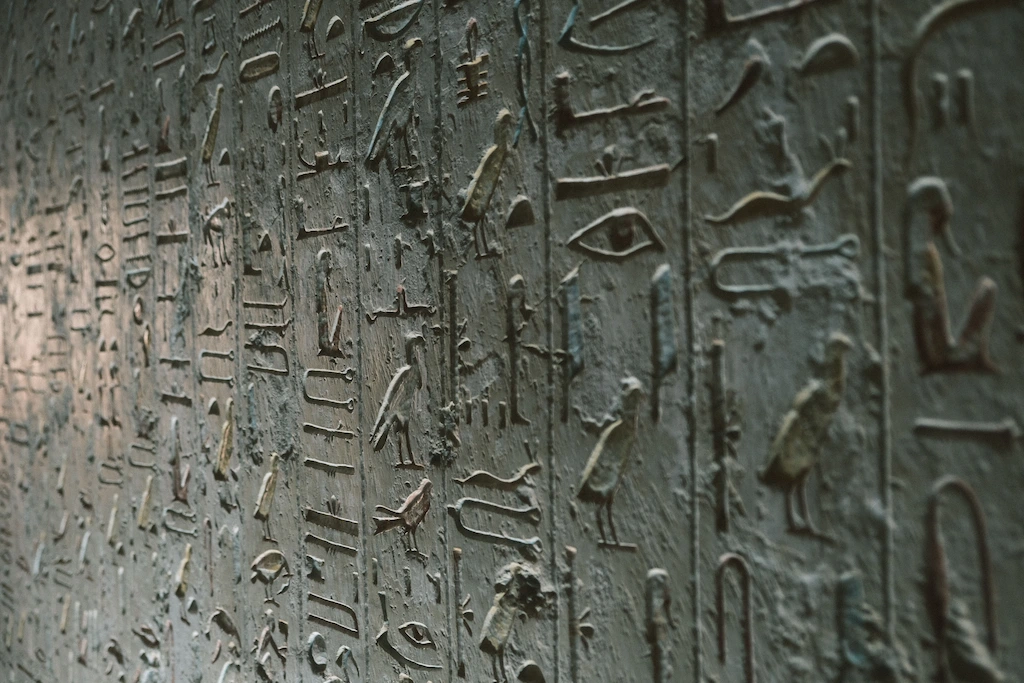
- Temple carvings show her performing rituals that had been reserved for native-born pharaohs for centuries.
Why Did Cleopatra’s Death Actually End Pharaonic Egypt?
Her death by suicide in 30 BC removed the last obstacle to Roman control, and Augustus folded Egypt into the Roman Empire as his own personal province within weeks.
Egypt’s Final Pharaonic Years, Year by Year
A handful of decisions across three decades decided how this story ended.
| Year (BC) | Event | Why It Mattered |
|---|---|---|
| 51 BC | Cleopatra VII crowned co-ruler | Began her reign at just 18 years old |
| 47 BC | Caesarion born to Julius Caesar | Created a direct Roman-Egyptian heir |
| 41 BC | Alliance with Mark Antony begins | Linked Egypt’s fate to Rome’s civil war |
| 31 BC | Battle of Actium | Antony and Cleopatra’s combined forces defeated |
| 30 BC | Cleopatra’s death, Egypt annexed | Ended pharaonic rule permanently |
Ready to walk through temples she once funded? Explore our curated Luxor day tours and see her legacy carved in stone.
What Actually Survives From Her Reign, Beyond the Legends?
Physical evidence tells a more grounded story than most films suggest.
- Surviving coins show a strong-featured profile, closer to political branding than romantic portraiture.
- A papyrus document bearing the Greek phrase for “let it be done” is widely believed to carry her own approval mark, one of the closest things historians have to her handwriting.
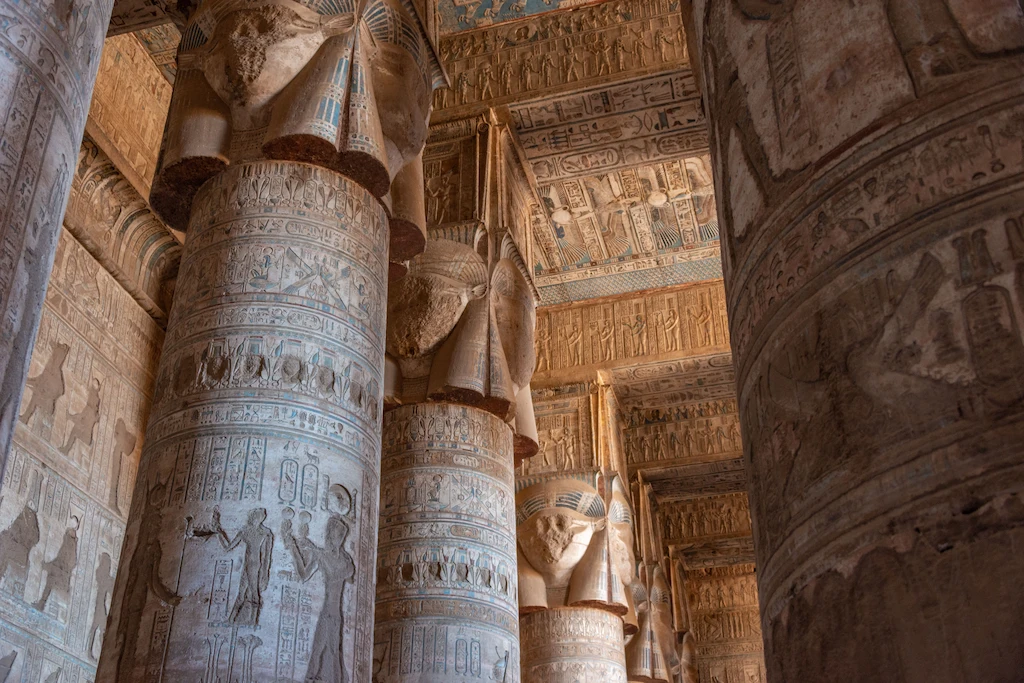
- Temple reliefs at Dendera remain the clearest large-scale depiction of her linked directly to Egyptian, rather than Greek, artistic tradition.
None of this matches the glamorous image most travelers arrive expecting, and that gap is often the most memorable part of seeing the real sites in person.
Ancient historians such as Plutarch and Cassius Dio wrote about her decades or centuries after her death, filtered through Roman politics that had every reason to paint her as a foreign threat rather than a working head of state.
Modern Egyptology increasingly reads those accounts against the archaeological record instead of taking them at face value.
Where Can You Still Stand Where Cleopatra Once Stood?
Her image survives on temple walls more clearly than almost any other Ptolemaic ruler, and a few sites in particular still show her face today.
- Dendera Temple: a rare relief shows Cleopatra alongside Caesarion, reachable on a day trip from Luxor.
- Philae Temple in Aswan: several additions from the late Ptolemaic period are linked to her family’s dedications.
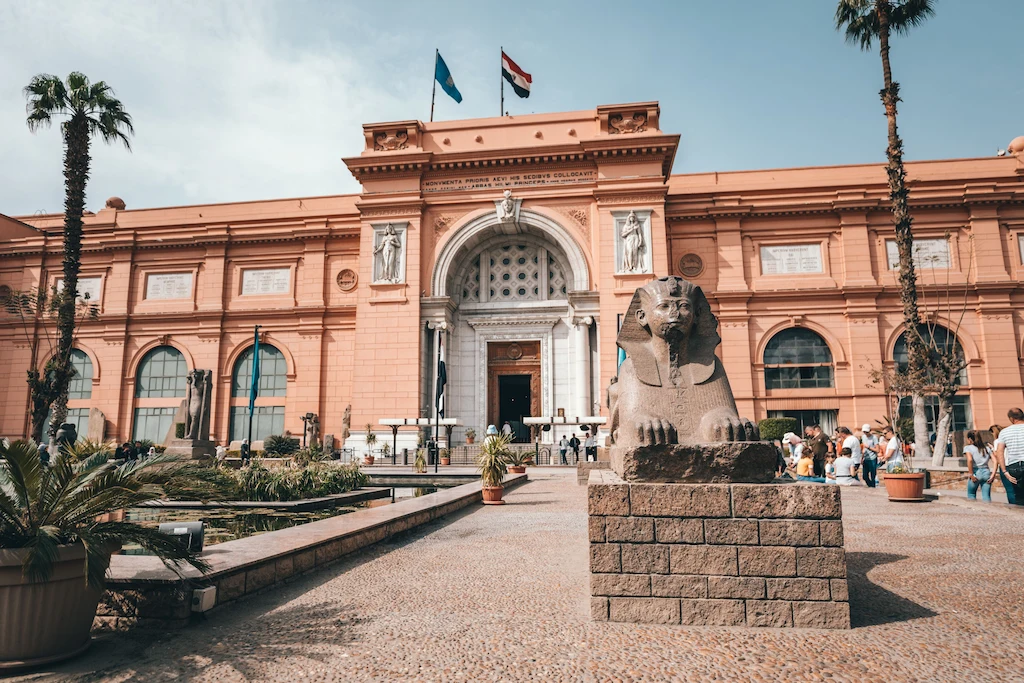
- Cairo’s Egyptian Museum: houses Ptolemaic-era artifacts that place her reign in context beside far older pharaonic treasures.
Since the Ptolemies also controlled trade routes down toward the Red Sea, many travelers pair this history-heavy route with a few relaxed days in Hurghada afterward.
Field note from a Qena-area guide: “Everyone expects a Hollywood face at Dendera. What actually stops people is the hieroglyphs beside it, her real name in a cartouche, carved by people who watched her reign end.”
Ready to sail where her final years played out? Book your Aswan & Luxor Nile Cruise today and see the river she ruled until the very end.
For a deeper academic look at her lineage and reign, Ancient Egypt Online’s dedicated profile is a well-sourced starting point.
Alexandria vs. Luxor and Aswan: Where Egypt’s Rulers Actually Lived
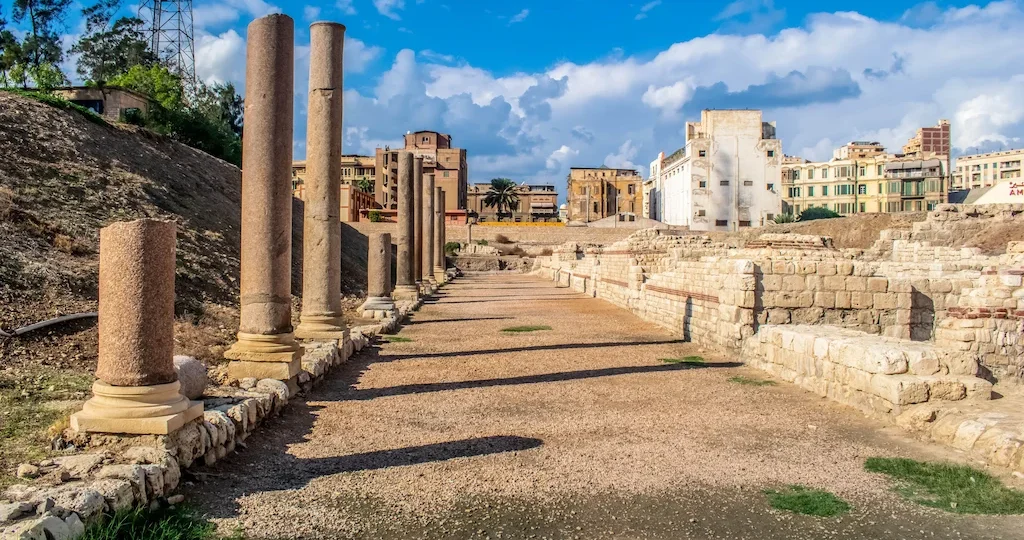
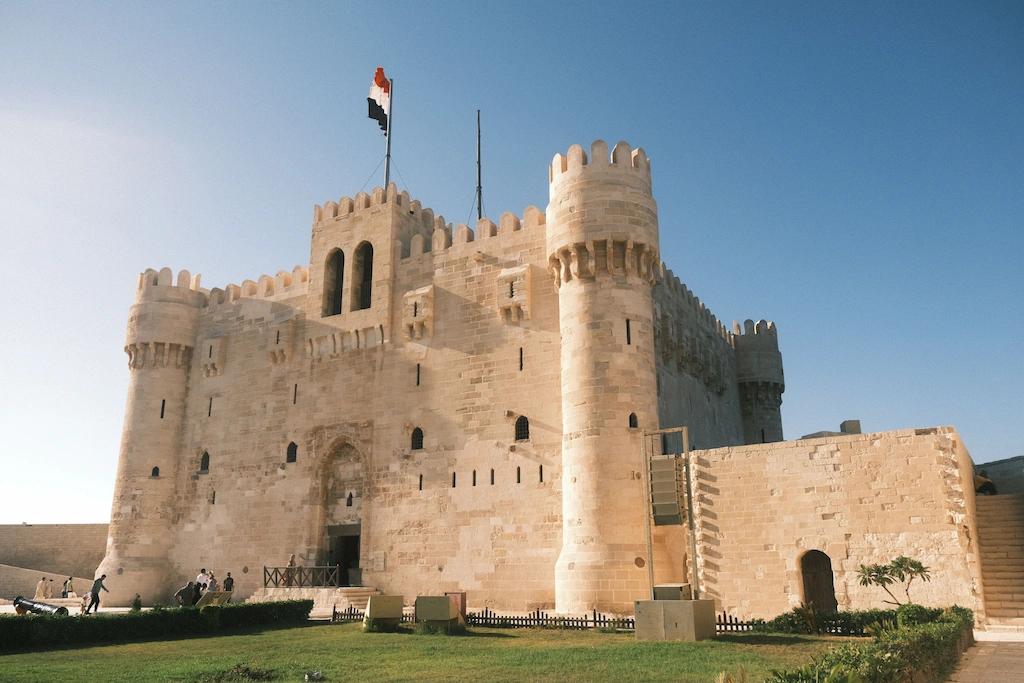
Cleopatra ruled from Alexandria, a Greek-built harbor city her Ptolemaic ancestors raised on the Mediterranean coast, centuries after Egypt’s native pharaohs had already built their power base far upriver.
Ahmose I, who founded the New Kingdom, governed from Thebes, the city travelers now know as Luxor, and Thutmose III expanded Egypt’s empire from that same base before Ramses II raised the temples that still draw visitors today, some as far south as Aswan.
| Ruler | Power Base | What Survives Today |
|---|---|---|
| Cleopatra VII | Alexandria, on the Mediterranean coast | Sunken harbor remains and the citadel near her still-undiscovered tomb |
| Ahmose I | Thebes, modern-day Luxor | Tomb and temple traces marking the start of the New Kingdom |
| Thutmose III | Thebes, modern-day Luxor | Karnak Temple’s major expansions |
| Ramses II | Thebes, with monuments as far south as Aswan | The Ramesseum and temples travelers still visit near Aswan today |
Travelers who want to feel that contrast in person often pair a few coastal days near Alexandria with a Luxor day tour and an Aswan getaway, tracing how Egypt’s center of power shifted from the Nile’s upper reaches to the Mediterranean over three thousand years.
Frequently Asked Questions
Who was the last pharaoh of Egypt, Cleopatra or her son?
Most historians credit Cleopatra VII as the last pharaoh of Egypt, though her son Caesarion briefly held the co-pharaoh title before Rome had him killed weeks after her death.
Did Cleopatra speak Egyptian?
Yes. She was one of the only Ptolemaic rulers fluent in the Egyptian language, setting her apart from nearly three centuries of Greek-speaking predecessors.
What happened to Cleopatra’s other children?
Her three children with Mark Antony survived and were raised in Rome under Augustus’s household; none of them ever returned to rule Egypt.
Is Cleopatra’s tomb still lost today?
Yes. Despite decades of searching near Alexandria and Taposiris Magna, archaeologists have not confirmed the location of her burial.
Final Thoughts
Cleopatra VII’s death in 30 BC didn’t just end one queen’s reign, it closed roughly 3,000 years of pharaonic rule in a single season. Standing at Dendera or Philae today puts that ending in physical perspective, carved centuries before Rome ever arrived.
Ready to trace her story yourself? Start planning your Egypt itinerary with Nile Travel Machine today.
