Egypt Solar Eclipse 2027: 8-Day Dahabiya Cruise with Totality Over Luxor

Overview
On Monday 2 August 2027 the moon’s shadow crosses southern Spain, North Africa and Egypt, and the strip where totality lasts longest runs almost exactly over Luxor. This Egypt solar eclipse 2027 cruise is built around that one afternoon: you sail from Aswan to Luxor over the preceding week, and on eclipse day you are moored on the Theban west bank with the sky to yourself.
Totality on the Egypt solar eclipse 2027 runs for more than six minutes over Luxor. For comparison, the 2017 eclipse across the United States gave most viewers under three, and the 2024 North American eclipse gave about four. Eclipses this long are rare; the next one over Egypt after 2027 is generations away.
The NASA eclipse listing confirms the date and the path across Egypt. What it cannot tell you is where to stand, and that is the part we handle.
Day-by-Day Itinerary
Day 1 — Arrive in Aswan: Philae, the High Dam and the Unfinished Obelisk
Your Egyptologist meets you at Aswan airport and brings you aboard. The afternoon covers the island Temple of Isis at Philae, reached by private motorboat, the High Dam that made Lake Nasser, and the Unfinished Obelisk still lying half-cut in the granite quarry. First dinner on deck.
Day 2 — Abu Simbel and the Nubian villages
An early start south across 280 kilometres of desert to Abu Simbel, where Ramses II cut two temples into a cliff and a UNESCO team later sawed them into blocks and rebuilt them higher to escape the rising lake. Back on board by evening, with time among the Nubian villages on the return.
Day 3 — Sailing north: Kom Ombo and Edfu
Sailing proper. The dahabiya moves with the current and the wind, and the banks pass at walking pace. You stop at Kom Ombo, the double temple shared between Sobek and Haroeris, and at Edfu, the best preserved temple in Egypt.
Day 4 — Esna lock, Karnak and Luxor Temple
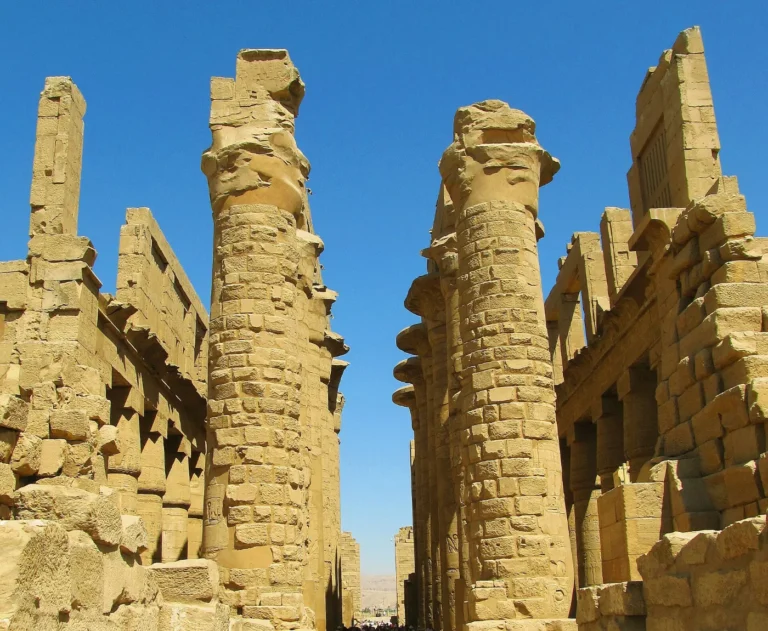
Through the Esna lock and on to Luxor. The afternoon is the east bank: Karnak, the largest religious complex ever built, and Luxor Temple at the end of the Avenue of Sphinxes.
Day 5 — Valley of the Kings, Hatshepsut and the eclipse briefing
The Theban west bank: the painted tombs of the Valley of the Kings and the terraces of Hatshepsut. In the evening your guide runs the eclipse briefing — where the boat will moor, the exact contact times, how to use the solar glasses safely, and what to expect from each phase.
Day 6 — Eclipse day: totality over Luxor, 2 August 2027
Totality. First contact comes mid-morning and the partial phase runs for over an hour; the light goes strange and flat long before anything looks obviously wrong. Around 1:10 in the afternoon the last sliver goes, the corona opens out, and for more than six minutes the sky over Luxor is dark enough for planets. Then the diamond ring, and it is over. The rest of the day is yours on deck.
Day 7 — Dendera and the zodiac ceiling of Hathor
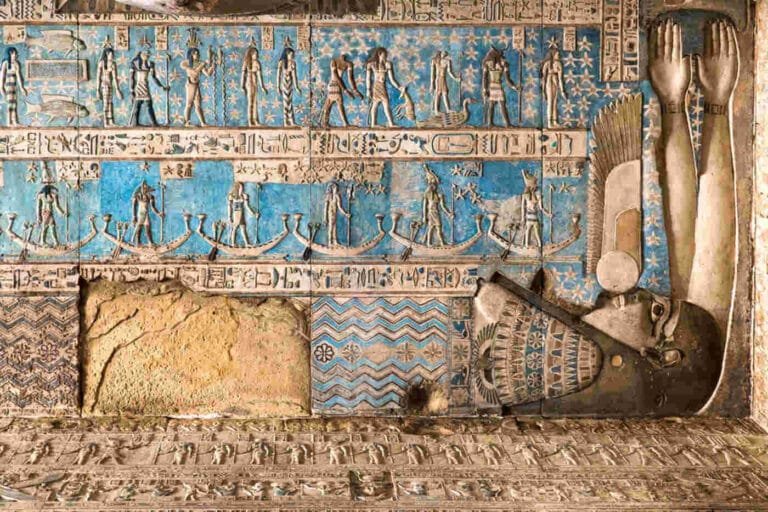
North to Dendera, the temple of Hathor, and up the stairs to the roof chapel. The famous zodiac ceiling here is a plaster copy — the original was cut out and taken to Paris in 1821 — but the painted main ceiling below it is intact and the colour is astonishing.
Day 8 — Disembarkation in Luxor
Breakfast on board, then disembarkation in Luxor and a transfer to the airport or your hotel. We can extend your stay, add a hot-air balloon at sunrise, or connect you onward to Cairo.
Highlights
- Totality on 2 August 2027 — over six minutes, from a dahabiya deck at Luxor
- Luxor sits within minutes of the point of greatest duration on this eclipse path
- A private dahabiya, not a 150-cabin cruise ship, moored where we choose
- Certified solar viewing glasses for every guest, included
- Abu Simbel, Philae, Kom Ombo, Edfu, Karnak, the Valley of the Kings and Dendera
- 7 nights full board with a private Egyptologist on every excursion
- One direct WhatsApp contact from booking to disembarkation
Included & Excluded
- 7 nights full board in an en-suite cabin aboard a private dahabiya
- Eclipse-day viewing plan with a moored position on the Theban west bank
- Certified solar viewing glasses for every guest
- Private certified Egyptologist on every shore excursion
- Entrance fees to Philae, Abu Simbel, Kom Ombo, Edfu, Karnak, Luxor Temple, the Valley of the Kings, Hatshepsut and Dendera
- Air-conditioned transfers throughout, including the Abu Simbel road trip
- Bottled water during excursions
- 24/7 assistance from our local team
- All taxes included
- International and domestic flights (available on request)
- Egypt entry visa
- Drinks on board
- Optional hot-air balloon over Luxor
- Gratuities and tips
- Anything not mentioned in the Included list
Why Choose Us
Local Egyptologist experts
Every trip is guided by a licensed Egyptologist who knows the sites in depth, not just a driver.
Private, not group
Your itinerary, your pace — no joining a bus full of strangers.
Honest, upfront pricing
The price you are quoted is the price you pay, with no hidden extras.
Real local support
A local Luxor-based team you can reach directly by phone or WhatsApp, before and during your trip.
Frequently Asked Questions
When is the Egypt solar eclipse 2027?
Monday 2 August 2027. The partial phase begins in the late morning and totality over Luxor falls at around 1:10 PM local time, lasting more than six minutes.
Why Luxor rather than anywhere else on the path?
Two reasons. Luxor lies close to the point of greatest duration, so totality there is among the longest anywhere on the 2027 track. And early August in Upper Egypt is about as close to a cloud guarantee as this planet offers.
How long does totality last?
Over six minutes at Luxor. That is roughly double the 2017 American eclipse and half again as long as 2024 — long enough to look at the corona properly rather than fumbling with a camera.
What is included in the price?
Seven nights full board in an en-suite cabin, the eclipse-day viewing plan and mooring position, certified solar glasses, a private Egyptologist on every excursion, all site entrance fees including Abu Simbel, air-conditioned transfers and 24/7 support.
What is not included?
International and domestic flights, the Egypt entry visa, drinks on board, the optional sunrise balloon over Luxor, and gratuities.
How far in advance should I book?
As far as you can. Dahabiyas carry a handful of cabins and the 2027 path has been on eclipse chasers’ calendars for a decade. If you are reading this, the answer is now.
Do I need special glasses?
Yes, for every part of the eclipse except totality itself. Certified solar viewing glasses are provided for each guest and your guide will make the safe window unmistakable.
How do I book?
Contact us by email, phone or WhatsApp with your party size. We confirm cabin availability and send a quote with no obligation.