

Coffee Shops in Egypt: The Ultimate Guide to Ahwa Balady Culture 2026
Last updated: April 2026 | Written by Ahmed Abdo – Nile Travel Machine Local Experts
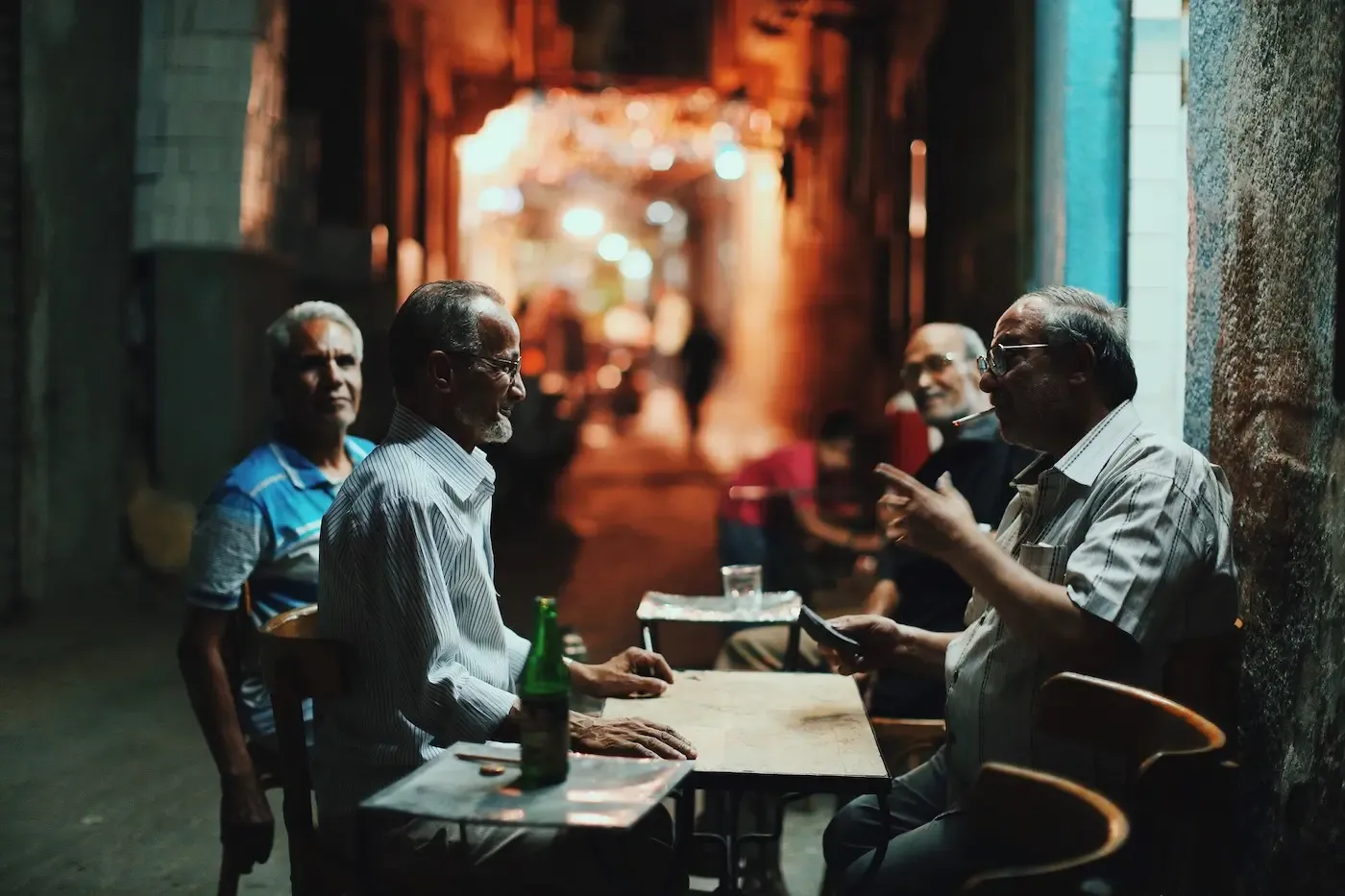
Walk into any side-street in Cairo, Luxor, or Aswan, and you’ll find it — a row of simple wooden chairs, the smoky curl of a shisha pipe, the rhythmic clack of backgammon dice, and the sweet aroma of fresh mint tea. Coffee shops in Egypt, known locally as “Ahwa Balady,” are not just places to get a caffeine fix. They are the living, breathing soul of Egyptian street culture — and no visit to Egypt is complete without sitting in one.
This guide covers everything a traveler needs to know: what an Egyptian ahwa actually is, the best drinks to order, where to find authentic spots in Cairo, Luxor, and Aswan, and the unwritten rules that will make you feel like a local from the first sip.
What Are Balady Coffee Shops in Egypt? (And Why They’re Nothing Like a Café Back Home)
The word *”Ahwa”* literally means coffee in Arabic — but Egyptian coffee shops are far more than their name suggests. For centuries, these establishments have served as the social backbone of Egyptian society: political forums, literary salons, neighborhood gathering spots, and the setting for some of Egypt’s greatest stories.
Nobel Prize-winning author Naguib Mahfouz was famously a regular at Cairo’s historic ahwas, weaving their atmosphere into the fabric of Egyptian literature. Today, that same spirit lives on in thousands of Ahwas across the country — from the grand old cafes of Downtown Cairo to the humble plastic-chair setups along the Luxor Corniche.
What makes a Balady coffee shop different from a modern café?
Unlike a Western coffee shop where people work silently on laptops, the Ahwa Balady is intentionally loud, communal, and timeless. The experience is about slowing down — something that has become almost revolutionary in the modern world.
What Does “El Ahwa” Mean in Arabic?
“El ahwa” (الأهوة) is the Egyptian Arabic word for coffee — but locals use it to mean two things at once: the drink itself, and the coffee shop where it is served. When an Egyptian says “let’s go to the ahwa,” they mean the neighborhood café, not just a cup of coffee. That double meaning explains why a Balady coffee shop in Egypt feels less like a modern cafe and more like a second living room for the whole street.
The Best Traditional Coffee Shops in Egypt: City by City
Below is the one that matters most to real travelers who are looking for.
Ahwa Culture in Cairo
Cairo is the heartbeat of Egyptian coffee shop culture. The best areas to experience an authentic ahwa include:
- Khan el-Khalili (Islamic Cairo): The most atmospheric option for first-time visitors. Ahwas here have operated for generations, surrounded by medieval architecture and the hum of the bazaar. Look for small, unmarked doorways — the more modest the entrance, the more authentic the experience. This area is ideal for a Cairo street culture experience that goes far beyond the usual tourist trail.
- Downtown Cairo (Wust el-Balad): The ahwas of Talaat Harb Street and the surrounding area attract a mix of artists, students, and old-timers. These are excellent spots to observe the “Lamma” (the gathering) at its most vibrant.
- Zamalek: A more relaxed, neighborhood feel. The ahwas here are popular with families and female travelers who want an authentic but comfortable environment.
💡 On our Cairo Cultural Street Tour, we take you to a working ahwa in Khan el-Khalili that has been operating since the 1940s — far from the tourist trail, and completely unforgettable.
Ahwa Culture in Luxor
Luxor’s ahwas offer something Cairo’s cannot: the backdrop of ancient temples across the Nile. The best spots are found along the Luxor Corniche on the East Bank, where locals gather each evening as the sun sets behind the West Bank mountains. For tourists staying in Luxor, sitting at a riverside ahwa after a day of temple visits is one of the most quietly magical experiences in Egypt.
Ahwa Culture in Aswan
Aswan has a slower, more Nubian rhythm to its ahwa culture. The coffee shops along the Corniche el-Nil in Aswan face directly onto the Nile and Elephantine Island. Here, mint tea comes stronger, the shisha burns sweeter, and the evenings stretch on until late. Many Aswan ahwas are run by Nubian families and carry a distinct cultural flavor unique to Upper Egypt.
Read more: Yaccub: Luxor’s Best Coffee Shop Experience
What to Order: A Guide to Traditional Egyptian Ahwa Drinks?
Forget your standard latte — the menu at a Balady coffee shop is a journey through genuinely local flavors. Here’s exactly what to order and how to order it:
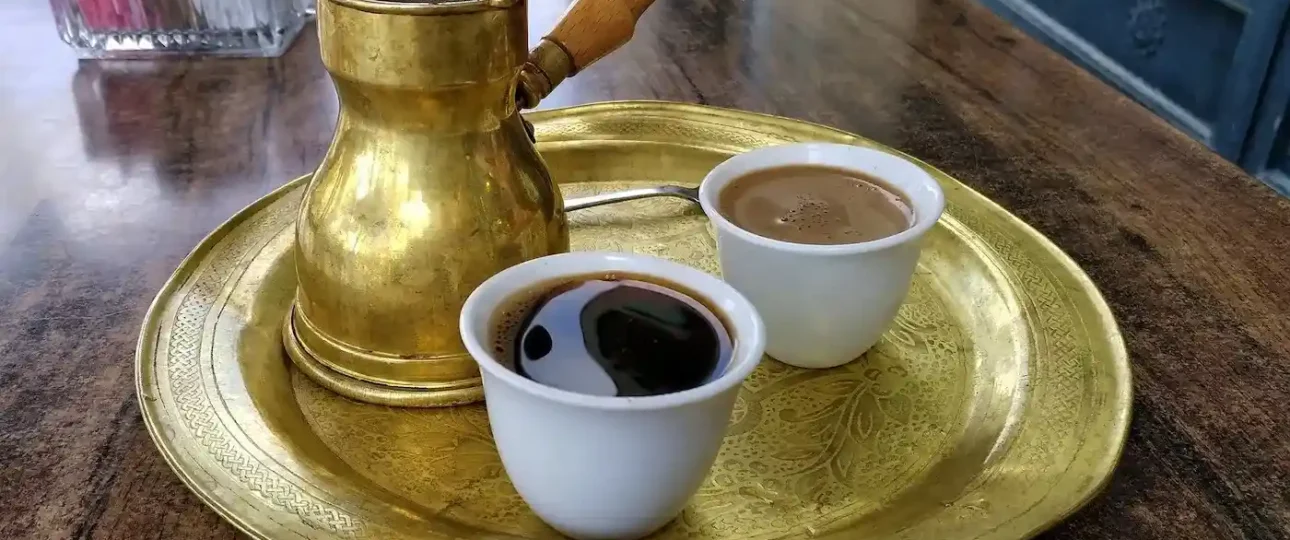
Egyptian Coffee (Ahwa)
The signature drink. Similar to Turkish coffee, brewed in a small copper pot called a *Kanaka* and served in a small cup. When ordering, you must specify your sugar preference:
- Sada — no sugar (bitter and intense)
- Mazbout — medium sugar (the most popular, meaning “just right”)
- Ziyada — sweet (heavily sweetened)
This is one of the most authentic things to drink in Egypt, and the experience most travelers remember longest.
Shay bel Ne’na’ (Mint Tea)
Fresh mint tea served in a tall glass, vibrant red from the strong black tea, topped with a generous bunch of fresh mint. It arrives hot, sweet, and incredibly aromatic. Order it “bel laban” (with milk) for a creamier version.
Karkadeh (Hibiscus Tea)
A deep crimson tea made from dried hibiscus flowers, served either piping hot in winter or over ice in summer. It has a sharp, tart flavor that is instantly refreshing. Karkadeh is one of Egypt’s most beloved drinks and pairs perfectly with the evening ahwa atmosphere.
Sahlab
A winter specialty — a thick, creamy hot drink made from orchid flour, topped with cinnamon, crushed nuts, and shredded coconut. Rich and warming, it’s the Egyptian equivalent of a hot chocolate on a cold evening.
Snacks to Accompany Your Drinks
Traditional ahwas don’t serve full meals. Instead, expect light accompaniments: roasted pumpkin seeds (leb), salted nuts, fresh dates, or small plates of oriental sweets from a nearby shop.
The Shisha (Waterpipe) Experience at an Egyptian Ahwa
No guide to Egyptian coffee shop culture is complete without addressing the shisha. Emerging in the 15th century and taking its name from the Persian word for glass (*shishe*), the waterpipe is one of the most iconic symbols of ahwa life.
At an Egyptian ahwa, shisha is ordered in a variety of flavors — apple, grape, mint, and mixed fruit being the most popular. The waiter manages the coals throughout your session, ensuring a consistent smoke.
Important note for travelers: You are absolutely not required to smoke shisha to sit at an ahwa. Many locals visit purely for the tea, the coffee, or a game of backgammon. Wave it away when offered and order your drink — no explanation needed.
Tawla, Dominoes & the Art of the Egyptian “Lamma”
The true magic of coffee shops in Egypt is not what you drink — it’s the *”Lamma,”* the gathering. The Ahwa is fundamentally a social institution, and the games played there are part of its language.
- Tawla (Backgammon): The unofficial national game of Egyptian ahwas. Played with speed, noise, and considerable drama — the sound of dice and pieces hitting the board is the percussion of every coffee shop in Egypt. As a visitor, don’t be shy: locals genuinely enjoy teaching tourists the rules.
- Domino: Popular in Upper Egypt ahwas, particularly in Luxor and Aswan. Games are played in pairs and can last hours.
- Kotshina (Towla Cards): A local card game that becomes intensely competitive in the hands of regulars.
The atmosphere is loud, welcoming, and inclusive. As a foreign visitor, you are not an outsider — you are a guest, and Egyptian hospitality ensures you’ll be treated as one.
Experience an Authentic Ahwa on Your Egypt Trip
Reading about Egyptian coffee shop culture is one thing. Sitting inside one — tea in hand, backgammon dice rolling, the evening call to prayer echoing across the street — is entirely another.
At Nile Travel Machine, our local guides know ahwas that no guidebook has ever listed. We incorporate authentic ahwa stops into our cultural tours across Cairo, Luxor, and Aswan — turning a simple tea break into a genuine cultural exchange.
👉 View Our Luxor Day Tours — end your temple visit with a sunset tea on the Corniche.
Frequently Asked Questions About Coffee Shops in Egypt
Are coffee shops in Egypt safe for tourists?
Completely. Traditional Egyptian ahwas are community-oriented spaces where locals look out for one another. The hospitality is genuine — you are far more likely to be invited into a friendly conversation than to feel uncomfortable. Areas like Khan el-Khalili, Zamalek, and the Corniche in Luxor and Aswan are particularly welcoming to visitors.
Can women visit traditional Balady coffee shops?
Yes. While the traditional ahwa was historically male-dominated, this has shifted significantly in tourist-friendly areas. In Downtown Cairo, Zamalek, Khan el-Khalili, Luxor Corniche, and Aswan Corniche, women, couples, and families are regularly seen and warmly welcomed. Solo female travelers report feeling comfortable and genuinely welcomed.
What is the best time to visit an Egyptian Ahwa?
Early evening after sunset is peak ahwa time — the streets cool down, the social energy rises, and the “Lamma” is at its most alive. During Ramadan, ahwas stay open and vibrant until 3-4am, creating a uniquely magical atmosphere that is worth experiencing if your trip coincides with the holy month.
How much does it cost to sit at an Egyptian Ahwa?
An Egyptian coffee (ahwa) typically costs from 25 Egyptian pounds. A glass of mint tea runs similarly. A shisha session ranges from 50-150 EGP, depending on the area and quality. In tourist areas, prices are slightly higher but still extremely affordable by international standards.
Is there etiquette I should follow?
Egyptian ahwa culture is relaxed, but a few things help: greet with a simple “Salam” or “Hello” when you sit down; a small tip (baksheesh) for the waiter is appreciated but not required; and if someone invites you to play backgammon, accept — it’s one of the most genuine cultural experiences Egypt offers.
Nile Travel Machine is an Egypt-based tour operator specializing in authentic cultural and historical experiences across Cairo, Luxor, Aswan, and the Red Sea. Our guides are local Egyptians who grew up in these streets — not tour scripts.
See All Egypt Tours, Contact Our Team, and Book a Custom Itinerary
