
Habu Temple Day Trip: The West Bank’s Most Dramatic Ancient Site
Want to fill a free day in Luxor with something genuinely unforgettable? A Habu Temple day trip delivers ancient drama, flawless preservation, and the kind of stories no guidebook captures fully. Here’s everything you need to know — and why this temple keeps stopping travelers cold.
What Exactly Awaits You on a Habu Temple Day Trip?
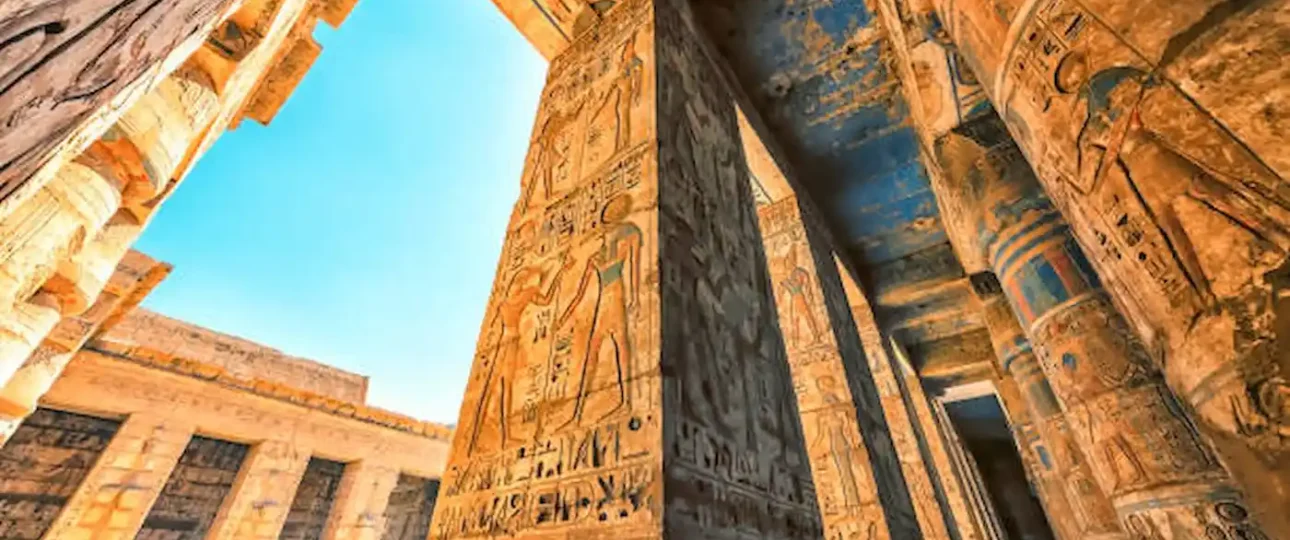
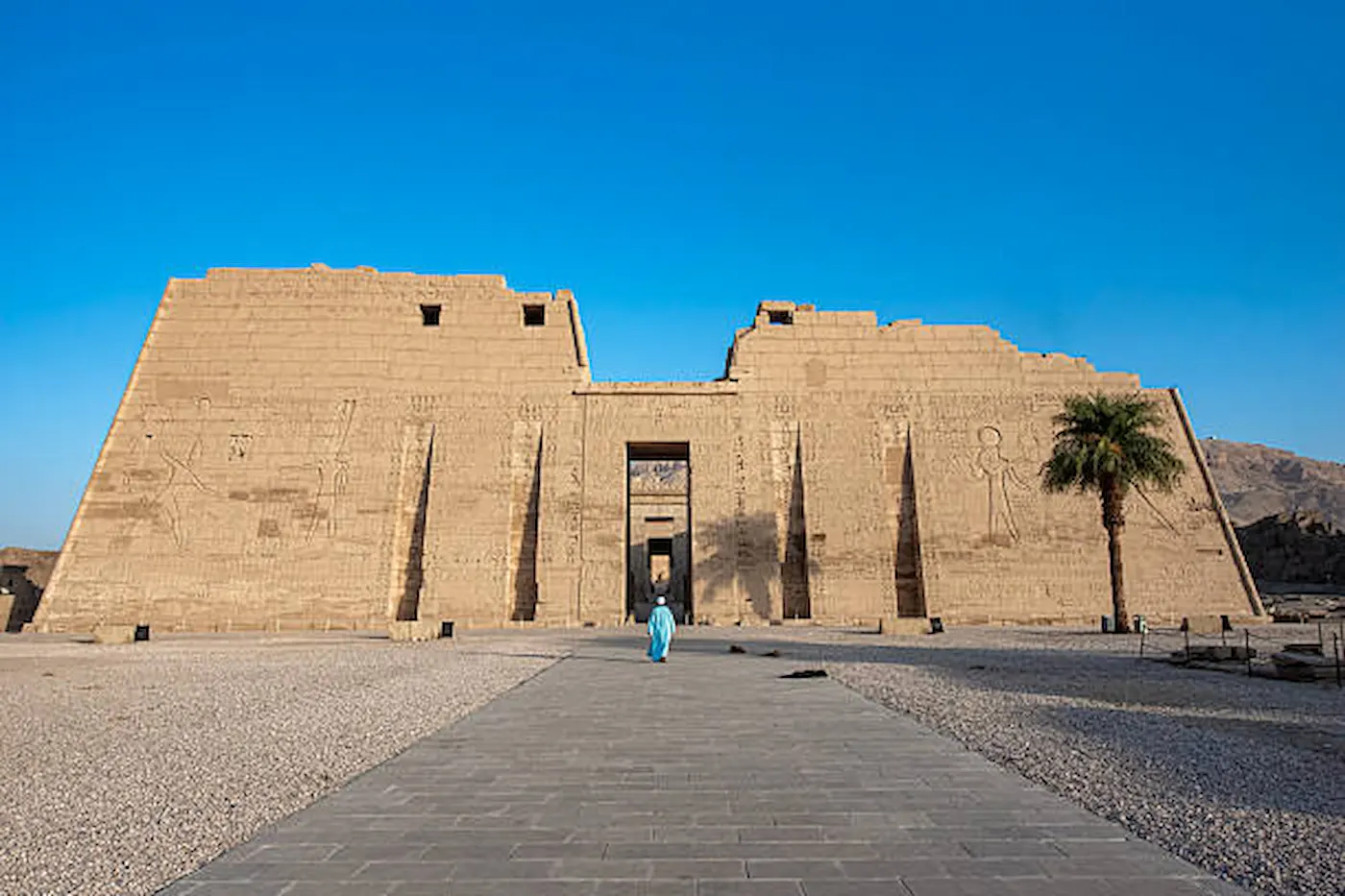
Medinet Habu — the Mortuary Temple of Ramesses III — sits on Luxor’s West Bank and covers more than 7,000 square meters of carved stone. Built around 1175 BC, it remains one of the most completely preserved religious complexes in Egypt.
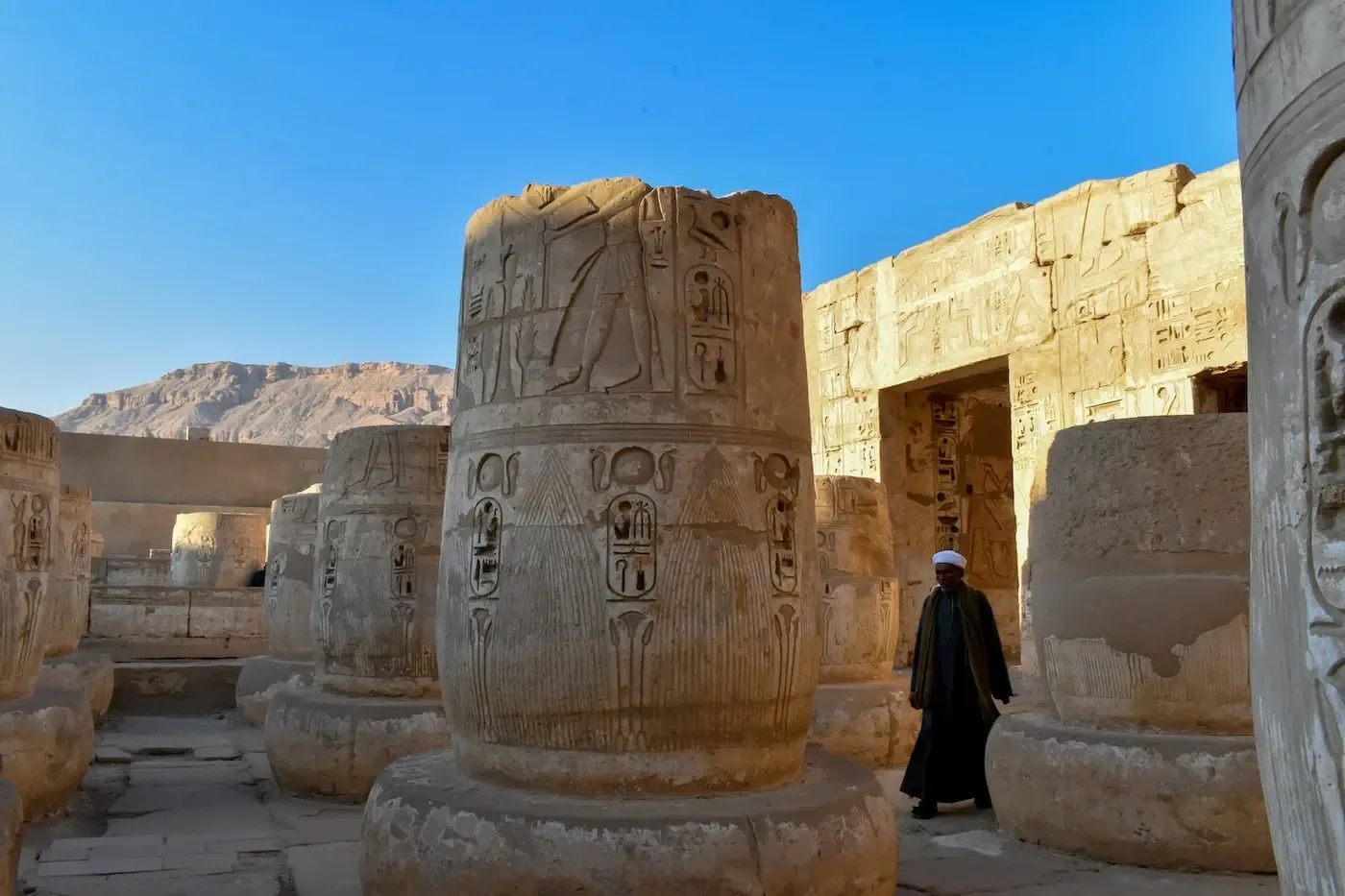
Unlike many sites where imagination must fill the gaps, here the colors, hieroglyphs, and reliefs speak for themselves. A single morning inside its walls covers military history, royal intrigue, ancient economics, and theology — all at once.
Planning a broader journey through Upper Egypt? Explore our curated Luxor tours and combine Medinet Habu with the West Bank’s greatest sites in one seamless day.
🏛️ Ready to walk where pharaohs once ruled?
Book your Luxor West Bank Day Tour and discover Medinet Habu with an expert Egyptologist guide — no planning stress, just ancient wonder.
The Battle Scenes That Rewrote What We Know About Bronze Age Warfare
The outer walls of Habu Temple display the most detailed naval and land battle reliefs ever carved in ancient Egypt. These massive scenes document Ramesses III’s campaigns against the Sea Peoples — mysterious raiders who destabilized the entire Eastern Mediterranean around 1177 BC. Scholars still debate their exact origins, but these carvings remain the clearest visual record of that cataclysmic conflict.
What makes these reliefs extraordinary is their specificity. Ship designs, weapon types, troop formations, and even the expressions of captives are rendered with documentary precision. Egyptologists have cross-referenced these images with Linear B texts from Greece and Hittite archives to reconstruct one of history’s most consequential military episodes.
- The naval battle relief is the only known ancient Egyptian depiction of sea combat.
- Enemy warriors are shown with feathered helmets — a detail confirmed by other Bronze Age sources.
- The land battle sequence stretches across the entire first pylon’s north face.
- Hieroglyphic captions beside each scene function as a running military dispatch.
The Harem Conspiracy Carved Into Stone — A True Royal Thriller
Possibly the most gripping detail a Habu Temple day trip reveals is the record of a real assassination plot. A group of royal wives, palace officials, and courtiers conspired to kill Ramesses III and place a secondary prince on the throne. The conspiracy was uncovered, and the subsequent trial — known today as the Judicial Papyrus of Turin — is one of ancient Egypt’s most remarkable legal documents.
“Standing in the royal palace annex and knowing the very rooms where this drama unfolded — that moment never gets old,” says Ahmed, a senior Egyptologist guide who has worked the West Bank for over fifteen years. “Visitors always think they know Egyptian history, and then Medinet Habu adds a layer they never expected.”
Recent CT scans of a mummy identified as Ramesses III revealed a cut throat — physical evidence that the plot may have partially succeeded before being suppressed. History, conspiracy, forensics, and stone relief converge in one place.
The Migdol Gate: Egypt’s Only Syrian-Style Fortress Entrance
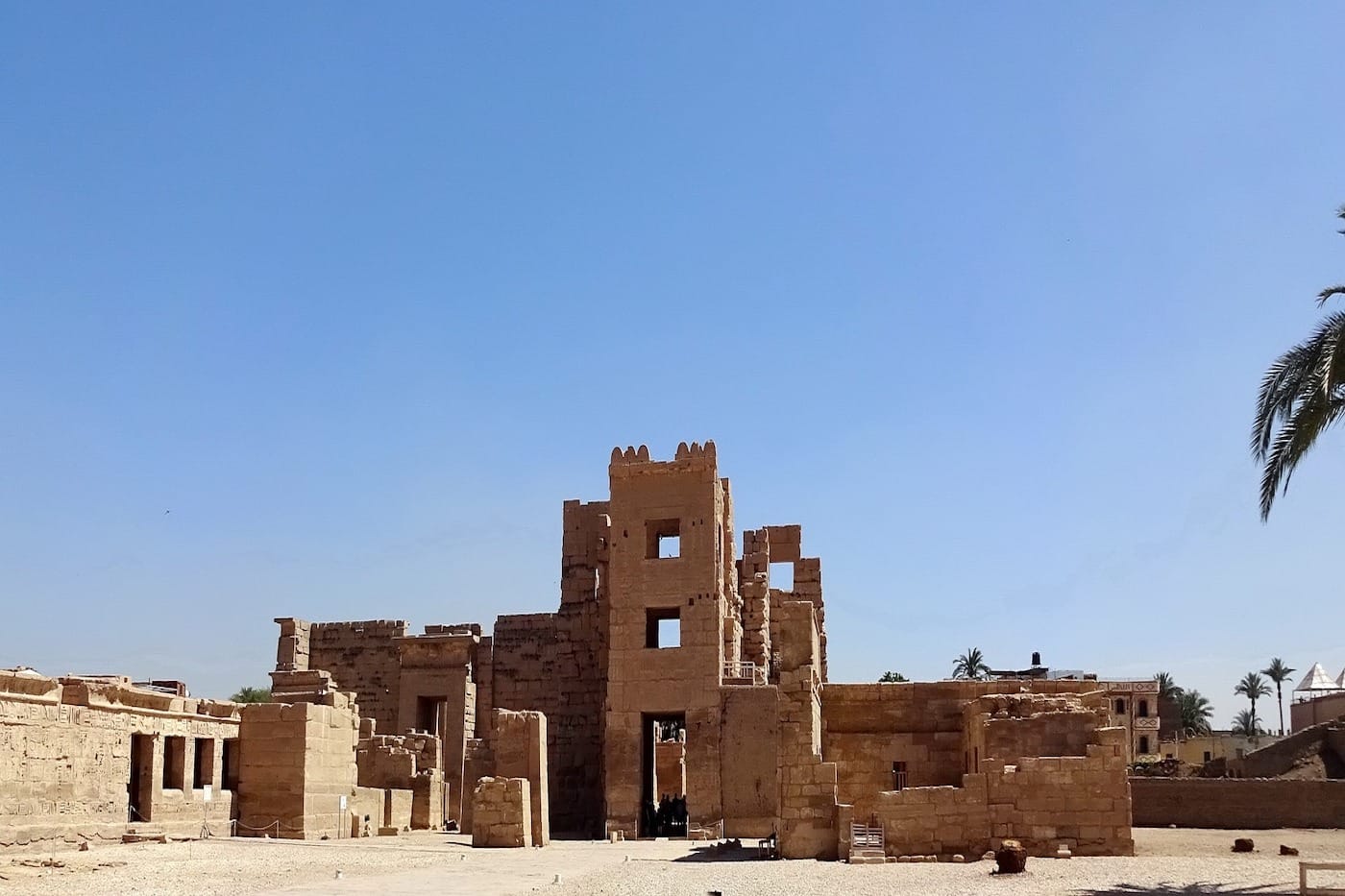
Before you even enter the main temple, the towering migdol gate stops you. This fortified gatehouse is modeled on Syrian and Canaanite military architecture — a deliberate design choice that signaled Ramesses III’s dominance over foreign powers.
It is the only structure of its kind in Egypt, and it doubles as a pleasure pavilion: the upper rooms are decorated with intimate scenes of the pharaoh relaxing with women of the court.
The contrast between fortress and pleasure palace within the same doorway captures the contradictions that made Ramesses III one of ancient Egypt’s most complex rulers.
Habu Temple as an Economic Powerhouse: The Administration Nobody Talks About
Most visitors focus on the reliefs and miss the equally fascinating story written in papyrus. Medinet Habu functioned as a full administrative and economic center for the Theban region. Storehouses held grain, linen, oil, and luxury goods. Officials managed workforce allocation, tax collection, and the distribution of temple revenues across western Thebes.
The Metropolitan Museum of Art’s Egyptian collection holds several papyri and ostraca discovered at the site that document this bureaucratic machinery in extraordinary detail — including records of the world’s first documented labor strike, which took place among the tomb-builders of nearby Deir el-Medina in Year 29 of Ramesses III’s reign, partly triggered by delayed wages from the temple’s own treasury.
🚢 Ready to sail the river of the gods?
Book your Aswan & Luxor Nile Cruise and see Medinet Habu alongside Egypt’s greatest monuments — with expert guides on every shore excursion.
Practical Planning: Habu Temple Day Trip at a Glance
| Detail | Information |
|---|---|
| Location | West Bank of Luxor, Upper Egypt |
| Opening Hours | 6:00 AM – 5:00 PM (winter) / 6:00 AM – 6:00 PM (summer) |
| Entrance Fee | From EGP 360 (approx. $7–8 USD) for foreign visitors |
| Recommended Visit Duration | 1.5 – 2.5 hours for a thorough visit |
| Best Time to Visit | Early morning (7–9 AM) for light quality and smaller crowds |
| Ideal Season | October through April |
| Combine With | Valley of the Kings, Hatshepsut Temple, Colossi of Memnon |
| Access | Taxi, bicycle, or guided tour from central Luxor |
Color That Has Survived 3,200 Years: Preservation Inside Habu Temple
One detail that silences even seasoned travelers is the surviving paint. Protected by the dry Theban climate and centuries of accumulated sand, significant sections of Habu Temple’s interior reliefs retain their original pigments — ochre yellows, deep reds, malachite greens, and carbon blacks. The effect under morning light is extraordinary: these walls don’t look like ruins. They look interrupted.
Systematic conservation began in the early 20th century through the Oriental Institute of Chicago, whose epigraphic survey of the site remains one of Egyptology’s landmark achievements. Today, the Supreme Council of Antiquities maintains ongoing stabilization work, balancing public access with long-term preservation.
Frequently Asked Questions About a Habu Temple Day Trip
How do I get to Habu Temple from central Luxor?
Cross the Nile by public ferry from Luxor’s corniche to the West Bank, then take a local taxi or bicycle to Medinet Habu — roughly 3 km from the ferry landing. Many visitors prefer a pre-arranged guided tour that handles all transport and combines the temple with other West Bank sites in one efficient loop.
What should I wear and bring for a Habu Temple day trip?
Wear light, breathable clothing that covers shoulders and knees — this is an active archaeological site with religious significance. Bring water, sunscreen, a hat, and a small flashlight for the darker inner sanctuaries. A quality camera lens will reward you: the relief textures photograph exceptionally well in early morning sidelight.
Does a Habu Temple day trip fit into a Nile cruise itinerary?
Absolutely. Most Nile cruise packages departing from Aswan or Luxor include a West Bank excursion covering Medinet Habu. If yours doesn’t, it can be added as a private shore excursion on any docking day in Luxor — typically, half a day is sufficient when combined with one or two other West Bank monuments.
What makes Medinet Habu different from Karnak or Luxor Temple?
Karnak and Luxor Temple are living cult temples built for gods. Medinet Habu is a mortuary temple built for a pharaoh’s eternal afterlife — a fundamentally different architectural and theological program. Its military reliefs, royal palace, administrative complex, and conspiracy records make it unique in Egyptian history. It also sees far fewer visitors than Karnak, which means a more personal, quieter encounter with the ancient world.
Why Medinet Habu Earns Its Own Day
A Habu Temple day trip isn’t a footnote to Luxor — it’s a destination that rewards curiosity at every level, from casual traveler to serious historian. Naval battles, royal conspiracies, economic records, and 3,200-year-old paint all coexist within a single extraordinary complex. Give it the morning it deserves.
✈️ Your Egypt adventure starts with one click.
Let our team handle every detail — from airport transfers to expert-guided temple tours. Browse our Luxor day tours and secure your spot today.