

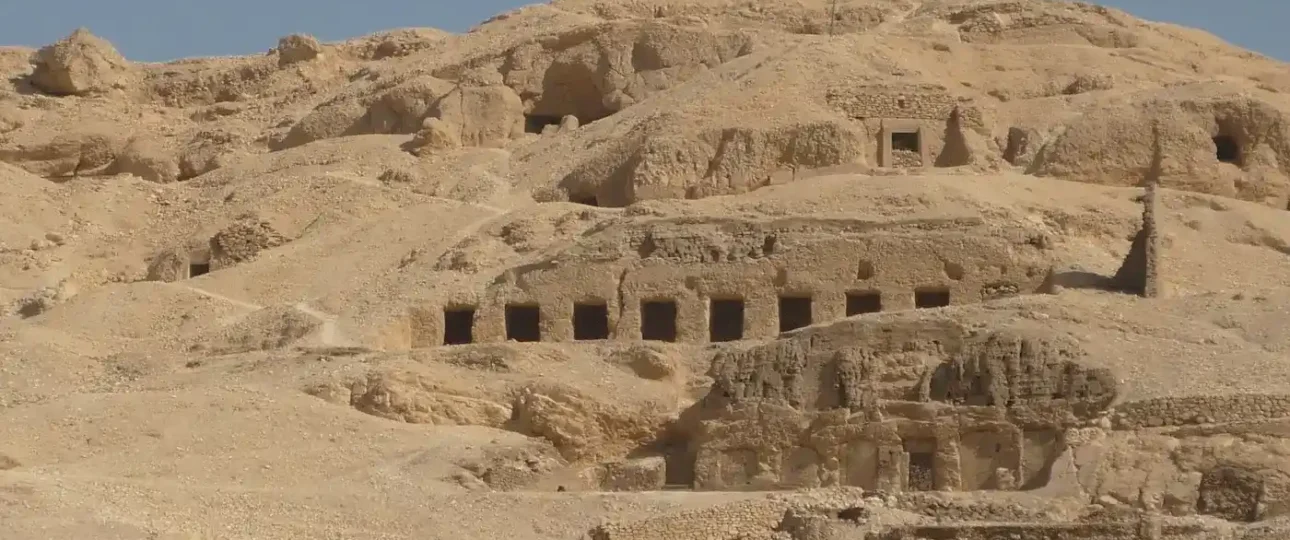
tombs of the nobles luxor: Unearthing the Lives of Egypt’s Elite
Walk into the Tombs of the Nobles Luxor, an underground chamber, look up, and find a ceiling completely covered in grapevines — painted 3,300 years ago, colors still vivid, brushstrokes still sharp, and not another soul in sight.
This isn’t a dream itinerary. This is what waits for you at the Tombs of the Nobles in Luxor — one of the most extraordinary and least-visited archaeological sites in all of Egypt.
Why are the Tombs of the Nobles Luxor the “Soul” of Ancient Thebes?
For many travelers visiting Luxor from Cairo or arriving via a Nile Cruise, the focus is often on the colossal. You see the massive pillars of Karnak and the deep shafts of royal burials. However, the Nobles Tombs Luxor represent a different kind of architectural and artistic mastery.
A Masterclass in Ancient Egyptian Artistry
The Tombs of the Nobles Egypt are adorned with exquisite artworks that differ significantly from royal burials:
- Vivid Realism: Instead of rigid religious texts, you will see scenes of family banquets, hunting in the papyrus marshes, and intricate agricultural harvests.
- Preserved Pigments: In areas like Sheikh Abd el-Qurna, the colors remain so fresh they look like they were applied this morning.
- The Scribe’s Detail: The hieroglyphic inscriptions here are not just religious spells; they are biographies. They ensure the Nobles’ names and achievements were immortalized for eternity.
How to Visit the Tombs of the Nobles? Everything You Need Before You Go
Opening Hours & Ticket Prices
| Detail | Information |
| Opening HoursDaily | 6:00 AM – 5:00 PM |
| Cluster Ticket | Price 150 – 250 EGP per cluster |
| Tombs per Ticket | 2–3 tombs per cluster ticket |
| Payment Method | Card only — cash no longer accepted on site |
| Children under 6 | Free entry |
| Best Time to Visit | 6:00 – 9:00 AM before the midday heat |
💡Our Guide’s Tip: Buy two cluster tickets covering different groups. This gives you a balanced experience of both the artistic masterpieces and the historical highlights without spending your entire day hiking between hillsides.
The Cluster Ticket System — Finally Explained Clearly
This is what confuses most visitors — and what most guides fail to explain properly. The “cluster” system means each ticket covers a specific group of tombs in the same area. Here is what each cluster contains:
- Tomb of Rekhmire & Sennefer — Highest artistic value; Sennefer’s vine ceiling is unlike anything in Egypt.
- Tomb of Nakht & Menna — The most celebrated daily life paintings in the entire necropolis.
- Tomb of Khonsu — Small, quiet, exceptionally preserved.
- Tomb of Qurnet Murai — Rarely visited; a genuinely private experience.
- Tomb of Ramose — The only tomb in Egypt that contains two contrasting art styles side by side.
- Tomb of El-Khokha — Overlooked by most tours; astonishing colors.
- Tomb of Abu Naga North — For visitors interested in the Ramesside period.
- Tomb of Abu Naga South — Transitional period tombs with unusual iconography.
- Temple of Seti I — A compelling addition for those who want the full religious context.
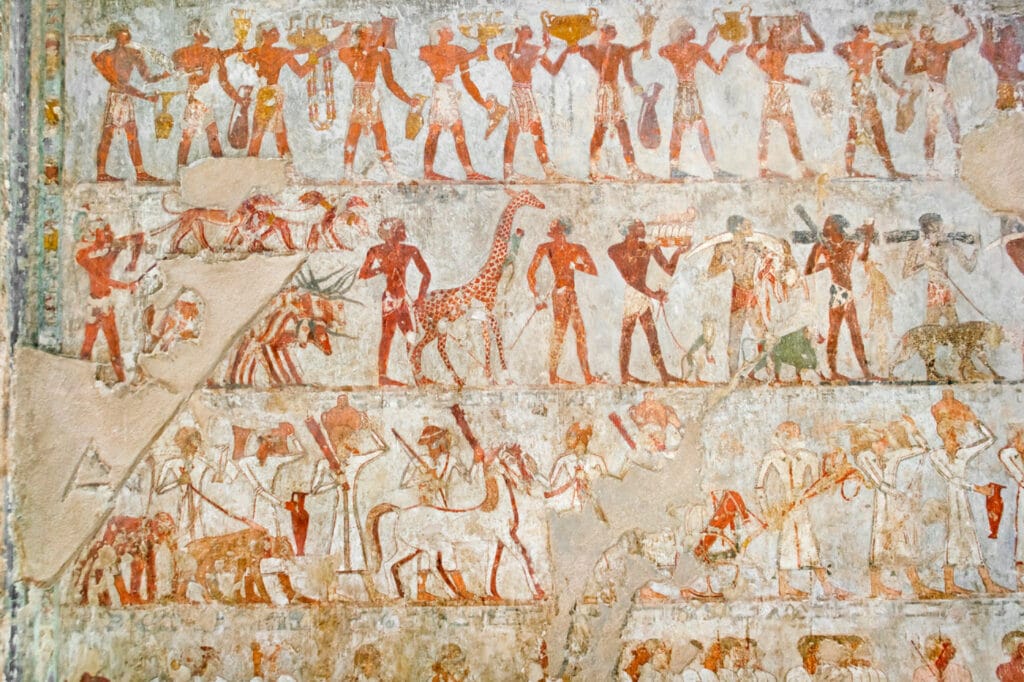
Who Were Egypt’s Noble Elite?
These were not kings. They were the people who made the kingdom work:
- The Vizier — Egypt’s prime minister. Responsible for justice, and taxation. “Ramose” held this title. His unfinished tomb tells the story of a man whose world changed faster than his walls could.
- The Mayor of Thebes — Governor of ancient Egypt’s most important city. “Sennefer” held this role. His vine ceiling was not just art — it was a declaration of power carved into rock.
- The Royal Scribe — Keeper of every record: astronomical observations, agricultural yields, military dispatches. *Nakht* did this work. His tomb is the archive he never stopped building.
- The Land Surveyor — The tax authority of an entire civilization. “Menna” measured every field along the Nile. His walls became his permanent ledger.
Their tombs tell us more about how Egypt actually functioned than any royal monument ever has.
The Art: Why It Still Stops People in the Doorway?
The Valley of the Kings gives you theology. The Nobles Tombs give you life.
- A woman adjusting her earring at a banquet
- Musicians playing at a feast — instruments painted so precisely that musicologists have used them to reconstruct ancient Egyptian music
- A boy on his father’s papyrus boat on the Nile
- Grain being measured, ducks rising from the marshes, a nobleman watching his workers from the shade of a tree
First-time visitors consistently go quiet in the doorways. Not from awe — from recognition. These people loved their families, took pride in their work, and wanted to be remembered. Across 3,300 years, that comes through completely.
🏛️ Hear the Stories From Someone Who Knows Them
Our Egyptologist guides read the hieroglyphic captions on these walls in real time. When a guide reads the name of a 3,300-year-old official from the wall of his own tomb, the room changes. Book Your Private Nobles Tombs Tour
The Religious Layer: What the Paintings Actually Mean
Beyond the daily life scenes, every Nobles Tomb contains a deeper spiritual purpose:
- The Osirian Journey
Scenes from the Book of the Dead appear throughout — the weighing of the heart, the judgment before Osiris, the passage through the underworld. These were not decorations. They were prayers in stone, designed to protect the soul on its journey. - The Offering Scenes
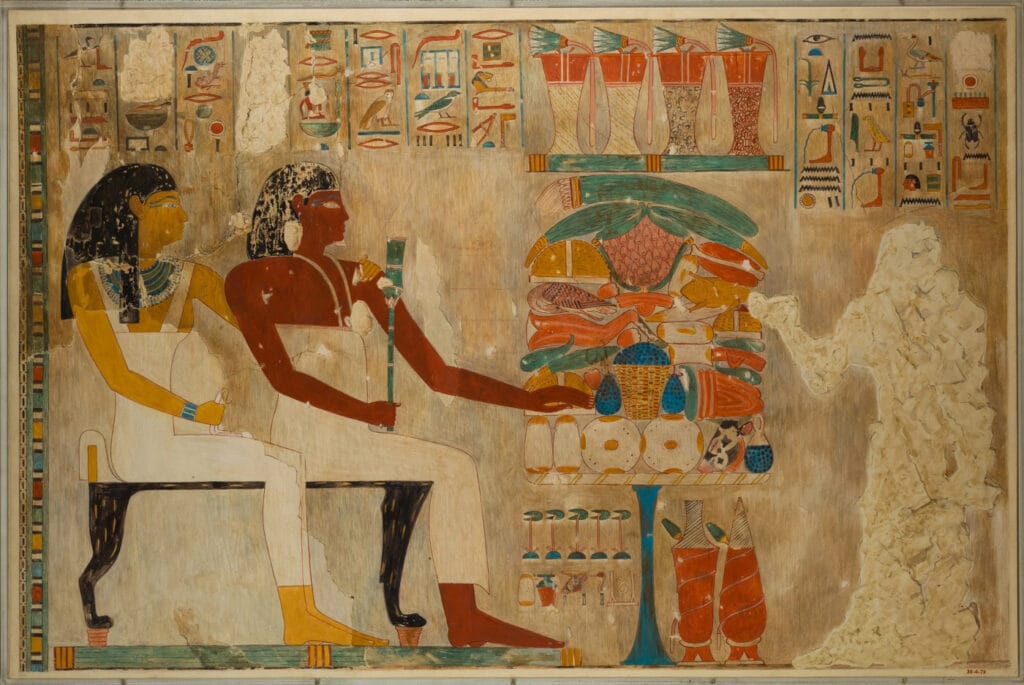
Family members carrying food, drink, linen, and incense appear in almost every tomb. In ancient Egyptian belief, a painted offering was as effective as a real one — a magical guarantee that the deceased would never go hungry, never go unclothed, never be forgotten. - The House of Eternity
Each tomb reflected the noble’s vision of his ideal afterlife:
– For Sennefer — an eternal garden of grapevines overhead
– For Menna — the orderly, prosperous fields of a well-managed estate
– For Nakht — music, abundance, and family at a banquet that would never end
They designed their forever. And somehow, it survived long enough for you to see it.
🌟The Golden Day from Our Team: Combine the Tombs of the Nobles with the Valley of the Kings and the Temple of Hatshepsut on our Full-Day Luxor West Bank Private Tour.
Nobles Tombs vs Valley of the Kings: Which Should You Visit First?
This is the question our team gets asked more than almost any other about the West Bank — and the honest answer is: both, on the same day, in the right order. But if you want to understand what each offers:
| Valley of the Kings | Tombs of the Nobles | |
| Subject | The pharaoh’s divine afterlife journey | Daily life of Egypt’s ruling elite |
| Scale | Monumental and dramatic | Intimate and personal |
| Art Style | Theological, formal, symbolic | Naturalistic, colorful, narrative |
| Crowds | High— especially Oct–Apr | Minimal — often just your group |
| Photography | Limited by crowds and time | Excellent — unhurried, close access |
| Emotional Impact | Awe-inspiring and humbling | Warm, human, quietly moving |
| Best For | Understanding royal Egypt | Understanding how Egypt actually worked |
Our recommendation: Valley of the Kings first (it handles the grand narrative of pharaonic power), then Nobles Tombs second (it fills in the human texture that the royal tombs deliberately omit). The contrast between the two experiences in a single morning is one of the most satisfying things you can do in Luxor.
The Bigger Picture: Theban Necropolis at a Glance
The Nobles Tombs are one piece of the largest ancient burial landscape in the world. Here is how everything connects:
- Valley of the Kings — Royal tombs of the New Kingdom pharaohs, including Tutankhamun and Ramses II.
- Valley of the Queens — Royal wives and children, including Nefertari’s extraordinary painted tomb.
- Temple of Hatshepsut — Three-terraced mortuary temple cut into the Theban cliffs
- Deir el-Medina — Village of the craftsmen who built the royal tombs — their records are our best window into ordinary ancient life.
- The Ramesseum — Mortuary temple of Ramses II; the fallen colossus that inspired Shelley’s “Ozymandias”.
- Colossi of Memnon — The two massive statues of Amenhotep III that greet every West Bank visitor.
💡 Whether you are on a Luxor day tour, a Nile cruise from Aswan, or a day trip from Hurghada, our West Bank itineraries connect all of these sites in the order that makes the most sense historically and logistically.
FAQ about the Tombs of Nobles in Luxor
What are the Nobles Tombs famous for?
Three things: extraordinary preservation of wall paintings, intimate daily life subject matter instead of theology, and near-zero tourist crowds even during peak season.
Where are Nobles’ Tombs located?
West Bank of the Nile in Luxor, Sheikh Abd el-Qurna hillside — 20–30 minutes by car from East Bank hotels, 15 minutes from the Valley of the Kings.
How old are Nobles’ Tombs?
Most date to the New Kingdom (1550–1070 BC) — over 3,000 years old.
Which tombs should a first-time visitor prioritize?
Nakht & Menna for color and daily life. Sennefer & Rekhmire for the vine ceiling and refined artistry. These four tombs together define the experience.
Are Nobles’ Tombs worth visiting after the Valley of the Kings?
More so, not less. The Valley shows royal Egypt. The Nobles Tombs show how royal Egypt actually worked. Most visitors say the Nobles Tombs were the unexpected highlight of their day.
Breathe the History
The Tombs of the Nobles in Luxor are more than archaeological sites; they are an invitation to connect with the humans who built civilization. From the bustling markets, no Egypt journey is complete without meeting the “Elite” of Luxor.
As you walk through the vibrantly painted halls of Menna, you aren’t just looking at history—you are breathing it. We would love to take you there.
