

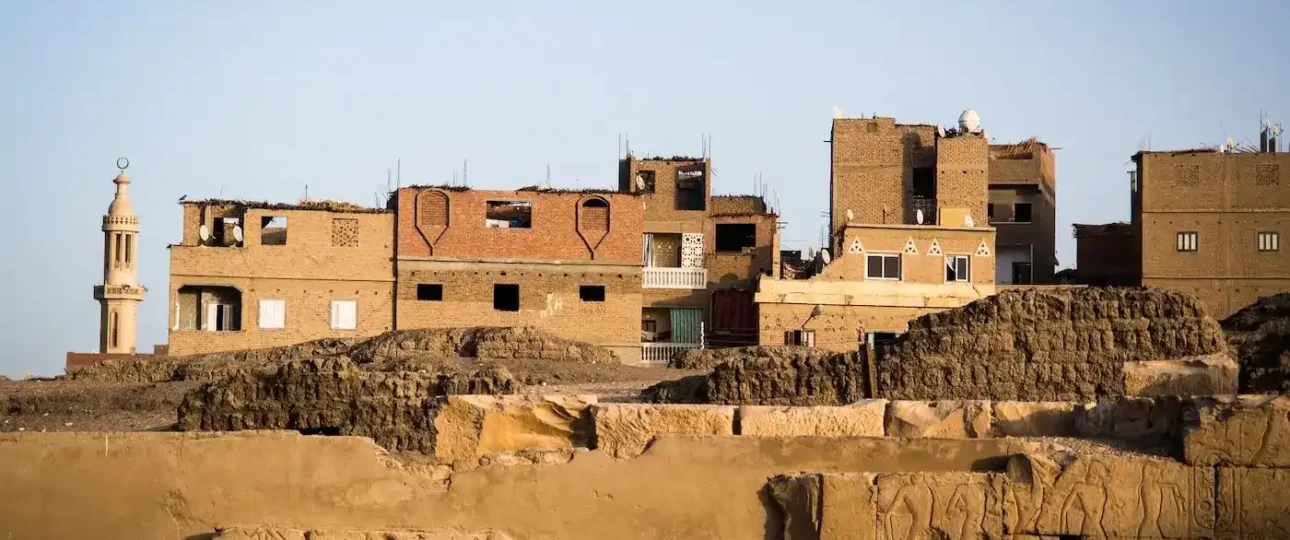
Abydos Temple Egypt: A Journey to the Sacred City of Osiris and Ancient Mysteries
If you are planning a trip to the land of the Pharaohs next month, you’ve likely heard of the Pyramids and the Valley of the Kings. However, for those who want to escape the massive crowds of Luxor and Cairo, Abydos Temple Egypt offers a serene, deeply spiritual experience that most tourists completely miss. This guide is your definitive resource on how to visit Abydos Temple Egypt and why this sacred site is a must-see for your itinerary.
Where is Abydos Temple Located in Egypt?
Abydos Temple Egypt is located in the Sohag Governorate, Upper Egypt, approximately 170 kilometers north of Luxor — about a 3-hour drive through the Nile Valley. Sitting 11 km west of the Nile River, this ancient site was once considered the gateway to the afterlife and the most sacred city in all of Egypt.
Unlike Karnak or the Valley of the Kings, Abydos sits slightly off the main tourist trail — which is precisely what makes it so extraordinary. You are not sharing the corridors with hundreds of strangers. You are, for the most part, alone with 3,300 years of history.
How to Visit Abydos Temple Egypt from Luxor?
If you are staying in Luxor, you might be wondering: how far is Abydos from Luxor? The journey is a scenic 3 to 3.5-hour drive through the Nile Valley.
For the most seamless experience, we recommend an Abydos temple tour from Luxor. While public transport exists, it is often complicated and time-consuming. A day trip to Abydos from Luxor via private car is the most efficient way to maximize your time at the site.
The “Golden Itinerary”: Abydos and Dendera Day Trip from Luxor
Most seasoned travelers don’t just visit Abydos—they combine it. The Abydos and Dendera day trip from Luxor is widely considered the “Gold Standard” of Upper Egypt excursions.
Since the Temple of Dendera (dedicated to the goddess Hathor) is located on the way back to Luxor, booking an Abydos Dendera tour Luxor allows you to see the two best-preserved temples in Egypt in a single, 10-hour round trip. It’s a full day, but the contrast between the delicate reliefs of Seti I and the vibrant blue astronomical ceilings of Dendera is simply breathtaking.
🏛️ Book the Golden Itinerary
Our Abydos and Dendera day trip from Luxor includes a private air-conditioned vehicle, certified Egyptologist guide, and flexible timing built around you — not a group schedule. Reserve Your Abydos & Dendera Tour
Abydos Temple Opening Hours & Ticket Price: What You Need to Know Before You Go?
To ensure your Abydos private tour Egypt goes smoothly, keep these updated 2026 details in mind:
| Feature | Details for Travelers |
| Abydos Temple Opening Hours | Daily from 7:00 AM to 5:00 PM. |
| Abydos Temple Ticket Price | Expect to pay via credit or debit card only. The Ministry of Tourism has fully transitioned to a digital-only payment system. Approximately 100 EGP for an adult. |
| Best Way to Visit | Book an Abydos temple egyptologist guide. The iconography here is deep and complex; you’ll want an expert to explain the secrets. |
| When to Book | To secure a high-quality private vehicle, book the Abydos Temple tour services at least 48 hours in advance. |
Is Abydos Temple Worth Visiting?
Yes — without hesitation, if you value refined ancient art, deep historical mysteries, and the rare luxury of exploring a world-class archaeological site in near-complete silence, Abydos Temple Egypt is not just worth visiting — it is one of the most underrated experiences in the entire country.
The absence of mass tourism is Abydos’s greatest gift to the modern traveler. While Karnak and the Valley of the Kings have become increasingly crowded, Abydos remains a place where you can stand in a 3,300-year-old corridor and hear nothing but your own footsteps. For photography alone, this is a paradise — vibrant colors, sharp reliefs, and no sea of selfie sticks blocking your frame.
What Was Abydos in Ancient Egypt?
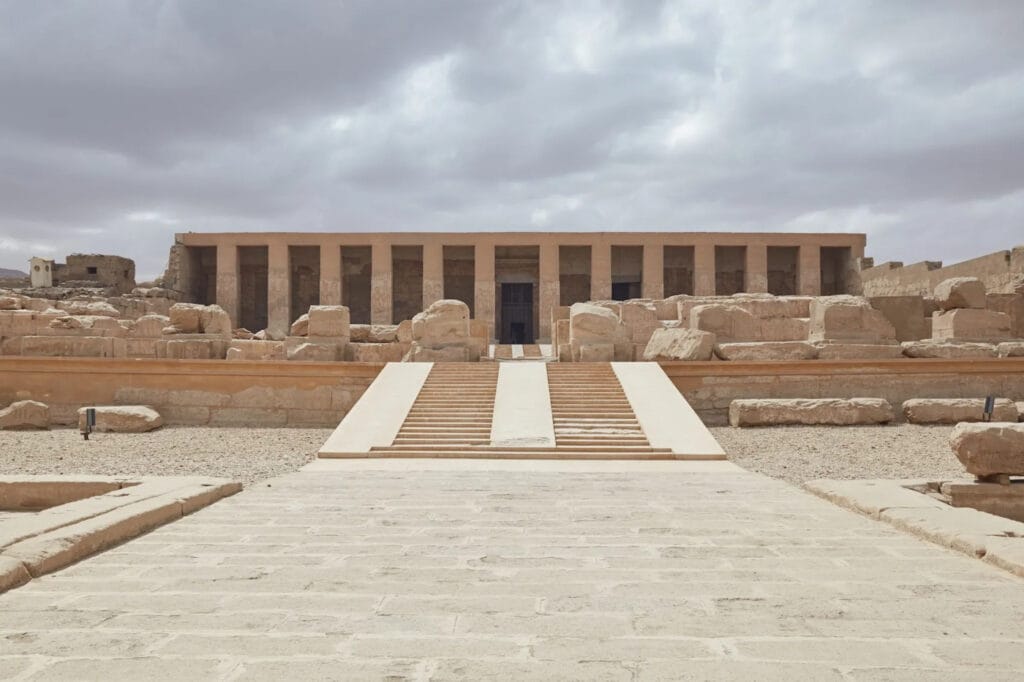
Abydos Temple Egypt, officially the Temple of Seti I, is a New Kingdom temple built around 1300 BCE, dedicated primarily to Osiris — the god of the afterlife — along with Isis, Horus, Amun-Ra, Ra-Horakhty, Ptah, and the deified Seti I himself.
But Abydos was far more than a single temple. For thousands of years, the Sacred City of Abydos was the most important religious site in Egypt — the primary cult center for Osiris and the principal destination of the Abydos pilgrimage in ancient Egypt. People believed that being buried here, or at least leaving a monument, guaranteed a favorable judgment in the halls of Ma’at.
The site dates back even further, to the Abydos Egypt predynastic period, when this land functioned as the royal necropolis of the earliest pharaohs — the Umm el-Qaab royal cemetery — making it one of the oldest continuously sacred sites on earth.
For More Information: Inside Abu Simbel Temple: A Journey into the Heart of Pharaonic Ambition
Must-See Highlights Inside Abydos Temple
The Temple of Seti I: A Masterpiece of the 19th Dynasty
The main temple is famous for its unique L-shaped layout — an architectural anomaly in ancient Egypt — and its seven sanctuaries, each dedicated to a different deity. What sets it apart from every other temple in Egypt is the quality of its reliefs.
While Ramses II preferred colossal, bold declarations carved at speed, Seti I commissioned work of extraordinary delicacy — fine, high-relief carvings with well-preserved original color that have survived remarkably intact.
Every time our guides bring a visitor through the inner corridors of Seti I’s temple for the first time, the reaction is the same: a long silence. Not from confusion, but from genuine awe.
The Abydos King List: Ancient Egypt’s Most Fascinating Document
Located in a long side corridor, the Abydos King List is one of the most significant archaeological discoveries in history. Carved into the wall are the cartouches of 76 kings of Egypt, arranged chronologically from the legendary first pharaoh Menes through to Seti I himself.
What makes it genuinely fascinating — beyond its historical value — is who was deliberately left off. Pharaohs like Hatshepsut, Tutankhamun, and Akhenaten were intentionally omitted for political reasons. Standing in front of this list, you are witnessing ancient propaganda in stone: a calculated erasure of inconvenient history. Egyptologists sometimes call it the world’s first recorded act of “cancel culture.”
The Osireion: Egypt’s Most Enigmatic Structure
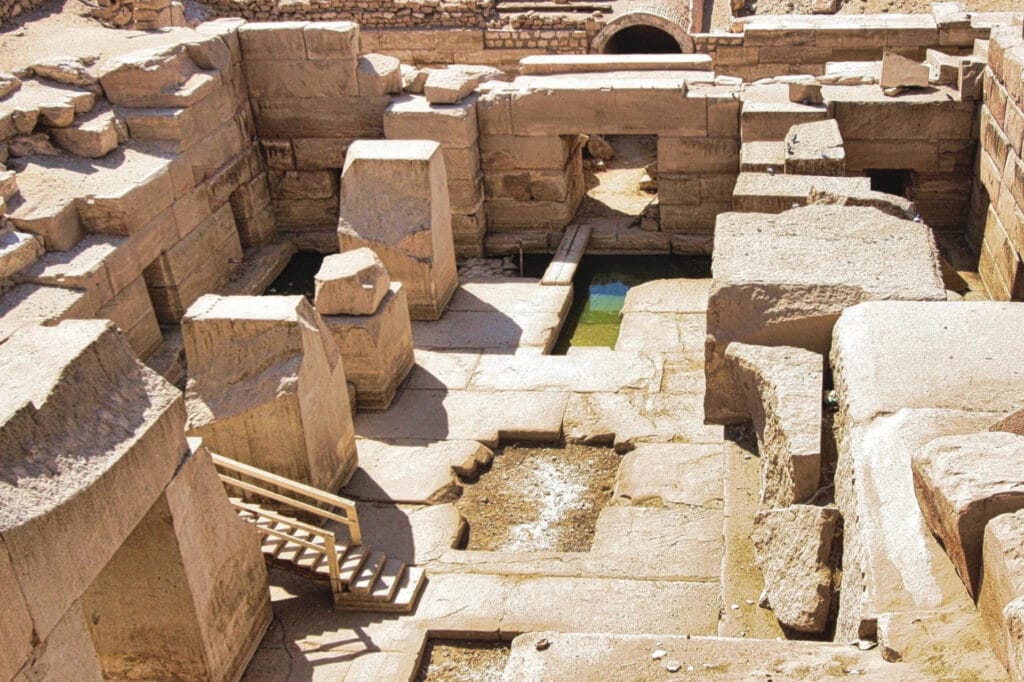
Behind the main temple, partially submerged, lies the Osireion Abydos Egypt — a symbolic cenotaph for Osiris that looks entirely out of place next to the New Kingdom architecture surrounding it.
Its massive granite blocks are more reminiscent of Old Kingdom construction at Giza than anything typically found in Upper Egypt, and its origins remain genuinely debated among Egyptologists.
Natural groundwater floods the structure regularly, creating an island effect at its center — a deliberate design choice representing the Primeval Mound that rose from the waters of chaos at the dawn of creation. It is one of the strangest and most thought-provoking structures in the country.
The Helicopter Hieroglyphs: Myth, Mystery, and the Real Explanation
No guide to Abydos Temple Egypt is complete without addressing the most talked-about feature in the entire complex. High on a supporting beam in the first hypostyle hall, you will find a cluster of hieroglyphs that — to the modern eye — appear to depict a helicopter, a tank, a submarine, and what looks like a futuristic aircraft.
The truth is more fascinating than any conspiracy theory. Egyptologists have demonstrated that this is a palimpsest — a term for the layering of two separate inscriptions over time. When the plaster covering the overlapping throne names of Seti I and Ramses II gradually fell away, the combined shapes of the two different inscriptions accidentally created these recognizable modern forms.
Ready to uncover the secrets of the Pharaohs?👉 Book Your Private Abydos Temple Tour Now,and👉 View our Full List of Upper Egypt Excursions.
From Predynastic Origins to the First Dynasty
The history of Abydos stretches back further than most visitors realize. Long before the Temple of Seti I, this was the burial ground of Egypt’s earliest rulers. At the Umm el-Qaab royal necropolis, archaeologists discovered the Abydos boats of the First Dynasty — some of the oldest planked wooden boats ever found — confirming that Abydos was a center of royal power from the very dawn of Egyptian civilization, around 3100 BCE.
The tomb of Narmer, the founder of the First Dynasty, is here. The tomb of Aha, his successor, is here. For over a thousand years before the New Kingdom temples were even conceived, this desert landscape was already the most sacred ground in Egypt.
Read More: Inside Abu Simbel Temple: A Journey into the Heart of Pharaonic Ambition
Practical Visitor Tips: What Our Guides Tell Every Traveler
- The Sun is Real: Even in winter, the Upper Egyptian sun is intense. Bring a hat and high-SPF sunscreen.
- Stay Connected: While there is some mobile signal at the site, having a downloaded offline map of the Abydos archaeological site is always a smart move.
- The Private Advantage: An Abydos private tour in Egypt gives you the flexibility to spend extra time at the Osireion or the King List corridor without being rushed by a group schedule.
- Hire an Egyptologist guide. The iconography at Abydos is among the most complex in Egypt. The King List corridor, the Osireion symbolism, the seven sanctuaries, and their individual dedications.
🌅 Experience Abydos the Right Way
Our private Abydos tours depart from Luxor daily. Certified Egyptologist guide, private air-conditioned vehicle, flexible pace — designed entirely around your group.
Book Your Private Abydos Temple Tour, Questions first? Contact Our Luxor Team
Frequently Asked Questions About Abydos Temple Egypt
What is Abydos famous for?
It is world-renowned for the Temple of Seti I, the historical Abydos King List, and its status as the cult center of Osiris.
What god was worshipped at Abydos?
The primary deity was Osiris, the god of the afterlife, though the temple also honors Isis, Horus, and Amun-Ra.
How old is the Temple of Seti I at Abydos?
It dates back to the 19th Dynasty of the New Kingdom, approximately 1300 BCE (over 3,300 years old).
Can you visit Abydos and Dendera in one day?
Yes, it is the most popular way to visit the site, usually taking around 10 hours for the full round trip from Luxor.
Is Abydos crowded with tourists?
No — and this is one of its greatest advantages. Compared to Karnak, the Valley of the Kings, or Abu Simbel, Abydos sees a fraction of the visitor numbers. During most of the year, you will have the corridors largely to yourself.
What are the helicopter hieroglyphs at Abydos?
They are a naturally occurring optical illusion created by two overlapping inscriptions — the throne names of Seti I and Ramses II — whose plaster coverings fell away over centuries, accidentally forming shapes that resemble modern vehicles. The scientific explanation is called a palimpsest.
How long does it take to visit the Abydos Temple?
A focused visit to the main highlights takes approximately 1.5 to 2 hours. A thorough visit, including the Osireion, the King List corridor, and the outer areas, takes 2.5 to 3 hours.
Can I visit Abydos without a guide?
Technically, yes, but it is strongly not recommended. The temple’s iconography, the symbolism of the Osireion, and the significance of the King List are difficult to interpret without expert guidance. A certified Egyptologist guide transforms the experience entirely.
What should I wear at Abydos Temple?
Light, breathable clothing covering shoulders and knees — both for cultural respect and sun protection. Comfortable closed-toe walking shoes, a wide-brimmed hat, and high-SPF sunscreen are essential year-round.
One Last Thing Before You Go
From the Abydos boats of the First Dynasty at Umm el-Qaab to the masterpiece reliefs of Seti I, this site is the missing piece of most Egypt itineraries — and one of the most rewarding decisions a traveler can make.
At Nile Travel Machine, our guides grew up in Luxor. They don’t read from scripts — they answer questions, read the hieroglyphics in front of you, and take you to the sections of Abydos that most visitors walk straight past. We don’t just show you the stones. We help you hear their stories.
Nile Travel Machine — Local Experts, Authentic Experiences, Luxor, Egypt.
