

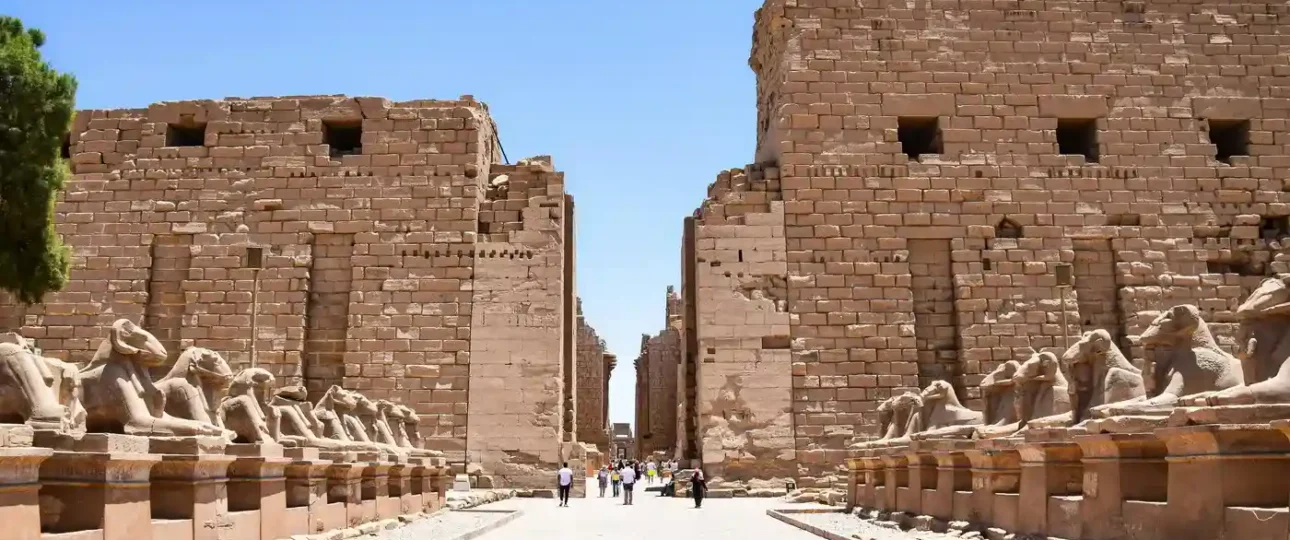
Karnak Temple Guide: History, Architecture, Tickets & Tours (2026)
Thirty pharaohs. Two thousand years of continuous construction. One hundred and thirty-four columns, each taller than a six-story building. Karnak Temple is not just the largest religious complex ever built — standing inside it, most visitors fall completely silent.
If you have one day in Luxor, spend it here. This guide covers everything you need: history, highlights, honest ticket prices, the sound and light show, and how to book a private tour that actually does the site justice.
Karnak Temple Tickets & Opening Hours 2026 (Quick Answer)
| Opening hours | 6:00 AM – 5:00 PM daily |
| Adult ticket (foreign) | 600 EGP |
| Student ticket (with ID) | 300 EGP |
| Sound & Light Show | From 350 EGP / around $20 USD |
| Best time to visit | 6:00-9:00 AM, before the tour bus crowds arrive |
Full ticket breakdown, the Open Air Museum add-on, and Sound and Light Show details are covered later in this guide.
What Is Karnak Temple?
Karnak Temple Complex sits on the east bank of the Nile in Luxor, Egypt — the spiritual, political, and economic heart of ancient Egypt for nearly twenty centuries. Dedicated primarily to Amun-Ra, it covers over 200 acres, making it the largest religious structure ever built anywhere in the world.
It is recognized as a UNESCO World Heritage Site and ranks as the second most visited site in Egypt after the Giza Pyramids — yet many travelers who see both say Karnak left a deeper impression
Where Is Karnak Temple Located?
Karnak is in Luxor, Upper Egypt, approximately 700 km south of Cairo, on the east bank of the Nile. It sits 3 km north of Luxor Temple, connected by the recently restored Avenue of Sphinxes. From most East Bank hotels, it is under 10 minutes by taxi or carriage — and easily included in any Luxor day tour from Hurghada, Aswan, Cairo, or a Nile cruise.
💡 If you are visiting from Hurghada or arriving on a Nile cruise, we offer private Luxor day tours that combine Karnak with Luxor Temple and the West Bank — all in one seamless day with hotel or dock pickup.
How Old Is Karnak Temple?
Construction began around 2055 BC and continued for nearly 2,000 years. The temple grew with Egypt itself — each pharaoh adding halls, pylons, and obelisks to outdo their predecessors.
The New Kingdom (1550–1070 BC) produced its most iconic structures: Hatshepsut‘s towering obelisks, Thutmose III’s unique Festival Hall, and the breathtaking Great Hypostyle Hall completed by Ramses II. Construction continued through the Ptolemaic and Roman eras, making Karnak a bridge across three millennia of human history.
Interesting facts about Karnak Temple:
- Over 30 pharaohs contributed to its construction
- The Hypostyle Hall covers 54,000 square feet
- Some obelisks weigh over 300 tons
- It is aligned to the sun — during certain days, sunlight shines directly through its main axis
What Was Karnak Temple Used For?
Karnak served as the ‘residence’ of the god Amun-Ra on earth. It wasn’t just a place of worship, but the political heart of the empire where pharaohs validated their power through daily rituals and grand coronations.
Every year, it hosts the Opet Festival, during which sacred statues are carried along the Avenue of Sphinxes to Luxor Temple in a 27-day celebration. Economically, it was ancient Egypt’s wealthiest institution, controlling vast lands and thousands of workers.
Read more: Inside Abu Simbel Temple: A Journey into the Heart of Pharaonic Ambition
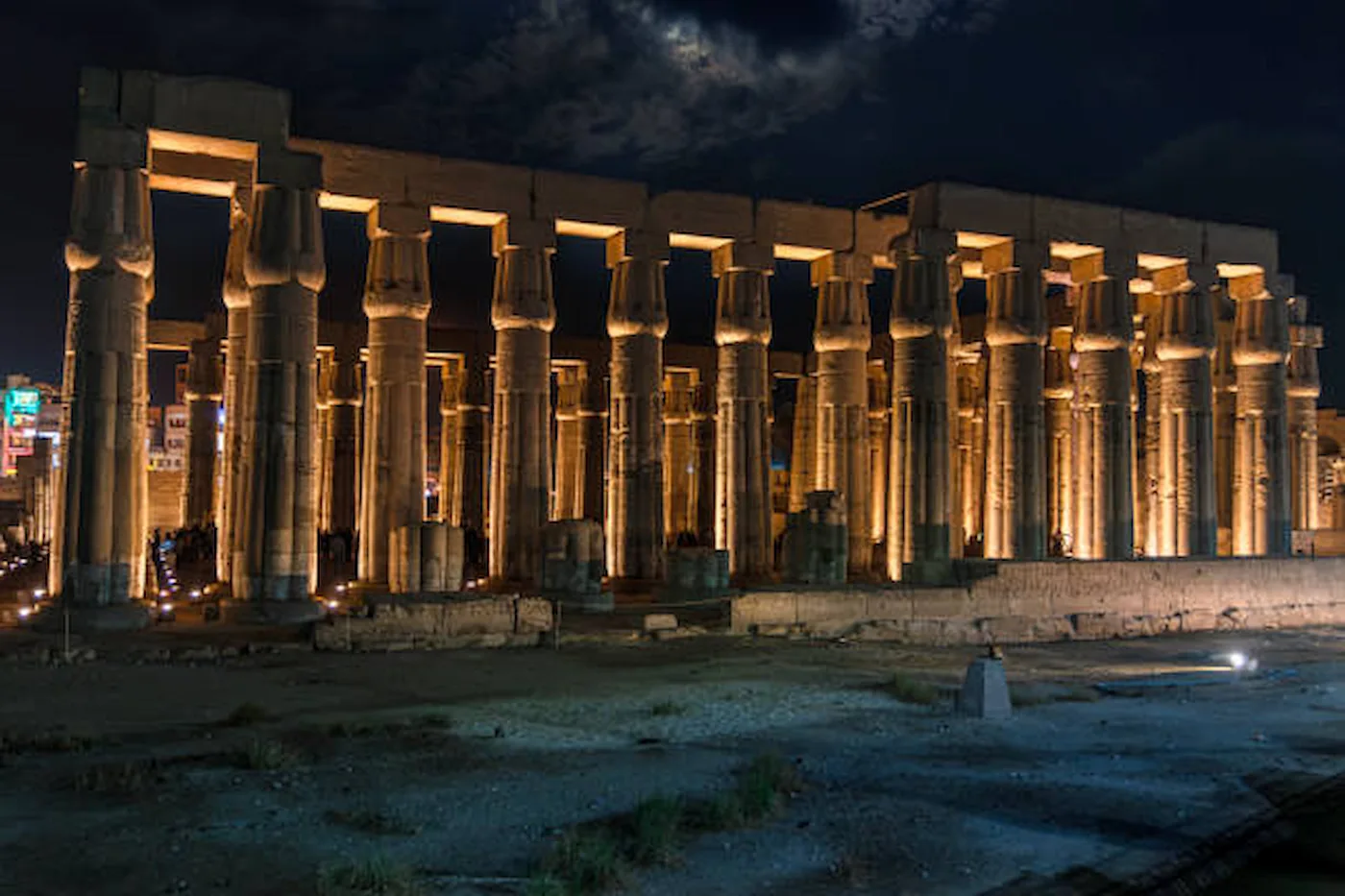
Must-See Architectural Highlights
- The Great Hypostyle Hall: 134 massive columns arranged in 16 rows. The central 12 columns rise to 21 meters—roughly the height of a 7-story building.
- The Obelisks of Hatshepsut: At 28.5 meters high, the surviving obelisk is the tallest standing ancient obelisk in the world, carved from a single block of Aswan granite.
- The Sacred Lake & Scarab: The largest lake of its kind, used by priests for purification. Don’t miss the giant granite scarab statue nearby—legend says walking around it 7 times brings luck.
- Festival Hall of Thutmose III: Famous for its unique ‘tent-pole’ columns and the ‘Botanical Garden’ room, featuring reliefs of exotic plants from ancient military campaigns.
The Theban Triad: Amun, Mut, and Khonsu
Karnak was dedicated to the Theban Triad — Amun-Ra (king of the gods), Mut (divine mother goddess), and Khonsu (moon god and son of Amun). Each deity had its own precinct within the complex, with the Precinct of Amun-Ra being the largest and most visited.
How Long Does It Take to Visit Karnak Temple?
This is a question our team gets every single day, and the honest answer is: it depends on how you visit.
A proper visit, the kind that actually does justice to 2,000 years of history, takes 3 to 4 hours minimum. This includes the Festival Hall of Thutmose III, the Botanical Garden room, the Temple of Ptah, the Khonsu Temple, and time at the Open Air Museum.
A complete visit with a certified Egyptologist who can read the hieroglyphic inscriptions and explain what you are actually looking at? That can take a full day — and it is one of the most genuinely educational experiences available anywhere in Egypt.
For more information: Luxor Temple: Complete Visitor Guide & Highlights
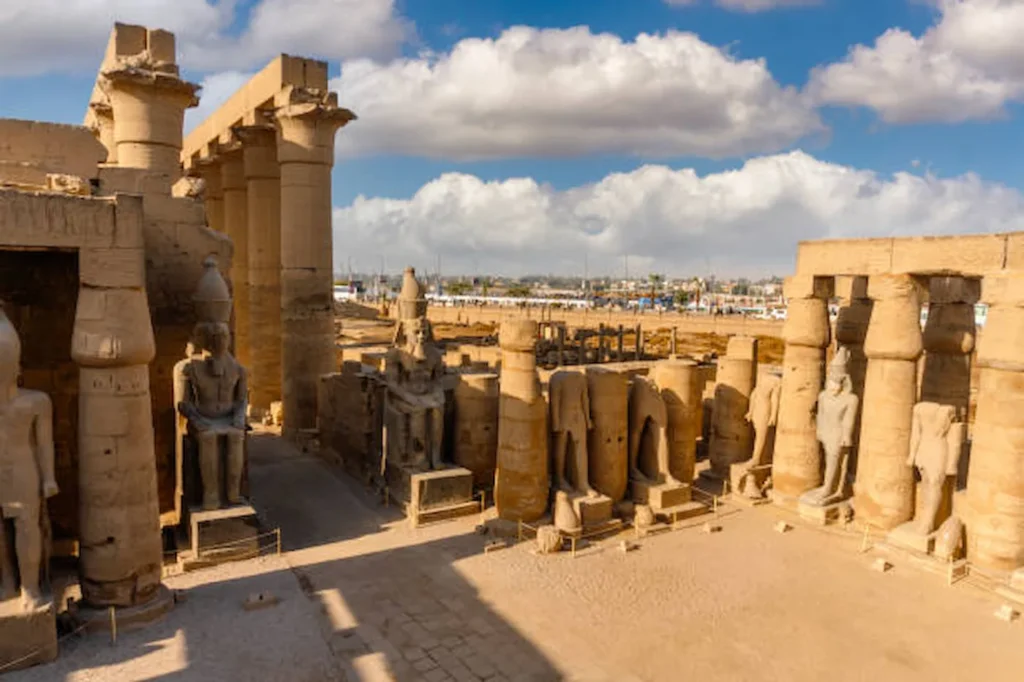
Karnak Temple Opening Hours & Tickets
The practical details below will help you avoid saying “I wish I had come earlier”. So it’s better to know that Opening Hours: 6:00 AM – 5:00 PM
Karnak Temple Ticket Price 2026
| Visitor Type | Price (2026) |
| Adult (foreign) | 600 EGP |
| Student (with ID) | 300 EGP |
| Sound & Light Show | $20 USD |
💡 The Open Air Museum ticket is absolutely worth the extra cost — it contains the White Chapel of Senusret I, which most visitors never see and which is, in our honest opinion, one of the ten most beautiful things in Egypt. Buy it at the main entrance before you go in.
Karnak Temple Sound and Light Show: Is It Worth It?
Yes — for first-time visitors, absolutely. The show runs every evening after sunset, taking you through the darkened complex as dramatic lighting illuminates the columns and obelisks. It ends at the Sacred Lake, where the illuminated temple reflects across still water. Even visitors who found the opening sections slow describe the lake finale as unforgettable.
Practical details:
- Duration: approximately 60 minutes
- Languages: English, French, Arabic, German, Italian, Spanish, and Japanese sessions available (check current schedule)
- Tickets: from 350 EGP, best purchased in advance during October–April
- What to bring: A light jacket (evenings in Luxor are cooler than you expect), comfortable shoes, and a small flashlight
⚠️ Honest note: The show is atmospheric but not a substitute for a daytime visit. If you can only do one, choose early morning. If you can do both, the contrast is extraordinary.
Practical Visitor Tips: What Our Guides Tell Every Traveler
These are the things we tell every client the night before their Karnak visit — the details that make the difference between a good experience and an unforgettable one.
- Arrive at 6:00 AM: Experience the Hypostyle Hall in golden dawn light before the 9:30 AM tour bus crowds arrive.
- Wear Sturdy Shoes: The ancient ground is uneven and gravelly; avoid flip-flops to prevent foot fatigue during the 3-hour walk.
- Stay Hydrated: Carry 1–2 liters of water per person, as vendors inside the vast 200-acre complex are sparsely located.
- Dress Modestly: Cover shoulders and knees to respect local culture and protect your skin from the intense Luxor sun.
- Visit the Open Air Museum: Don’t skip this (200 EGP ticket); it houses the White Chapel—the finest surviving Middle Kingdom jewel.
- Photography Light: While dawn is peaceful, the 3:00–5:00 PM window offers the warmest light for capturing deep reliefs on columns.
- Hire an Egyptologist: The wall inscriptions are a “living newspaper”; a guide transforms these stones into a 4,000-year conversation.
Karnak Temple Tours: What to Expect When You Book With Us
We want to be straightforward about what booking a tour through Nile Travel Machine actually means in practice — because we think the details matter.
Every Nile Travel Machine tour is fully private — your guide, your vehicle, your pace. Morning, afternoon, or evening slots available.
You can see full pricing, timing, and what’s included on our Karnak Temple tour page.
What is typically included in our Karnak tours?:
Private air-conditioned vehicle with hotel or dock pickup and drop-off. Certified Egyptologist guide for the full duration of the visit. Flexible timing — morning, afternoon, or evening options. Assistance with ticket purchase at the entrance. Optional extensions to Luxor Temple, the Avenue of Sphinxes, Karnak Sound and Light Show, or West Bank sites.
- Entry tickets are purchased separately at the gate and are not included in the base tour price — this is standard practice across Luxor and ensures you always pay the official government rate with no markup.
- How to book: Use the booking form on our website, send us a WhatsApp message, or email us directly. We confirm availability within a few hours and send a full itinerary confirmation before you arrive in Luxor.
Frequently Asked Questions About Karnak Temple
How old is Karnak Temple?
Built over 2,000 years (2055 BC – 100 AD), it evolved from a Middle Kingdom shrine into a massive stone city.
How many columns does the Great Hypostyle Hall have?
It features 134 colossal columns; the 12 central ones soar 21 meters high, resembling a majestic stone forest.
What god is Karnak Temple dedicated to?
Primarily the sun god Amun-Ra, along with Mut and Khonsu, together forming the sacred Theban Triad.
Is the Karnak Temple the biggest temple in Egypt?
Yes, it is the world’s largest religious complex, covering 200+ acres—large enough to contain ten average cathedrals.
Is Karnak Temple bigger than the Pyramids?
In ground area, yes; Karnak covers more land than the entire Giza Plateau, including all three pyramids.
What is the difference between Karnak and Luxor Temple?
Karnak is a vast, multi-temple religious city; Luxor Temple is a compact, elegant site built for festivals and coronations.
Can women visit Karnak Temple alone?
Absolutely. It is a safe, public site. For extra comfort, we provide private tours with female Egyptologist guides.
What should I wear to Karnak Temple?
Breathable clothing covering shoulders and knees, comfortable walking shoes, a hat, and plenty of high-SPF sunscreen.
Is photography allowed inside Karnak Temple?
Personal smartphone photography is free; professional equipment like tripods requires a small additional fee on-site.
Can I visit Karnak Temple independently without a guide?
Yes, but a guide is vital to deciphering complex hieroglyphics and finding hidden, non-touristy sections.
One Last Thing Before You Go
We have guided travelers through Karnak for years. The response we hear most often — from historians, architects, and people who had no particular interest in ancient Egypt before arriving — is the same: “I had no idea it would feel like this.”
View all Egypt Tours, and contact us for our Luxor Team
