

Top 10 Historical Sites in Egypt Every Curious Traveller Must See
You’ve studied the history. You’ve seen the documentaries. But nothing — nothing — prepares you for the moment you actually stand inside Egypt’s ancient world. If visiting the most iconic historical sites and ancient landmarks in Egypt is on your list, this guide will help you make every hour count.
Egypt’s Ancient Sites: More Than a Photo Opportunity
Egypt holds more ancient monuments per square kilometer than almost anywhere on Earth. The country is, in effect, one vast open-air museum — but unlike any museum you’ve been to.
Here, the artifacts are enormous, the ceilings are painted with the stars of the cosmos, and the stories etched into the walls are 3,000 years old.
Whether you’re drawn to pharaonic architecture, Greco-Roman mysteries, or the living energy of Islamic Cairo, Egypt’s ancient ruins deliver something for every kind of curious traveler.
Expert Perspective — Ahmed Abdo, Licensed Egyptologist & Tour Guide (Luxor):
“Most visitors spend three days in Luxor and feel they’ve scratched the surface. My advice? Pick two or three sites and go deep. Karnak at dawn with a knowledgeable guide will teach you more about ancient Egypt than a full day of rushing between temples ever will.”
1. The Giza Pyramids — Where Legends Become Real
The Pyramids of Giza are the only surviving wonder of the ancient world, and the first thing most travelers picture when they think of Egypt.
Standing on the Giza Plateau for the first time, facing structures that have outlasted empires by thousands of years, is a genuinely humbling experience.
Three Pyramids, Three Stories
The plateau holds three main pyramids, each built as a royal tomb for a pharaoh of the Old Kingdom:
| Pyramid | Pharaoh | Original Height | Distinctive Feature |
|---|---|---|---|
| Great Pyramid | Khufu | 146 m | World’s tallest structure for 3,800 years |
| Pyramid of Khafre | Khafre | 136 m | Guardian of the Great Sphinx |
| Pyramid of Menkaure | Menkaure | 65 m | Red granite casing, intricate interior |
A Site Connected to the Stars
The three pyramids align precisely with the belt stars of the Orion constellation — a deliberate celestial map encoded in stone.
What Can You Do at the Pyramids?
- Enter the Great Pyramid and walk through the ascending passage to the King’s Chamber
- Visit the Great Sphinx and its ancient Valley Temple
- Take a camel or horseback ride through the desert plateau for panoramic photos
- See Khufu’s 4,500-year-old Solar Boat, now displayed at the Grand Egyptian Museum
Want to explore the Pyramids with a private Egyptologist guide and skip the crowds? Book Your Private Pyramids Tour Today
2. Karnak Temple — The Largest Temple Complex Ever Built
Karnak isn’t just a temple. It’s a city of temples, built and expanded by pharaoh after pharaoh over 2,000 years. Located in Luxor. Walking through Karnak feels like stepping into an ancient city dedicated entirely to the gods. Ready to visit? See our Karnak Temple tour for details and pricing.
The Great Hypostyle Hall: A Stone Forest That Defies Logic
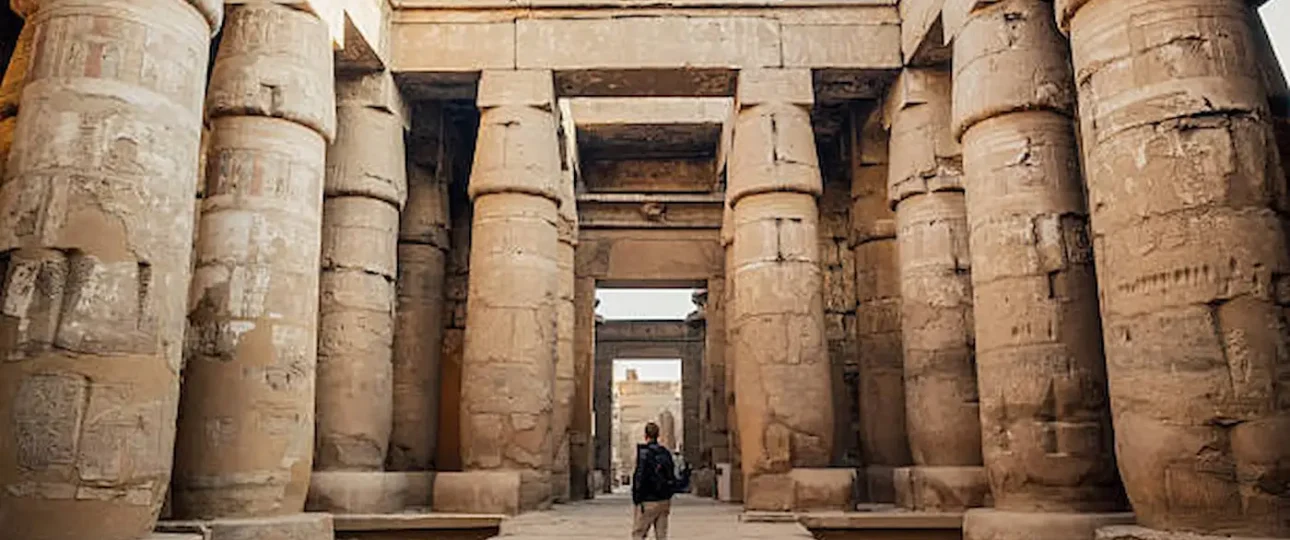
Nothing in Karnak stops visitors in their tracks quite like the Great Hypostyle Hall — a gigantic space filled with 134 massive columns arranged like a forest of stone.
Each column is decorated with hieroglyphs and images of pharaohs making offerings to the gods. When the sunlight streams between them, you’ll feel like you’re in the middle of something magical.
The Hidden Layers Most Tourists Miss
- The Sacred Lake, used for priestly purification rituals
- The obelisk of Queen Hatshepsut, a symbol of her strength and lasting legacy
- The Temple of Ptah, home to a mystical statue of the lioness goddess Sekhmet
- The White Chapel, beautifully restored with original Middle Kingdom carvings
- The quiet chambers and shrines behind the main sanctuary
Every area has a story, and every wall is a piece of art.
Travel Tip: Visit early morning or late afternoon for the best lighting and fewer crowds. And if possible — go with a trained Egyptologist. Explore our curated Luxor Day Tours.
3. Valley of the Kings — Where Pharaohs Hid Their Eternity
On Luxor’s West Bank, carved into desert cliffs, lies one of the most extraordinary archaeological zones on Earth. The Valley of the Kings contains more than 60 royal tombs from the New Kingdom era — each one a masterpiece of ancient Egyptian art and theology. Our Luxor West Bank day trip covers the Valley of the Kings along with Hatshepsut’s temple.
Why Did the Pharaohs Choose This Valley?
After tomb robbers plundered earlier pyramids, New Kingdom pharaohs switched strategy. They chose a remote desert valley — hidden, overlooked by a pyramid-shaped peak considered sacred to the goddess Meretseger.
Instead of giant pyramids, pharaohs were buried in hidden underground tombs. The logic: obscurity over grandeur.
The Tomb of Tutankhamun — Small Room, World-Changing Discovery
The most famous tomb in the valley is, of course, King Tut’s tomb — discovered in 1922 by Howard Carter. While small compared to others, it’s the only tomb found mostly intact. The treasures found inside are now showcased at the Grand Egyptian Museum in Cairo.
The Wall Paintings That Still Glow After 3,000 Years
Every tomb is covered in colorful scenes from the afterlife. Some show the sun god traveling through the underworld; others show the pharaoh being welcomed by the gods. These paintings are over 3,000 years old — and still glowing with color.
Travel Tip: Buy the extra ticket to visit the tomb of Ramses V & VI — it’s one of the most beautiful in the entire valley, with rich blue ceilings dotted with golden stars.
4. Abu Simbel — The Temple That Moved an Entire Mountain
Down near the Sudanese border lies one of Egypt’s most awe-inspiring wonders: Abu Simbel, the temple of Ramses II. Two enormous temples were carved directly into a mountain over 3,200 years ago — and then, in an audacious UNESCO rescue mission, moved stone by stone to save them from rising floodwaters.
The Four Colossal Guardians
Outside the main temple stand four colossal statues of Ramses II, each over 20 meters tall. See our Abu Simbel day tour from Aswan for the full visiting logistics. Inside, the halls are filled with:
- Giant pillars shaped like Ramses II
- Beautiful carvings celebrating his victories
- A sanctuary aligned with the sun
The Abu Simbel Sun Festival — An Ancient Solar Calendar
Twice a year — on February 22 and October 22 — sunlight travels through the temple and lights up the sanctuary inside. This astronomical alignment, built over 3,200 years ago, functions flawlessly today.
| Detail | Information |
|---|---|
| Sun Festival Dates | February 22 & October 22 |
| Temple Orientation | East-facing, sunrise aligned |
| Temple Relocation | 1968, UNESCO-led rescue project |
| Distance from Aswan | ~280 km (approx. 3 hrs by road) |
Temple of Queen Nefertari
Next door is a smaller but equally stunning temple dedicated to Nefertari, Ramses’ beloved wife. Her statues stand side-by-side with his — an honor rarely given to a queen.
Ready to stand beneath the colossal statues of Ramses II? Let our experts handle early departures, private transfers, and professional guides. Explore our Aswan Day Tours.
5. Luxor Temple — Where Pharaohs Were Born into Gods
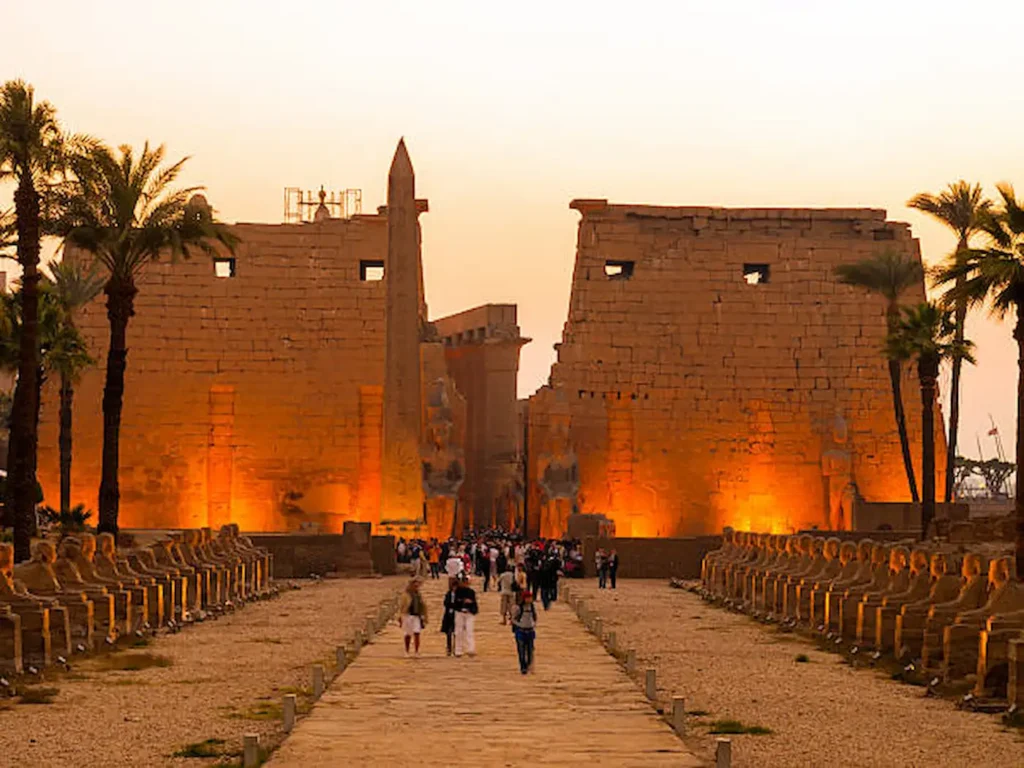
While Karnak is impressive during the day, Luxor Temple is pure magic at night. Located in the center of Luxor on the east bank of the Nile, this temple glows beautifully under warm golden lights — and it may be the most atmospherically beautiful ancient site in all of Egypt after dark.
The Ceremony That Shaped Civilization
Luxor Temple hosted the Opet Festival — the annual ceremony in which the pharaoh merged spiritually with Amun-Ra to renew his divine authority. The entire ritual structure of Egyptian kingship played out within these walls for centuries.
Nighttime Illumination — A Different World After Sunset
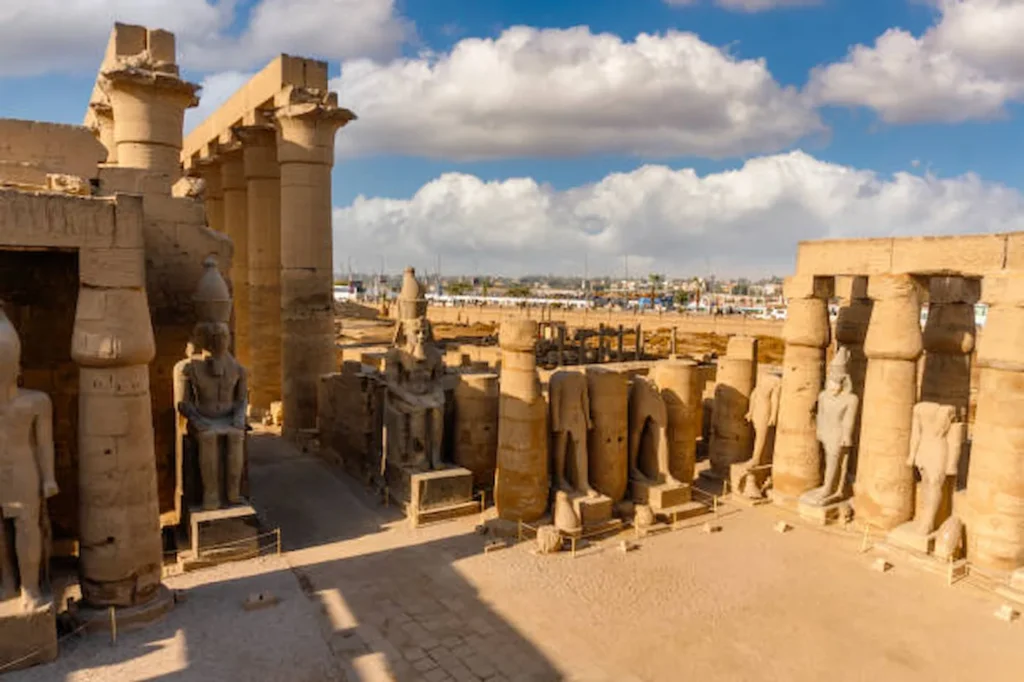
- Columns light up in amber hues against the deep blue evening sky
- Statues cast dramatic shadows across the courtyard
- The sky turns deep blue behind the ancient stones
A Living Temple — Three Civilizations in One
Luxor Temple also features:
- A working mosque (Abu Haggag Mosque)
- Chapels built by Alexander the Great
- Roman additions and frescoes painted over ancient reliefs
- Restored colonnades
History layers beautifully here, making Luxor Temple both grand and intimate. It’s one of the most tangible proofs on Earth that civilizations don’t replace one another — they layer.
6. Saqqara — Where Egypt’s Architectural Revolution Began
Before the Pyramids of Giza, Egypt built the Step Pyramid of Djoser in Saqqara. Considered the world’s first monumental stone structure, it represents the moment architecture changed forever — designed by the brilliant architect Imhotep, who was later deified for his genius.
The Step Pyramid: Six Stages of Ambition
Imhotep stacked six mastabas of decreasing size to create a staircase toward the sky — a prototype that led directly to the Great Pyramid two generations later. Standing here, you’re watching the birth of an architectural idea that changed the world.
The Saqqara Necropolis — More Than One Pyramid
Saqqara is packed with tombs filled with:
- Bright, colorful carvings and ancient stories of daily-life scenes
- Well-preserved hieroglyphs
- The Tomb of Mereruka: vivid carvings of farming, fishing, and craftwork
- The Serapeum: underground galleries housing massive granite sarcophagi of sacred Apis bulls
Travel Tip: Saqqara is less crowded than Giza — perfect if you want a peaceful, more immersive experience. Pair it with a Cairo day tour.
7. Philae Temple — The Island Sanctuary That Was Saved from the Flood
Floating on an island in Aswan is the stunning Temple of Philae, dedicated to Isis — goddess of love, magic, and motherhood. Getting there requires a short motorboat ride, which makes the approach feel like a genuine pilgrimage.
The Rescue That Required Moving 45,000 Stones
In the 1960s, rising waters from the Aswan High Dam threatened to drown Philae Temple forever. In an extraordinary rescue mission, UNESCO moved the entire temple — stone by stone — to a nearby island. Over 45,000 individual blocks were relocated to save 2,000 years of history. Our Philae Temple tour covers this rescue story in more depth on site.
Why Travelers Love Philae
- You reach it by boat — the cinematic approach is unforgettable
- The temple is peaceful and romantic, rarely overcrowded
- Its carvings are beautifully preserved
- It’s stunning at sunset
- The Sound & Light Show is magical at night
Philae has a soft, serene atmosphere unlike anywhere else in Egypt. Planning an Aswan itinerary? Browse our Aswan day tours, which combine Philae with the Aswan High Dam and Nubian culture in a single seamless day.
8. Temple of Hatshepsut — The Architecture That Shocked Archaeologists
Built into the cliffs of Deir el-Bahari, this temple honors Hatshepsut, one of Egypt’s most powerful female rulers. Where Egyptian temples typically overwhelm with mass and darkness, Hatshepsut’s temple dazzles with light, horizontal lines, and geometric precision that feels almost modern.
The Queen Who Became Pharaoh — and Built the Evidence
Hatshepsut declared herself Pharaoh — wearing the double crown, the false beard, and adopting all royal titles. She ruled Egypt for over 20 years, launched a celebrated trade expedition to the land of Punt, and built this temple to document it all in spectacular carved relief.
Architectural Beauty That Defies the Desert
Her temple features:
- Terraces rising dramatically toward the limestone cliffs
- Long, elegant colonnades framing reliefs of Hatshepsut’s divine birth
- Bright, colorful reliefs and peaceful courtyards
- The upper sanctuary, cut into the rock itself — cool, dim, and stunning
9. Alexandria’s Catacombs — Egypt’s Most Underrated Historical Site
A surprising blend of Egyptian, Greek, and Roman cultures, the Catacombs of Kom El-Shoqafa are one of the most unusual historical sites in Egypt. This three-tiered subterranean tomb complex fuses three funerary traditions in a way found nowhere else on Earth. It’s usually visited as part of our Alexandria day trip from Cairo.
The Tri-Cultural Underworld
Deep below the city of Alexandria, you’ll find:
- Anubis depicted in Roman military armor — Egyptian gods, Roman style
- Medusa heads carved beside Egyptian hieroglyphs
- A Roman-style triclinium (dining room) used for funerary banquets
- Spiral staircases descending three stories below the city
- Carved burial chambers with unique hybrid mythological art
It’s eerie, fascinating, and incredibly photogenic. The catacombs were accidentally rediscovered in 1900 when a donkey fell through a hole in the ground. For an authoritative historical overview, Britannica’s entry on the Catacombs of Kom El-Shoqafa is an excellent reference.
10. Islamic Cairo — Where the Middle Ages Are Still Alive
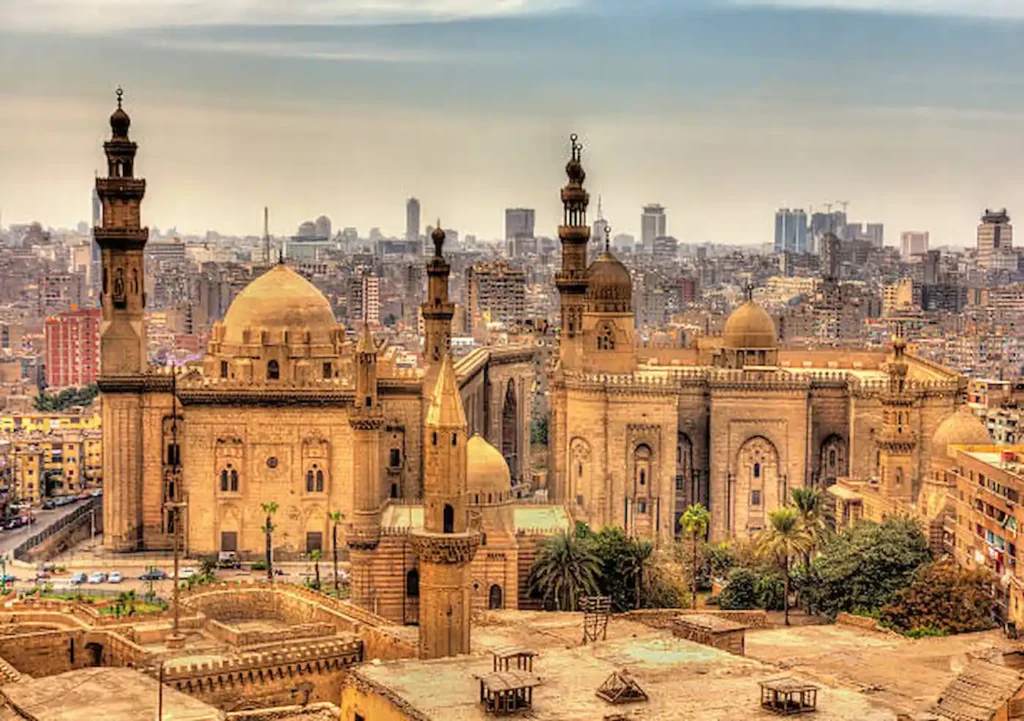
Beyond ancient temples, Egypt also offers a rich medieval heritage. Islamic Cairo — a UNESCO World Heritage-listed district — contains the densest concentration of medieval Islamic architecture anywhere in the world.
Top Highlights
- Khan El Khalili Bazaar — a living, breathing souk with roots in the Fatimid period
- Al-Azhar Mosque — founded in 970 AD, one of the oldest continuously operating universities in the world
- Sultan Hassan Mosque — an overwhelming example of Mamluk grandeur
- Al-Muizz Street — a 1km open-air corridor of mosques, mausoleums, and Mamluk architecture
- Citadel of Saladin — the fortress that has dominated Cairo’s skyline since the 12th century
Egypt Historical Sites & Landmarks at a Glance — Quick Planning Reference
| Site | Location | Best For | Closest City |
|---|---|---|---|
| Giza Pyramids | Giza Plateau | Iconic bucket-list experience | Cairo |
| Karnak Temple | East Bank, Luxor | Scale & ancient religion | Luxor |
| Valley of the Kings | West Bank, Luxor | Royal tombs & wall paintings | Luxor |
| Abu Simbel | Near Aswan | Colossal rock-cut temples | Aswan |
| Luxor Temple | City center, Luxor | Nighttime ambience | Luxor |
| Saqqara | South of Cairo | First pyramid, fewer crowds | Cairo |
| Philae Temple | Nile island, Aswan | Serene beauty, boat access | Aswan |
| Temple of Hatshepsut | West Bank, Luxor | Female pharaoh history | Luxor |
| Catacombs of Kom El-Shoqafa | Alexandria | Greco-Roman-Egyptian fusion | Alexandria |
| Islamic Cairo | Historic Cairo | Medieval Islamic heritage | Cairo |
How to Book Your Egypt Historical Sites Tour
Planning to explore these incredible historical sites? Choosing the right tour company makes a huge difference. With Nile Travel Machine, you can explore Egypt with ease, comfort, and confidence.
Why Book with Nile Travel Machine?
- Expert licensed Egyptologist guides
- Flexible, personalized itineraries
- Private transportation throughout
- Personalized service and easy online booking
Whether you want a curated Egypt tour package or a fully tailor-made itinerary, Nile Travel Machine handles every detail so you can focus on the experience.
Frequently Asked Questions
Which historical sites in Egypt can you actually go inside?
Many of Egypt’s most famous ancient sites allow interior access, including the Pyramids, the tombs in the Valley of the Kings, the inner chambers of Abu Simbel, and the Catacombs of Kom El-Shoqafa. Access levels vary by site and ticket type.
How many days do you need to visit Egypt’s main ancient monuments properly?
A focused 7–10 day itinerary covers the essential sites — Cairo and Giza, Luxor’s East and West Banks, and Aswan with Abu Simbel — without feeling rushed. Travelers wanting to add Alexandria or explore lesser-known West Bank tombs should plan for 12–14 days.
Are Egypt’s ancient ruins accessible for travelers with mobility limitations?
Surface-level access at sites like Karnak, Luxor Temple, and the Giza Plateau is generally manageable for most visitors. However, interior chambers involve steep stairs and uneven ground. It’s best to discuss specific needs with your tour operator before visiting.
What is the single most underrated ancient site in Egypt that most tourists skip?
Saqqara consistently surprises travelers who expect it to feel like “Giza’s lesser sibling.” It’s older, richer in variety, and far more peaceful than the Giza Plateau. The Serapeum alone — a vast underground gallery of multi-ton granite Apis bull sarcophagi.
What are the most famous historical landmarks in Egypt?
The most famous historical landmarks in Egypt include the Giza Pyramids and Great Sphinx, Karnak Temple, the Valley of the Kings, Abu Simbel, and Luxor Temple. Beyond these headline sites, Saqqara, Philae Temple, and the Temple of Hatshepsut round out the list of ancient places every first-time visitor should prioritize.
Final Thought
Egypt’s historical sites don’t just reward curiosity — they actively reshape it. Every temple, tomb, and ancient monument you visit leaves you with better questions than the ones you arrived with.
That’s the nature of a civilization that was building world-changing architecture for 3,000 years. The stones are still here.
