
King Tut Tour Without Curse: 5 Real Secrets Behind the Pharaoh’s Legend
Want to explore King Tut’s tomb without the shadow of ancient curses ruining the wonder? A King Tut tour without curse anxiety is not only possible — it’s the only way to experience one of archaeology’s greatest discoveries truly.
What Actually Happened When Howard Carter Opened Tutankhamun’s Tomb?
On November 4, 1922, British archaeologist Howard Carter made the find of the century in the Valley of the Kings, Luxor. Sealed for over 3,000 years, Tutankhamun’s burial chamber — KV62 — held more than 5,000 artifacts, including the now-iconic golden death mask. The teenage pharaoh, who ruled during Egypt’s 18th Dynasty around 1332–1323 BCE, had been largely forgotten until Carter’s excavation team broke through.
Lord Carnarvon, the expedition’s financier, died seven weeks after the tomb opening — from an infected mosquito bite that turned septic. He had long suffered from poor health after a serious car accident years prior. Newspapers, starved for sensation, transformed a medical misfortune into a supernatural verdict: “Pharaoh’s Curse Strikes Down Explorer.”
Ready to walk the same sands Carter did — without the mythology weighing you down? Explore our curated Luxor day tours and step into the Valley of the Kings with an expert guide by your side.
The “Curse” Decoded: 5 Real Secrets Behind the Legend
Secret 1: No Curse Inscription Was Ever Found in Tut’s Tomb
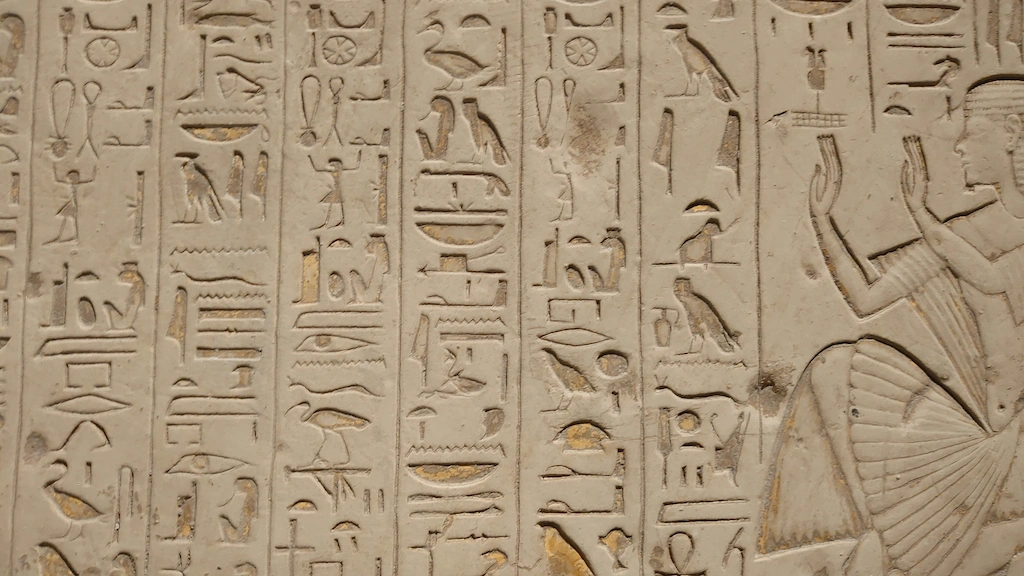
This is the fact that dismantles the entire myth. Unlike some Old Kingdom tombs — such as the 6th-dynasty tomb of Khentika Ikhekhi, which warns intruders “I shall seize his neck like a bird” — Tutankhamun’s burial chamber contained zero curse inscriptions. The legend was born entirely outside the tomb, in Fleet Street editorial rooms and sensationalist telegrams.
Secret 2: The Statistics Tell a Very Different Story
Of the 58 people present at the tomb’s opening, only 8 died within the following decade. Howard Carter himself — the man who physically broke the seal and entered first — lived until 1939, a full 17 years after the discovery. Statisticians who have analyzed the “curse deaths” consistently find the mortality rate falls within normal probability for a group of that age and era.
Secret 3: Ancient Egyptian “Curses” Were Psychological Deterrents, Not Magic
Rare hieroglyphic warnings in pre-Dynastic and Old Kingdom tombs were carved to deter thieves, not smite archaeologists millennia later. As renowned Egyptologist Zahi Hawass has described it, these carvings were essentially the world’s first security system — leveraging the fear of divine retribution to protect sacred spaces. Ancient Egyptians understood the power of belief far better than we credit them.
Secret 4: Microbiology, Not Magic — The Aspergillus Argument
Could ancient pathogens be the “real” curse? Some researchers have pointed to Aspergillus niger and Aspergillus flavus molds, along with Pseudomonas bacteria, found in sealed tombs. For individuals with compromised immune systems — like Lord Carnarvon after years of illness — exposure to concentrated ancient mold spores could theoretically cause serious respiratory illness. It’s a fascinating footnote, but it’s biology, not sorcery.
Secret 5: The Media Machine Created the Curse — And Kept It Alive
The 1922 discovery coincided with the golden age of tabloid journalism. Arthur Conan Doyle — creator of Sherlock Holmes — publicly suggested that “elementals” guarded the tomb, lending the myth literary credibility. Hollywood picked up the baton with Boris Karloff’s The Mummy (1932), and the trope has never looked back. The curse is, at its core, a masterpiece of early viral storytelling.
Tutankhamun’s Treasures: What You Actually See When You Visit
The physical evidence of Tutankhamun’s reign is breathtaking — and entirely real. Here’s a quick overview of the key sites and what they hold:
| Location | What You’ll Experience | Highlight |
|---|---|---|
| Valley of the Kings (KV62), Luxor | Enter the actual tomb chambers of Tutankhamun | Original wall paintings & royal sarcophagus |
| Grand Egyptian Museum (GEM), Cairo | The world’s largest collection of Tut’s artifacts | Golden death mask, golden throne, chariots |
| Egyptian Museum, Tahrir Square, Cairo | Legacy Tut artifacts & royal mummies | Canopic jars, jewelry, shabtis |
| Luxor Museum | Select 18th Dynasty royal objects | Statues of Amenhotep III & Tutankhamun |
Planning to see both Cairo’s museums and Luxor’s Valley of the Kings? Our Cairo day tours cover the Grand Egyptian Museum in depth, with expert Egyptologist guides who bring Tut’s story to vivid, curse-free life.
The 18th Dynasty Context: Who Was Tutankhamun, Really?
Born around 1341 BCE, Tutankhamun was the son of the “heretic pharaoh” Akhenaten — the king who controversially replaced Egypt’s polytheistic pantheon with the monotheistic worship of Aten.
Tut inherited the throne at approximately nine years old and ruled for a decade before dying around age 19. His advisors, Vizier Ay and General Horemheb, wielded the real power, and both eventually succeeded him as pharaoh.
During his short reign, Tutankhamun — originally named Tutankhaten — reversed his father’s religious reforms, restoring the worship of Amun-Ra and the traditional Egyptian gods.
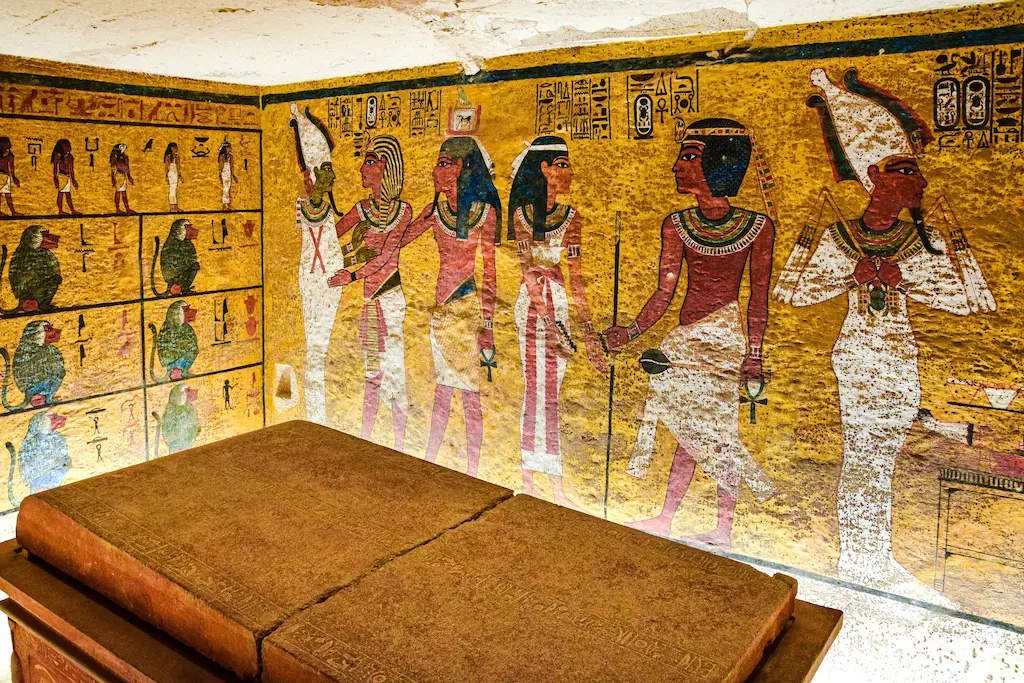
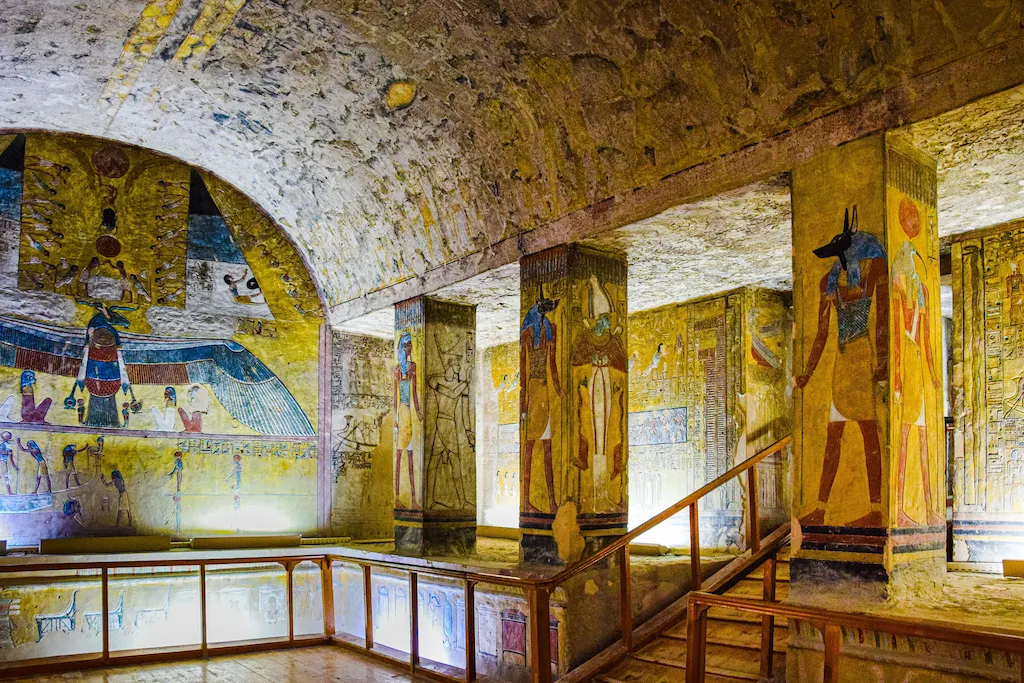
His name change itself, from “-aten” to “-amun,” was a deliberate political statement. The gods Osiris, Isis, Anubis, and Thoth — all central to Egyptian funerary beliefs — are depicted throughout his burial chamber.
DNA analysis conducted on Tut’s mummy in 2010 revealed multiple malaria infections, a club foot, and evidence of Köhler disease, suggesting his death was likely caused by a combination of genetic disorders and illness rather than foul play — or pharaonic curses.
Why the Valley of the Kings Rewards the Intellectually Curious Traveler
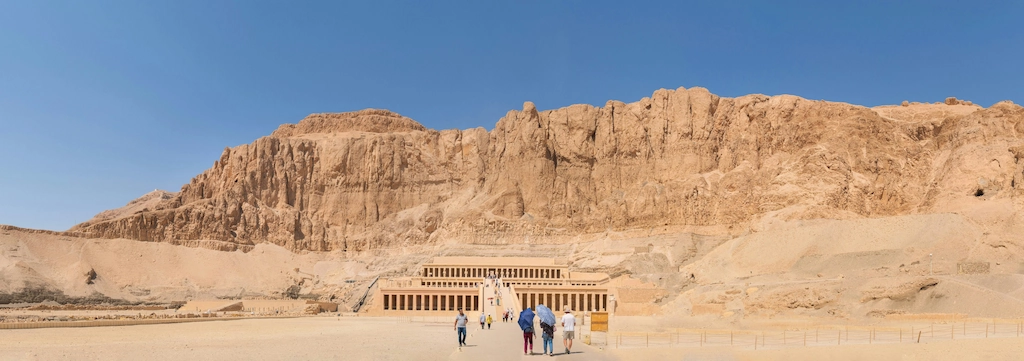
The Valley of the Kings on Luxor’s West Bank holds 63 known royal tombs from the New Kingdom period (1550–1070 BCE).
Most were cut deep into the limestone cliffs to deter the very tomb robbers those “curse” inscriptions warned against — and most were robbed anyway within centuries of sealing.
Field Note from Our Luxor Guide, Ahmed S.: “Every time I take guests into KV62, the reaction is the same — they go quiet. Not from fear. From awe. When you stand where Howard Carter stood and look at those wall paintings, still vivid after 3,300 years, the curse is the last thing on your mind. The artistry is overwhelming.”
That’s the experience our travelers consistently describe. At Nile Travel Machine, we pair every Valley of the Kings visit with an Egyptologist guide who contextualizes the tombs’ religious symbolism — the Book of the Dead passages, the Amduat journey through the underworld, the depictions of Ra’s nightly rebirth — so you leave with understanding, not mythology.
Want to combine the Valley of the Kings with Karnak Temple and Luxor Temple in a single immersive day? Browse our Luxor tour packages — we handle every logistical detail so you focus entirely on the experience.
Beyond the Curse: The Enduring Cultural Legacy of Tutankhamun
The “curse of the pharaohs” has done something remarkable for Egyptian tourism: it made ancient history irresistible to mainstream audiences who might never have picked up an Egyptology textbook.
The myth has inspired films, novels, escape rooms, video games, and Halloween aesthetics for over a century. In that sense, the curse has been Egypt’s most effective — if entirely fictional — marketing campaign.
Modern Egyptology has moved far beyond the sensationalism of 1922. Today’s excavations at sites like Saqqara continue to yield extraordinary discoveries — the 2022 season alone uncovered over 250 sealed wooden coffins and hundreds of bronze statues in the area near Tut’s historical context.
The real story of ancient Egypt is richer, stranger, and more scientifically compelling than any curse mythology.
For travelers who want the full sweep of ancient Egyptian civilization — from the Old Kingdom pyramids to the New Kingdom tombs — our Aswan tours and Hurghada excursions can be seamlessly combined with a Luxor Valley of the Kings experience into a complete Egyptian journey.
Frequently Asked Questions
Does a King Tut tour without curse myths actually exist, or do all guides focus on the legend?
Absolutely — and it’s the better experience. A genuine King Tut tour without curse theatrics focuses on verified archaeology, 18th Dynasty history, and the tomb’s extraordinary artistic program. At Nile Travel Machine, our Egyptologist guides are trained historians who present the evidence, debunk the myths, and let the real discoveries speak for themselves.
What did Howard Carter find inside Tutankhamun’s burial chamber that was so significant?
Carter discovered four nested shrine rooms, a quartzite sarcophagus housing three coffins (the innermost of solid gold), Tutankhamun’s mummified remains, and over 5,000 artifacts including the golden death mask, chariots, weapons, furniture, and ritual objects. It remains the most complete New Kingdom royal tomb ever found — because it was hidden beneath later workmen’s huts and escaped systematic ancient robbery.
Are there real health risks inside ancient Egyptian tombs that visitors should know about?
Modern tomb sites open to the public, including KV62, are monitored and ventilated. The theoretical risk from ancient mold spores — sometimes cited as a “scientific” basis for the curse — applied to people spending extended periods in unventilated chambers in the 1920s, not to contemporary visitors on guided tours. Standard precautions are in place at all Valley of the Kings sites managed by Egypt’s Ministry of Tourism and Antiquities.
Which artifacts from Tutankhamun’s tomb can I see at the Grand Egyptian Museum in 2025?
The Grand Egyptian Museum (GEM) in Giza now houses the complete Tutankhamun collection — all 5,000+ artifacts — displayed together for the first time since their discovery.
Highlights include the golden death mask, the golden throne depicting Tut and Queen Ankhesenamun, the ceremonial chariots, and the miniature golden coffins housing his canopic organs.
It is, without question, the single most important museum visit in Egypt. For a well-informed reference on the collection’s historical context, see the Metropolitan Museum of Art’s Tutankhamun resource.
The Bottom Line: History, Not Horror
Tutankhamun’s story is one of archaeology’s greatest triumphs — a young king, a hidden tomb, and a discovery that reshaped our understanding of New Kingdom Egypt.
The curse was a media invention that has served its purpose, but the real treasure is the history. Come for the golden mask. Stay for the 3,300-year-old wall paintings that are still teaching us things.
Ready to experience it for yourself? Book your Luxor Valley of the Kings tour with Nile Travel Machine and let our expert guides handle every detail — so you arrive at KV62 with nothing but curiosity.