

Why is the Mouled Abu El-Haggag Festival the Heartbeat of Luxor?
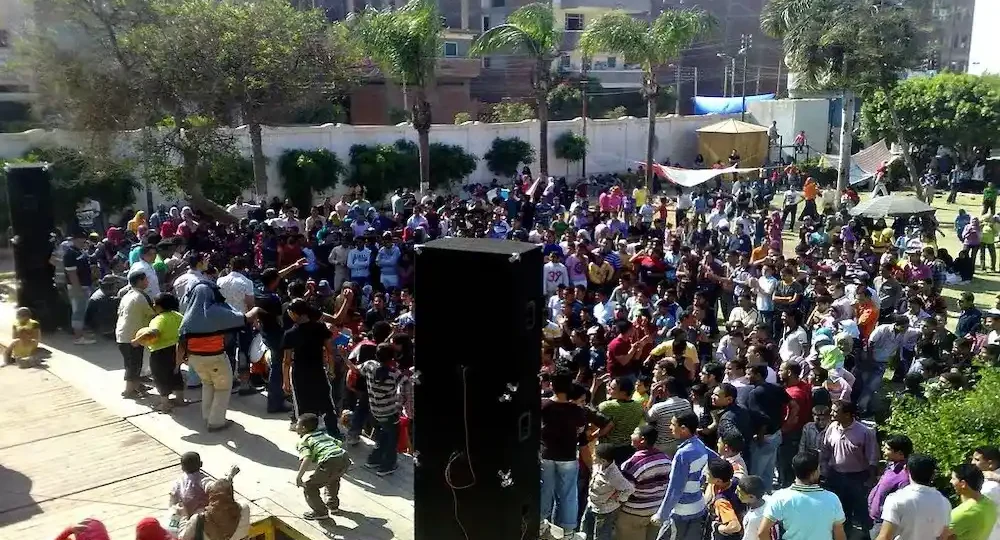
Imagine standing at the gates of the Luxor Temple, the air thick with the scent of burning “Oud” and roasting meat. Around you, the rhythmic beat of the Tabl drum vibrates through your chest, while thousands of voices rise in a unified, hypnotic chant. This isn’t just a festival; it’s a living bridge between two worlds. The Mouled Abu El-Haggag Festival is the only place on Earth where Islamic Sufism meets the grandeur of the Pharaohs in a vibrant explosion of color, music, and tradition.
At Nile Travel Machine, we know that Luxor is famous for its “City of the Dead,” but during this festival, you witness the “City of the Living” at its most vibrant.
💡 A Note from the Streets of Luxor: This festival isn’t a staged show for tourists. It is raw, loud, and deeply personal for the locals. To get the best view of the Dora parade, try to find a balcony seat at one of the cafes overlooking the temple square. Check our Private Luxor Experiences.
Who was Sheikh Yusuf Abu El-Haggag and Why is He Honored?
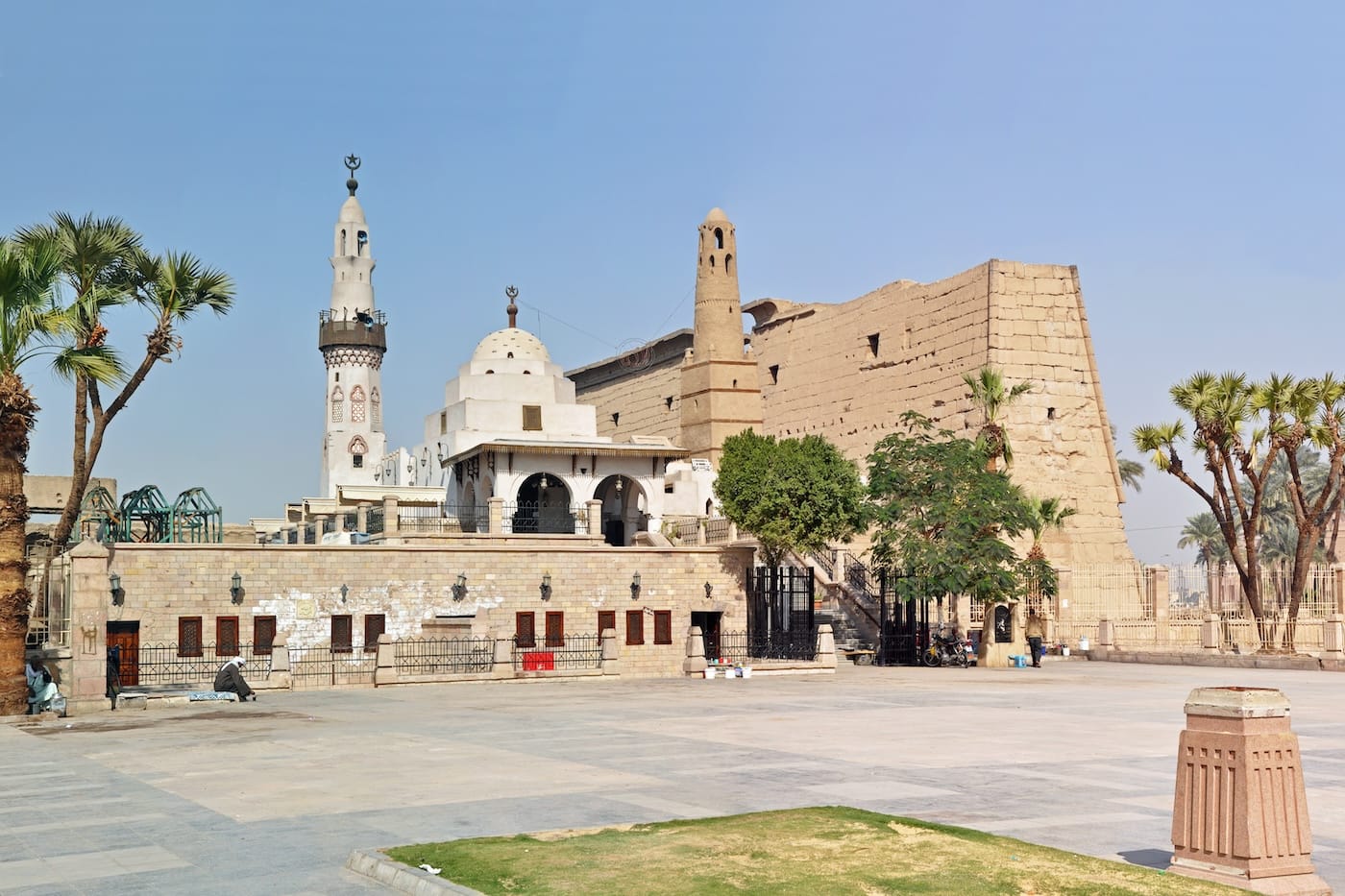
To understand the festival, you must understand the history of this man. Yusuf Abu El-Haggag wasn’t just a 13th-century Sufi saint; he is the “Patron Saint of Luxor.” Legend says he settled in the ruins of the Luxor Temple over 800 years ago, bringing a message of peace and devotion.
What makes his legacy mind-blowing is his mosque, which bears his name and is an architectural miracle. It sits perched nearly 12 meters above the ground, built directly into the columns of the court of Ramses II. When you attend the Mouled Abu El-Haggag Festival, you are witnessing a miracle of continuity.
While the ancient gods once marched here for Amun-Ra, the descendants of the Sheikh now march for a Sufi saint, using the same paths and the same spiritual energy.
What are the Hidden Secrets of the Festival’s Traditions?
The festival is a multi-day marathon of spiritual joy. If you want to capture the true essence, you need to look closer at these four pillars of the celebration:
1. Why do Boats “Sail” on Dry Land?
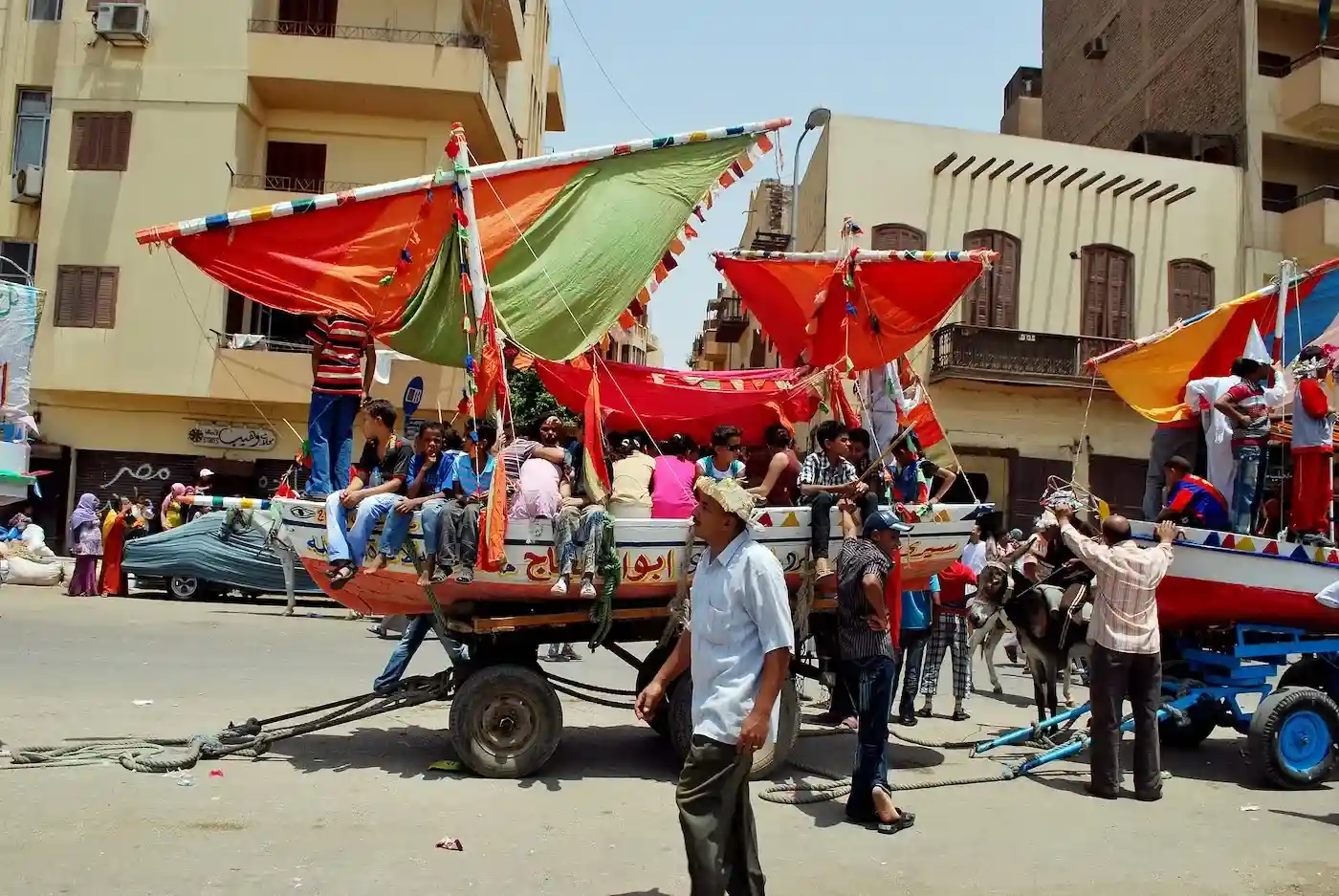
The sight of colorful boats being pulled by donkeys through dusty streets is the highlight of the Mouled Abu El-Haggag Festival. This isn’t a random choice. It is a direct “cultural echo” of the Ancient Egyptian Opet Festival.
Thousands of years ago, sacred barques were carried here to rejuvenate the King. Today, these boats symbolize the Sheikh’s journey and the “Ship of Knowledge.” It is a visual proof that the Egyptian spirit never truly changes.
2. Tahtib: Is it a Dance or a Duel?
In the shadows of the ancient columns, you will see men circling each other with long wooden sticks. This is Tahtib, the oldest martial art in history. It requires incredible agility and respect. During the festival, the energy of the crowd turns these duels into a rhythmic dance, accompanied by the high-pitched wail of the Mizmar.
3. The Spiritual Trance of the Zikr
As night falls, the atmosphere shifts. In the “Big Night” (Layla Kebira), the Sufi orders gather for the Zikr. The repetitive chanting of the names of God creates a trance-like state that is deeply moving, even if you don’t speak a word of Arabic. It is an experience of pure, unadulterated spirituality.
4. Arabian Horse Racing: A Display of Gallantry
Luxorians are famous for their relationship with horses. During the horse races, riders don’t just run; they perform. They balance sticks and perform “horse dancing” (Raqs al-Khayl) to the beat of drums, showing off the grace and power of the Arabian breed.
Read more: Egyptian Festivals: A Local’s Guide to the Most Vibrant Celebrations
What is the Secret Ingredient of Luxor’s Hospitality?
You cannot travel to Luxor during the Mouled without being invited to eat. Hospitality (Karam) is the festival’s unspoken rule.
- The Communal Feast: Families prepare massive quantities of Fattah (rice, bread, and meat) and Kebabs.
- The Sweet Side: Don’t miss the Halaweyyat al-Moulid—brightly colored sugar dolls and nut-filled sweets that fill every market stall.
- The “Dayem” Councils: Inside the mosque, the descendants of the Sheikh hold open councils where the Quran is recited and everyone, regardless of their background, is welcome.
How Can You Experience the Festival Like a Local?
- Join the “Layla Kebira” (The Big Night): This is the peak of the spiritual rituals. The square around the mosque transforms into a sea of lights and chanting.
- Taste the Festive Treats: Look for vendors selling some products that belong to the festival, like traditional sweets. It’s a taste of Egyptian childhood.
- Watch the Horse Races: Luxorians are master horsemen. Watching them dance with their horses to the sound of the music (flute) is exhilarating.
Ready to witness the magic? Explore our Packages for Luxor and other citys and let our expert guides lead you through the crowds to the best viewing spots.
Plan Your Visit: The Ultimate Festival FAQ
When does the Mouled Abu El-Haggag Festival take place?
Since the festival follows the Islamic lunar calendar (Sha’ban), the dates shift every year. We recommend contacting us at Nile Travel Machine to confirm the exact dates for your trip in advance to book your accommodation, as Luxor fills up quickly during this time.
Is it safe for tourists to attend the festival?
Yes, of course! The people of Luxor are famous for their hospitality (Karam). While the crowds can be dense, the atmosphere is generally welcoming and festive. Just be prepared for noise, music, and lots of excitement!
Is it safe to bring children to the Mouled?
Absolutely! Children love the carnival atmosphere, the balloons, and the parade. However, be prepared for large crowds and loud music. We suggest staying with a guide who knows the “exit routes” if the crowd becomes too dense for your little ones.
What should I wear to the festival?
Since it is a religious and local celebration, we recommend modest clothing. Light, breathable fabrics are best, as the Luxor sun can be intense even during the parade.
Can I take photos during the rituals?
In the streets and during the parade, photography is generally welcomed. However, inside the mosque during prayer or deep Zikr sessions, it is best to be discreet and always ask for permission. Respect is the key to getting the best shots.
Conclusion: Why Luxor is More Than Just Stones
The **Mouled Abu El-Haggag Festival** is a reminder that Egypt is not a museum, or a cemetery of the past, but a vibrant theater of the present. It is the only place where you can feel the heartbeat of the Pharaohs and the devotion of the Sufis in the same breath.
If you want to see the real Egypt—the one that isn’t in the history books—come to Luxor and live it during the Mouled. We’ll save you a seat.
Plan Your Cultural Journey to Luxor with Us, and Talk to a Local Expert About Your Trip
