
The Unforgettable Wonders of Ancient Egypt: Discover what can’t be done in our time
Imagine a world where stone giants align with the stars with surgical precision, and where colors on tomb walls remain as vivid as if they were painted yesterday, defying 5,000 years of decay. Ancient Egypt is not just a chapter in history books; it is a profound challenge to modern technology and logic. Are you ready to stand face-to-face with a civilization whose achievements still bewilder the world’s greatest minds?
7 Wonders of Ancient Egypt You Should Not Miss
If you only have time to prioritize a handful of sites, these seven wonders of ancient Egypt define a first trip to the country:
- The Great Pyramid of Khufu – the last surviving wonder of the ancient world, on the Giza Plateau
- The Great Sphinx – the lion-bodied guardian standing watch beside the pyramids
- Karnak Temple – the largest religious complex ever built, in Luxor
- The Valley of the Kings – the rock-cut royal tombs on Luxor’s West Bank, including Tutankhamun’s tomb
- Abu Simbel – Ramses II’s colossal rock temple near Aswan, famous for its biannual Sun Festival
- The Temple of Hatshepsut – the terraced mortuary temple of Egypt’s most powerful female pharaoh
- The Grand Egyptian Museum – the new home of the complete Tutankhamun collection in Giza
Who were the most powerful Egyptian Pharaohs in history?
The history of Ancient Egypt was shaped by the “Living Gods” who sat upon the throne. Each Ancient Egypt pharaoh held absolute divine authority, acting as the high priest and military leader who maintained cosmic order across the land.
- King Hatshepsut: A visionary female ruler who focused on trade and commissioned the magnificent mortuary temple at Deir el-Bahari.
- Ramses II, known as the Great Ancestor, has a legacy carved into the colossal statues of Abu Simbel and the walls of Karnak.
- Tutankhamun: Though a minor king, his intact tomb is the greatest source of Egyptian artifacts for modern Egyptology.
- Pharaoh Khufu: The mastermind behind the Great Egyption pyramid, a feat of engineering that remains a world wonder.
What makes the Giza Plateau the ultimate symbol of Ancient Egypt?
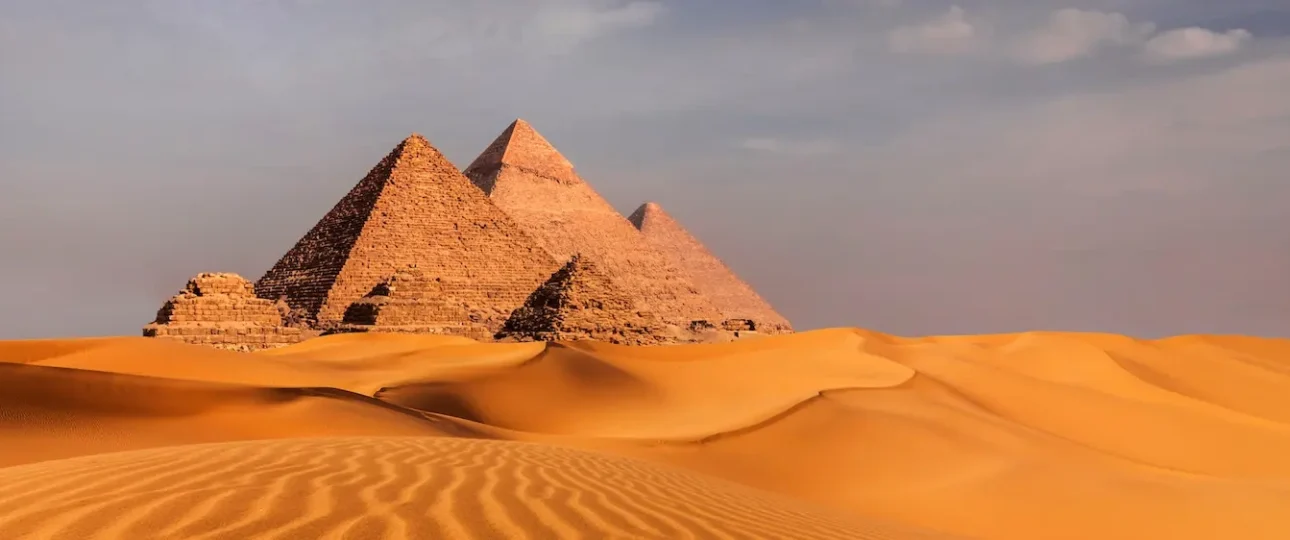
The Great Pyramid of Khufu is the only surviving wonder of the ancient world, representing the pinnacle of history of ancient Egypt. Standing on the Giza plateau, near the bustling city of Cairo, you realize that no modern machine could easily replicate the precision found in these 2.3 million stone blocks.
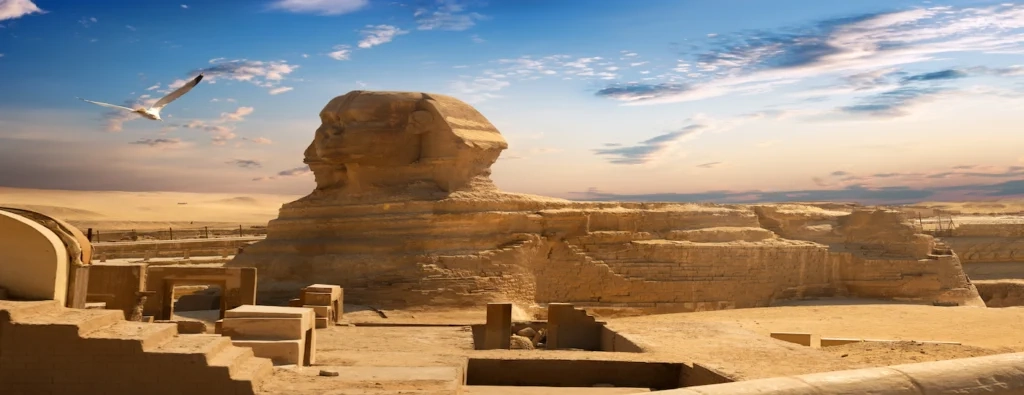
- The Ancient Sphinx: A monumental guardian with a lion’s body and a pharaoh’s head, representing the divine power of the ancient Egypt pharaoh. stands as a sentinel protecting the necropolis from chaos.
- Engineering Mystery: The alignment of the pyramids with the stars of Orion’s Belt demonstrates the era’s advanced astronomical knowledge. The Great Pyramid of Khufu used over 2 million stone blocks, each weighing several tons, moved via sledges and ramps.
- Hidden Corridors: Recent Egyptology discoveries using 3D scanning continue to reveal secret chambers inside the Great Pyramid.
- Labor Force: Modern excavations prove that a dedicated city of skilled laborers, not slaves, built these monuments over decades.
💡 Your journey to the past starts in Cairo. Explore our Private Cairo & Pyramids Tours and witness the mystery yourself!
What are the secrets behind the Ancient Egyptian Language and Hieroglyphs?
The Egyptian language is a complex tapestry of symbols that recorded the soul of a nation. Deciphering Ancient Egyptian language hieroglyphics through the Rosetta Stone was the key that unlocked the door to understanding their legal and spiritual world.
- Sacred Scripts: Egyptian hieroglyphs were primarily used for monumental inscriptions and religious texts.
- Scribes & Wisdom: Only a small elite could read and write, preserving knowledge like the medical secrets in the Papyrus Ebers.
- Artistic Language: Unlike modern letters, each symbol in Ancient Egyptian art often held multiple layers of phonetic and symbolic meaning.
Which Egyptian Gods ruled the afterlife and daily life?
Religion was polytheistic, with hundreds of Ancient Egyptian gods governing every natural force. The cult of Egyptian gods was the primary driver for the construction of the massive temples you see today during a Nile cruise.
- Anubis Egyptian gods: The jackal-headed god who oversaw mummification and guided the deceased to the underworld.
- Egyptian gods Horus: Represented as a falcon, he was the protector of the living pharaoh and the symbol of kingship.
- Amun-Re: The king of the gods and the sun deity, whose primary residence was the vast complex of Karnak.
Why is the Valley of the Kings the most sacred site in Egyptology?
Located on the west bank of the Nile in Luxor, this hidden valley was the final resting place for the most powerful Egyptian pharaohs. To protect their Egyptian mummies and golden treasures from tomb robbers, the kings of the New Kingdom moved their burials into deep, rock-cut tombs.
- Tutankhamun’s Legacy: The only tomb found nearly intact, providing the world with the most famous Egyptian artifacts in history.
- Queen Hatshepsut’s Temple: Nearby, this masterpiece of ancient Egyptian art showcases a female pharaoh’s architectural ambition.
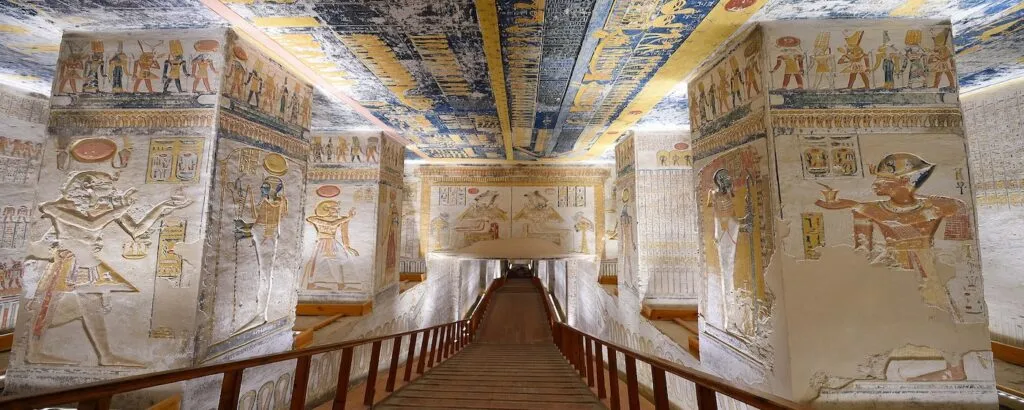
- Religious Art: The walls are covered in Egyptian hieroglyphs and scenes from the “Book of the Dead,” guiding the soul through the underworld.
🎈 Experience the Magic: See the Valley of the Kings from above! Book our Luxor Hot Air Balloon Tour for a breathtaking sunrise over the land of the pharaohs.
Why are Egyptian Mummies and Artifacts so significant today?
The preservation of Egyptian mummies was a central ritual to ensure the soul could recognize its body in the afterlife. Today, these remains and Egyptian artifacts provide a biological and cultural map of the past.
- The Mummification Process: A 70-day ritual involving natron salt and linen wrappings to stop decomposition.
- The Golden Mask: Artifacts like Tutankhamun’s mask showcase the pinnacle of Ancient Egyptian art and metallurgy.
- The Cairo Museum: A treasure house where visitors can witness the sheer scale of the treasures found in royal tombs.
What secrets are hidden within the Temples of Karnak?
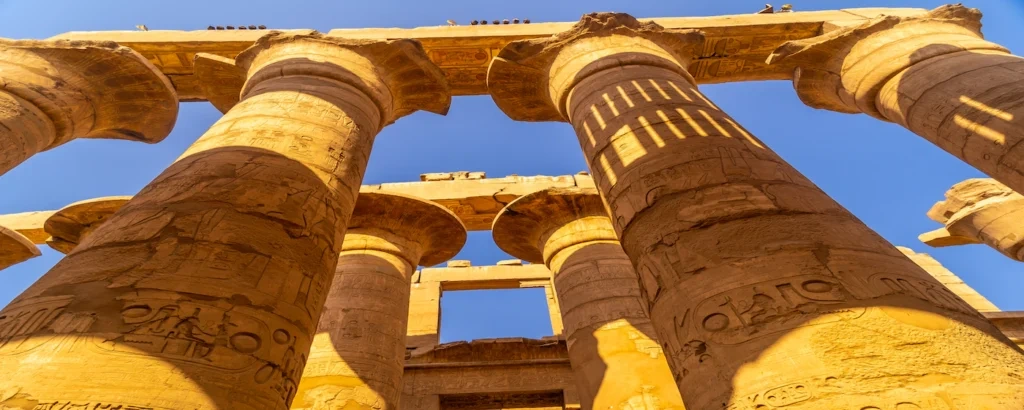
The Karnak Temple complex in Luxor is the largest religious site ever built. It wasn’t just a building; it was a “city for the gods” developed over 1,500 years. Dedicated to the Egyptian gods Horus and Amun-Re, its scale is truly mind-blowing.
- Hypostyle Hall: A forest of 134 massive columns, some 80 feet tall, decorated with intricate ancient Egyptian language hieroglyphs.
- Obelisks of Power: Towering granite needles that reach for the sky, celebrating the divine authority of the rulers.
- Sacred Lakes: Where priests performed rituals to maintain the cosmic balance (Ma’at).
🚢 Sail the Nile: Karnak is a highlight of every river journey. Check out our 5-Day Luxury Nile Cruise from Luxor to Aswan and sail through history.
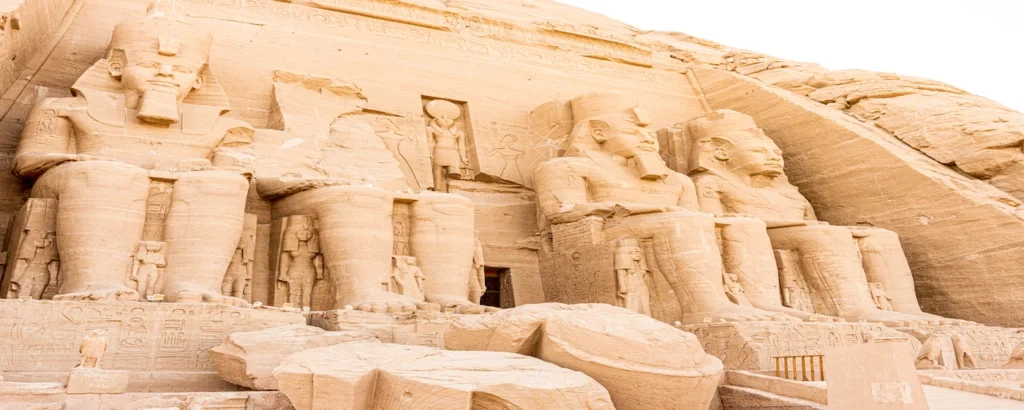
How did Abu Simbel become a tribute to Pharaoh Ramses II and Nefertari?
Deep in the south, near Aswan, lies Abu Simbel—a site that defines the term “wonder.” Carved directly into a mountainside, it was a bold statement of power by Ramses II.
- The Sun Miracle: Twice a year, the sun aligns perfectly to light up the statues of the Egyptian gods in the innermost sanctuary.
- Saving History: In the 1960s, a massive UNESCO project moved the entire temple to higher ground to save it from the rising Nile waters.
- The Temple of Hathor: A smaller, equally beautiful temple dedicated to Queen Nefertari, showcasing the romantic side of Ancient Egypt.
☀️ Discover Aswan: From the High Dam to the temples of Ramses. Join our Aswan Day Tours and explore the jewels of the south.
What is the difference between the Egyptian Museum and the Grand Egyptian Museum (GEM)?
While the classic Egyptian Museum remains a landmark in downtown Cairo, the new Grand Egyptian Museum (GEM) in Giza is now the world’s largest archaeological complex. Home to the complete Tutankhamun collection, GEM serves as a modern bridge to the history of ancient Egypt, located just steps away from the Great Pyramids.
The evolution of Egypt’s museums marks a new era for Egyptology. Travelers now have two distinct experiences to explore:
- The Grand Egyptian Museum (GEM): A modern architectural marvel in Giza that houses over 100,000 Egyptian artifacts, offering a high-tech, immersive journey into the pharaonic past.
- The Egyptian Museum in Tahrir: The historic red palace in Cairo that continues to display thousands of masterpieces, including royal statuary and ancient jewelry.
- National Museum of Egyptian Civilization (NMEC): The current home of the Egyptian mummies, where you can see the actual remains of the great Egyptian pharaohs in a state-of-the-art gallery.
Can you combine Ancient History with a Red Sea Escape?
Many travelers don’t realize that Ancient Egypt is just a few hours away from the crystal-clear waters of the Red Sea. After exploring the dust and mystery of the temples, a visit to Hurghada is the perfect way to relax.
From Tombs to Reefs: You can easily take a day trip from Hurghada to Luxor to see the monuments.
🏛️ Don’t miss the chance to visit both! Book our Cairo Museum Tour and witness the transition from the classic to the Grand.

FAQ for Ancient Egypt
What is the best way to see the wonders of Ancient Egypt?
A Nile Cruise between Luxor and Aswan is widely considered the best way to see the major temples and the Valley of the Kings in comfort.
Who were the most famous Egyptian gods mentioned in the temples?
The most frequently depicted are Horus (the protector), Anubis (the guide to the afterlife), and Amun-Re (the sun god).
What is the oldest medical document in Ancient Egypt?
The Papyrus Ebers is one of the most famous medical Egyptian artifacts, containing over 800 prescriptions and demonstrating the advanced science of the time.
Which pharaoh built the largest temple in Egypt?
Ramses II and his successors expanded the Karnak Temple complex, making it the largest religious site ever built for the Egyptian gods.
Is the Egyptian language still spoken?
The Ancient Egypt language evolved into Coptic, which is still used in liturgical services, though the daily language of modern Egypt is Arabic.
The wonders of Egypt continue to enchant and bewilder. Whether you are standing in the shadow of a pyramid in Cairo, flying in a Hot Air Balloon over Luxor, or sailing on a Nile Cruise toward Aswan, the feeling of awe is the same. It is a journey that changes you forever.
