

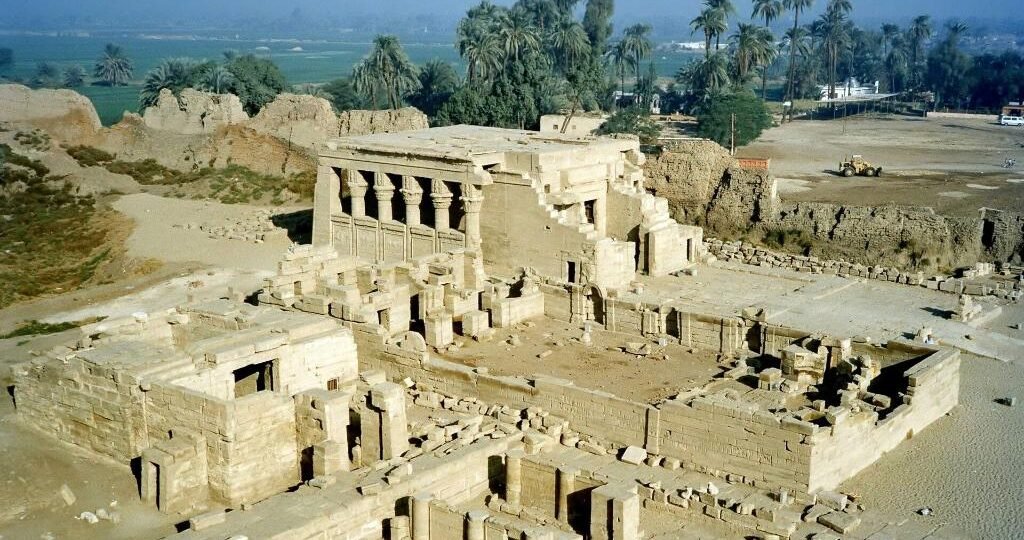
Temple of Hathor Dendera: Rooftop Rituals and a Hidden Queen
Most visitors reach the Temple of Hathor Dendera for the zodiac. They look up, take a photo and leave. That is a shame. The real story here is a sunrise ritual on the roof, a queen on a back wall and a few quiet corners that most groups walk straight past.
Why Was the Roof the Holiest Place in the Temple?
Because that is where Hathor met the sun. Every New Year, priests carried her statue up a staircase inside the temple wall. They placed it in an open-air kiosk on the roof. At dawn, the first rays touched the goddess. The Egyptians believed she was renewed, and so was the land.
The festival was loud and joyful, as Hathor would have wanted. There was music, incense, offerings and processions. Her image went up one staircase and came down another, so the two flights never crossed.
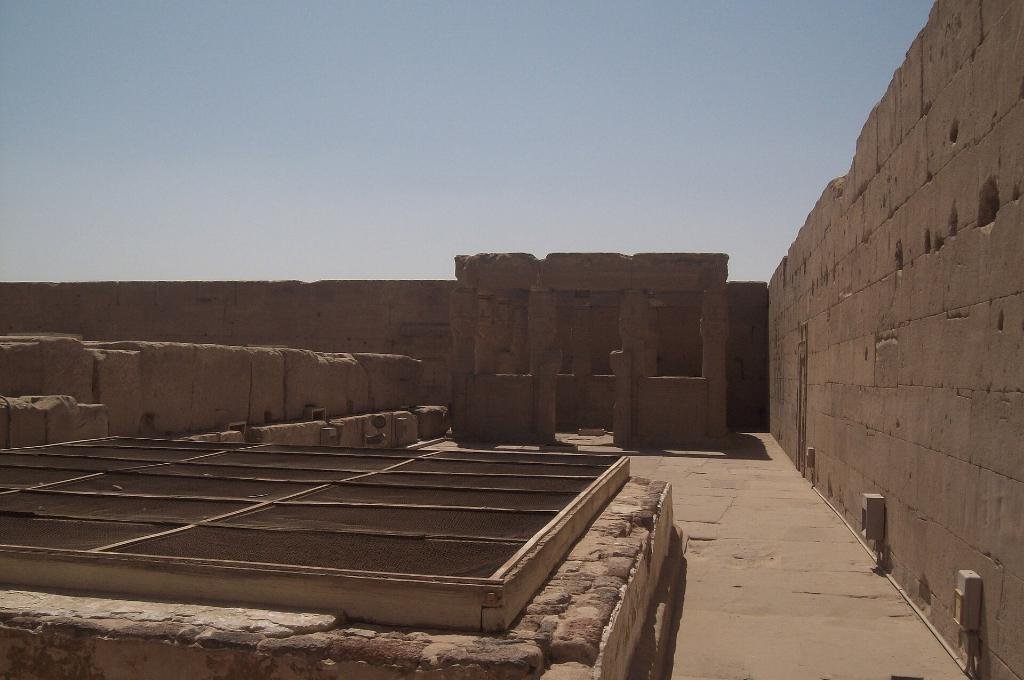
- The stairs are carved with scenes of priests climbing in procession.
- Two small chapels of Osiris stand on the roof, where the famous round zodiac was found. We tell that story in our guide to the Dendera zodiac.
- From the roof you see the whole enclosure, the desert edge and the Nile fields beyond.
Practical tip: ask your guide whether the roof is open on the day. Go early. The stone is cool and the light is soft.
Would you like someone to walk you up those stairs and explain what you are seeing? Our Dendera temple tour from Luxor comes with a private Egyptologist guide and hotel pickup.
Where Is Cleopatra on the Wall, and Why Does She Look Like a Pharaoh?
Walk to the outer rear wall of the temple. There she stands beside her young son Caesarion, both facing the gods. Cleopatra VII wears the crown and robes of a traditional Egyptian ruler. Nothing about her is Greek or Roman.
That is the point. Temple artists followed strict rules. A ruler was shown as a pharaoh, whoever she really was. So this is not a true portrait. It is a statement of power, carved in stone for the gods to see.
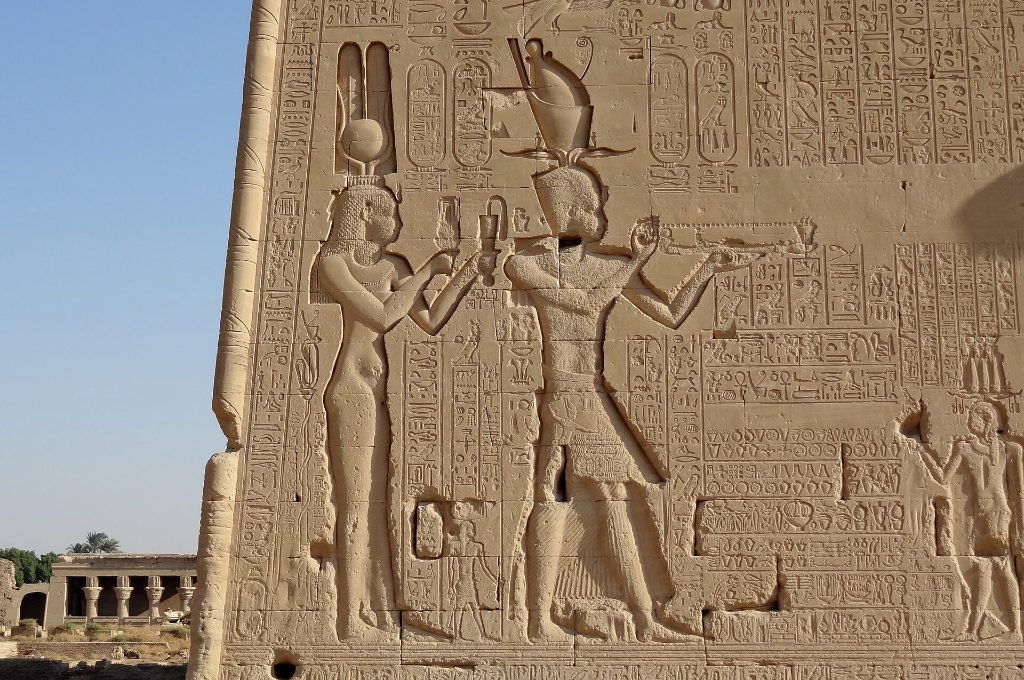
- The carving is worn, so look at it in side light.
- Caesarion was her son by Julius Caesar and her co-ruler on paper.
- Most tour groups skip this wall, so you may have it to yourself.
Why Does Dendera Have Two Birth Houses?
Because Hathor was a mother goddess, and Dendera celebrated her family. A birth house, or mammisi, is a small temple that honours the divine birth of a child god. At Dendera that child was Ihy, the son of Hathor and Horus of Edfu. He is the god of music and joy.
Two of these buildings stand outside the main temple. One is older, and one was built in Roman times. Their walls show the goddess giving birth and the infant being nursed and blessed.
Between them lie the remains of a Christian basilica from the early centuries of the faith. It is easy to miss. It is also a quiet reminder that Dendera never stopped being used. Pharaohs, Romans and early Christians all left a layer here.
What Else Hides Behind the Temple Walls?
A small temple of Isis, a stone-lined sacred lake and wide courtyards full of fallen blocks. Set aside ten minutes for them. The lake is dry now, but priests once used it for purification before rituals. The Isis shrine is small and calm, and it often has no queue at all.
If you want the full story of the goddess herself, the World History Encyclopedia entry on Hathor is a clear read before you go. For the crypts, the columns and the practical side of the visit, see our Dendera temple complex guide.
Rooftop to Lake: What to Look For at Each Stop
| Stop | What to look for |
|---|---|
| Roof staircases | Reliefs of priests carrying Hathor’s statue in procession |
| Roof kiosk and Osiris chapels | The spot where the sun met the goddess at New Year |
| Outer rear wall | Cleopatra VII and Caesarion, carved in pharaonic style |
| Birth houses | Scenes of divine birth and the child god Ihy |
| Early Christian basilica | Low ruined walls between the two birth houses |
| Sacred lake and Isis shrine | A dry stone basin and a small, quiet sanctuary |
How Can You Fit Dendera Into a Luxor Trip?
Dendera sits about 60 km north of Luxor, so it works well as a half-day outing. Go in the morning, then return for lunch and a rest. Many travellers add it to a longer day that continues to Abydos. You can read more about that route in our Abydos guide.
Sailing between Luxor and Aswan? Dendera fits neatly before or after your ship. Our Nile cruises between Luxor and Aswan make the extra stop easy to add.
Frequently Asked Questions
What happened at Hathor’s New Year festival?
Priests carried her statue up to the roof at dawn so the first sunlight could touch it. The ritual renewed the goddess and, in Egyptian belief, the world. Music, offerings and a joyful procession surrounded it.
Did Cleopatra ever visit the Temple of Hathor Dendera?
No record proves it. Her relief on the rear wall was carved in her name, but that does not mean she stood there. Historians treat it as a royal statement rather than a sign of a visit.
What is a birth house, and why are there two?
A birth house, or mammisi, honours the birth of a child god. Dendera has two because the site celebrated the divine family of Hathor and her son Ihy over many centuries. One building is older and one is Roman.
Is there a church inside the Dendera enclosure?
Yes. The ruins of an early Christian basilica sit between the two birth houses. Only low walls remain, so ask your guide to point them out.
A Temple That Rewards Looking Up, Then Around
Dendera is more than a zodiac. It holds a sunrise ritual, a queen’s carved portrait and layers of history from three eras. Give it two slow hours and it will repay you.
If you would like help fitting it into your Egypt plans, our team is happy to plan it with you.
