

What Is an Egyptian Sarcophagus? The Stone Box Pharaohs Trusted With Eternity
What is Egyptian sarcophagus, really, and why did pharaohs trust total strangers to carve their afterlife into solid stone? The answer is stranger than any curse story.
Sarcophagus or Coffin? The Mix-Up Even Seasoned Travelers Make
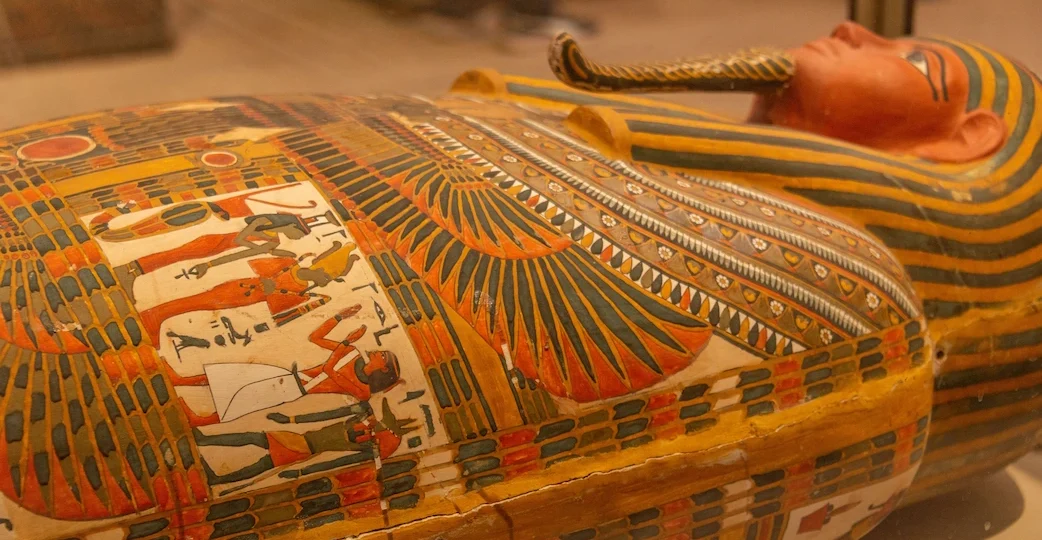
A sarcophagus is the outer stone shell. A coffin sits inside it, usually made of wood or gilded wood, and directly holds the mummy. Guests constantly confuse the two, and it is an easy mistake to make.
- Sarcophagus: stone, immovable, stays in the tomb or museum hall.
- Coffin: lighter, often nested two or three deep, sometimes travels for exhibitions.
- A royal burial could use both together, with the coffin nested inside the sarcophagus like a final locked box.
Curious to see the difference up close? A Luxor day tour puts you inside the tombs where both once sat side by side.
What Is Egyptian Sarcophagus Actually Made To Do?
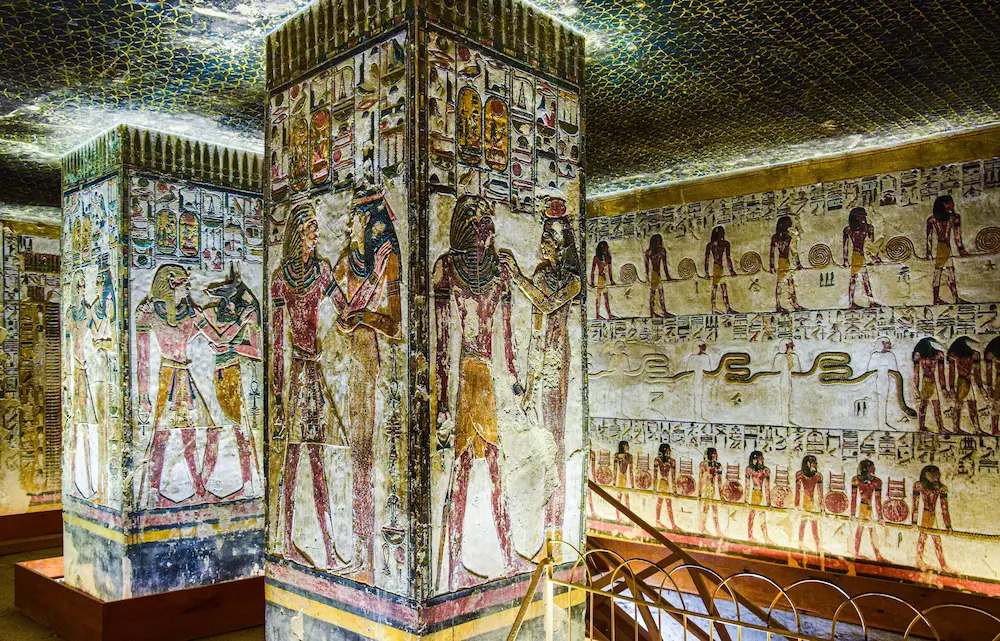
Its job was never just storage. A sarcophagus worked as a magical shell, inscribed to protect the body and guide the soul through the afterlife.
- Hieroglyphic spells lined the interior, taken from funerary texts meant to speak for the deceased.
- Carved goddess figures, usually Isis and Nephthys, wrapped protective wings around the corners.
- The shape and weight were meant to outlast tomb robbers, wars, and time itself.
Sarcophagus Materials, By the Numbers
Not every sarcophagus was built the same way. Material signaled status as clearly as size did.
| Material | Common Era | Typically Used By | Source | Notable Trait |
|---|---|---|---|---|
| Wood / cartonnage | All periods | Officials, priests | Local timber | Lightest, most affordable option |
| Limestone | Old & Middle Kingdom | Nobles, officials | Local quarries | Easier to carve, softer stone |
| Basalt | New Kingdom | High officials | Northern Egypt | Dense, dark, hard to shape |
| Red granite | New Kingdom | Pharaohs | Aswan quarries | Required teams of skilled quarrymen |
| Alabaster / calcite | Rare, elite royal | Select pharaohs | Middle Egypt | Thin enough to glow when lit from inside |
Ready to see where that granite came from? Explore Aswan’s quarry sites on one of our Aswan day tours.
How Did a Nile Sarcophagus Travel 800 Kilometers Without Cracking?
Quarrying was only step one. Moving several tons of stone from Aswan to a royal tomb hundreds of kilometers north demanded serious engineering, long before wheels or draft animals did much of the heavy lifting on Egyptian worksites.
- Blocks were roughed out at the quarry, then finished closer to the tomb to shed excess weight before the journey.
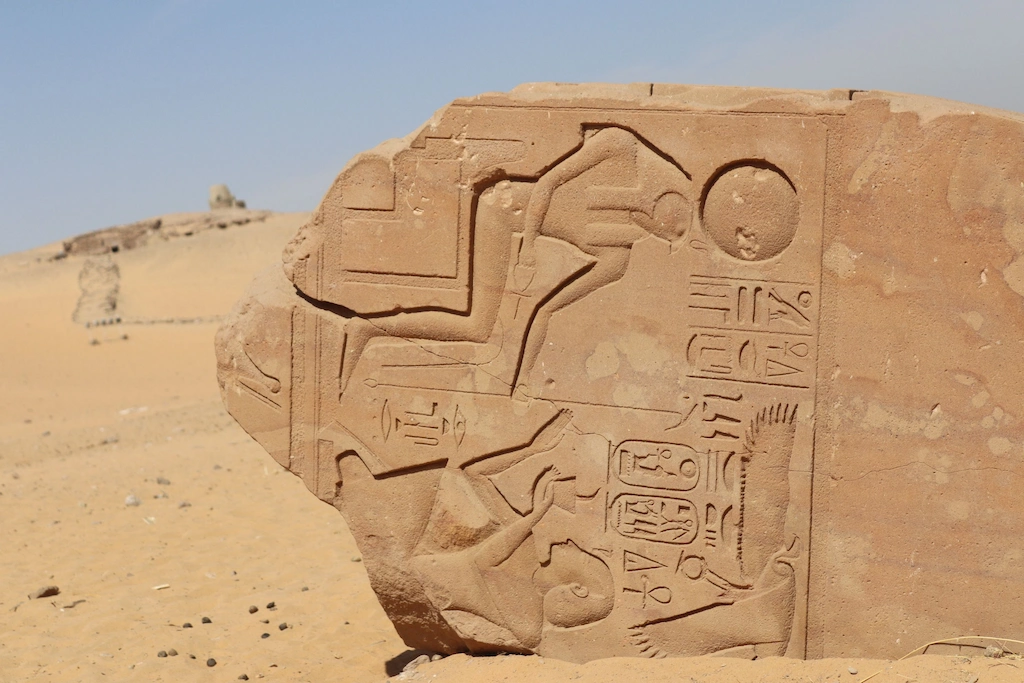
- Wooden sledges dragged the stone across sand tracks that workers wetted down to cut friction, a technique tomb paintings actually show in progress.
- Nile barges carried the heaviest loads north during the flood season, when higher water made loading and launching far easier than during the dry months.
- A single crack partway through the trip could waste months of quarry work, so crews moved at a deliberately slow, careful pace rather than rush the load.
That fragility is part of why an intact Egyptian sarcophagus still draws a crowd today. Surviving the trip from quarry to tomb was never guaranteed, and several unfinished blocks still sit abandoned along ancient transport routes, tool marks and all, exactly where the crew left them thousands of years ago.
Once a sarcophagus finally reached its tomb, the work was still not finished. Painters and carvers often completed the finer inscriptions on site, sometimes under real time pressure if a pharaoh died before the tomb was fully ready.
That rushed finishing shows up today as noticeably rougher carving on a few royal sarcophagi, a small detail that guides in Luxor like to point out once visitors know to look for it.
The Pharaoh’s Sarcophagus That Ended Up in a London Townhouse
Seti I’s alabaster sarcophagus never made it to an Egyptian museum. It sits today in the basement of Sir John Soane’s Museum, a private London townhouse, after an architect bought it in 1824 when the British Museum turned it down over price. Egyptologists still travel to London just to see it lit from within, glowing like frosted glass.
How Do Egyptologists Read the Symbols on a Sarcophagus?
Every carved detail on a sarcophagus had a job. Nothing was purely decorative.
- Painted eyes let the deceased “see” out toward the rising sun.
- The Four Sons of Horus guarded the internal organs, each linked to a specific canopic jar.
- Columns of text functioned as a script, not artwork, guiding the soul step by step.
Field note from a Luxor guide: “Visitors always want to touch the lid first. I tell them to look at the corners instead, that’s where the real story starts.” Once travelers know to look there, every sarcophagus in the Egyptian Museum reads differently.
Ready to step into Egypt’s best-kept secrets? Explore our curated Luxor day tours and see these details for yourself.
Where Can You See a Real Egyptian Sarcophagus Today?
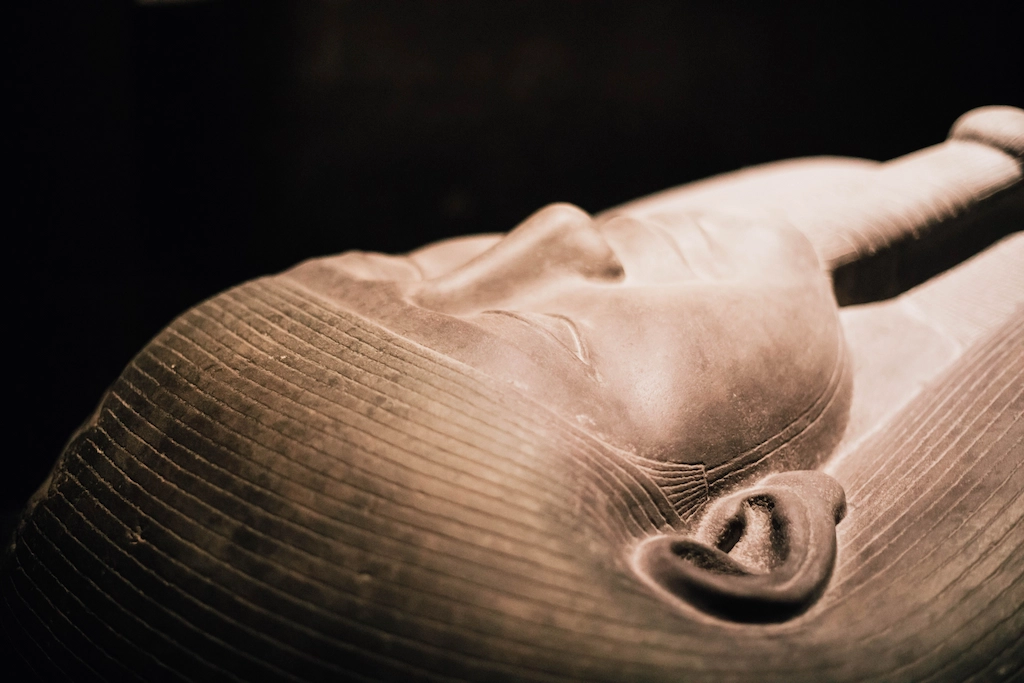
Seeing one in person changes how the object reads. Photographs flatten the scale completely.
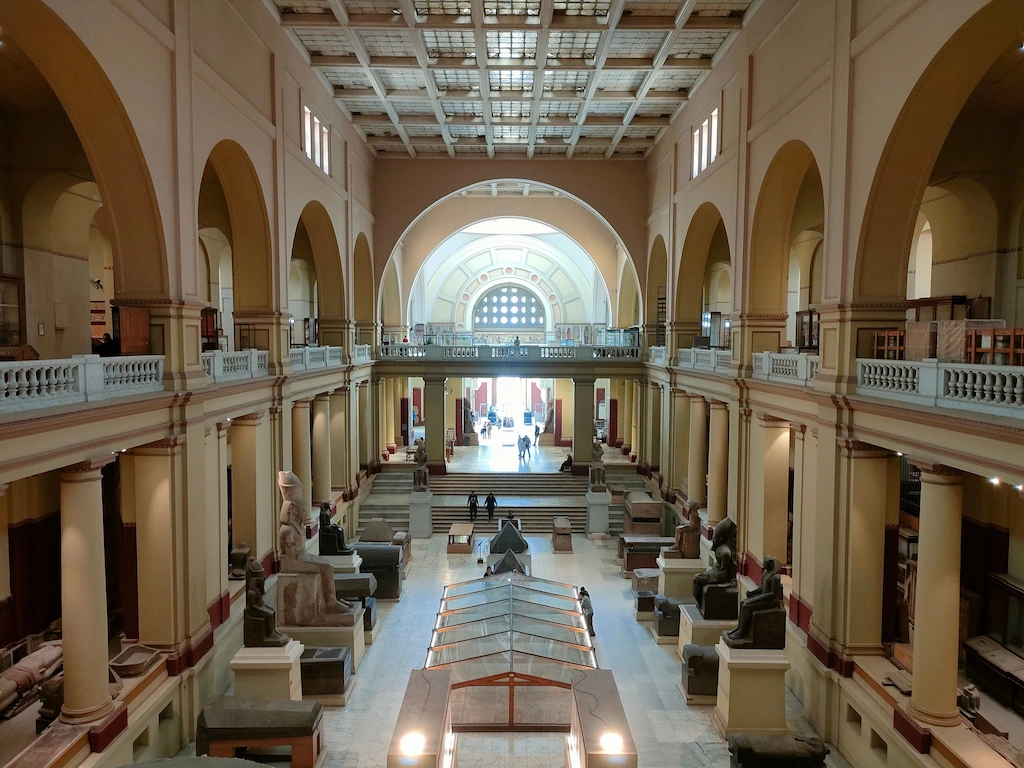
- Cairo: the Egyptian Museum and the Grand Egyptian Museum both hold major royal examples.
- Luxor: several tombs in the Valley of the Kings still contain the stone outer sarcophagus, minus the coffin and mummy.
- Aswan: visit the ancient granite quarries that supplied royal sarcophagi, including the unfinished obelisk site.
- Hurghada: pair a history-heavy Nile itinerary with a few relaxed days on the Red Sea afterward.
For a deeper academic breakdown of sarcophagus classification across cultures, Britannica’s dedicated entry is a solid, well-sourced starting point.
Frequently Asked Questions
What’s the difference between a sarcophagus and a coffin?
An Egyptian sarcophagus is the outer stone container; a coffin is the inner case, usually wood, that holds the mummy directly. Royal burials often used both, nested together.
Were all Egyptian sarcophagi made of stone?
No. Stone was reserved mainly for nobles and royalty. Most Egyptians were buried in wood or cartonnage cases, which were far more affordable to produce.
Why are so many sarcophagi in museums empty?
Most mummies were removed for study, conservation, or display elsewhere. Tomb robbery in antiquity also emptied many sarcophagi long before modern archaeologists arrived.
Can visitors get close to a real sarcophagus in Egypt?
Yes. Several tombs in the Valley of the Kings and museum halls in Cairo allow close, sometimes arm’s-length, viewing of genuine sarcophagi.
Final Thoughts
An Egyptian sarcophagus was never simply a box for the dead. It was a coded, engineered attempt at eternity, built from stone that had to survive longer than any empire. Seeing one in Cairo or Luxor makes that ambition suddenly physical.
Ready to see it for yourself? Start planning your Egypt itinerary with Nile Travel Machine today.
