

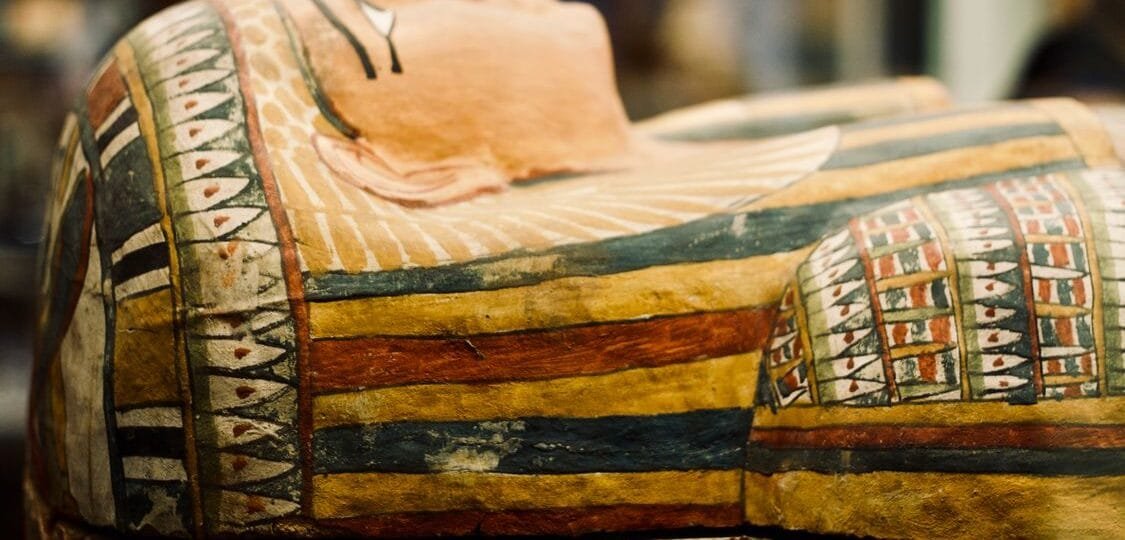
What Is Mummification? The 70-Day Process Behind Egypt’s Eternal Bodies
What is mummification without the museum gift-shop version? The real process took 70 days, involved removing organs through a small incision, and used enough salt to dry out a body for 3,000 years. Here’s what actually happened inside the embalmer’s tent.
Mummification Meaning: What Ancient Egyptians Actually Believed They Were Doing
Mummification meaning goes deeper than simple preservation. Ancient Egyptians believed the soul split into two parts, the Ka and the Ba, and both needed a recognizable body to return to after death. Without a preserved body, they believed the soul had nowhere to land.
The ritual traces back to the myth of Osiris, whose body Isis restored after his murder. That story gave Egyptians their first template for defeating death itself, and every embalmer who followed was, in a sense, reenacting it.
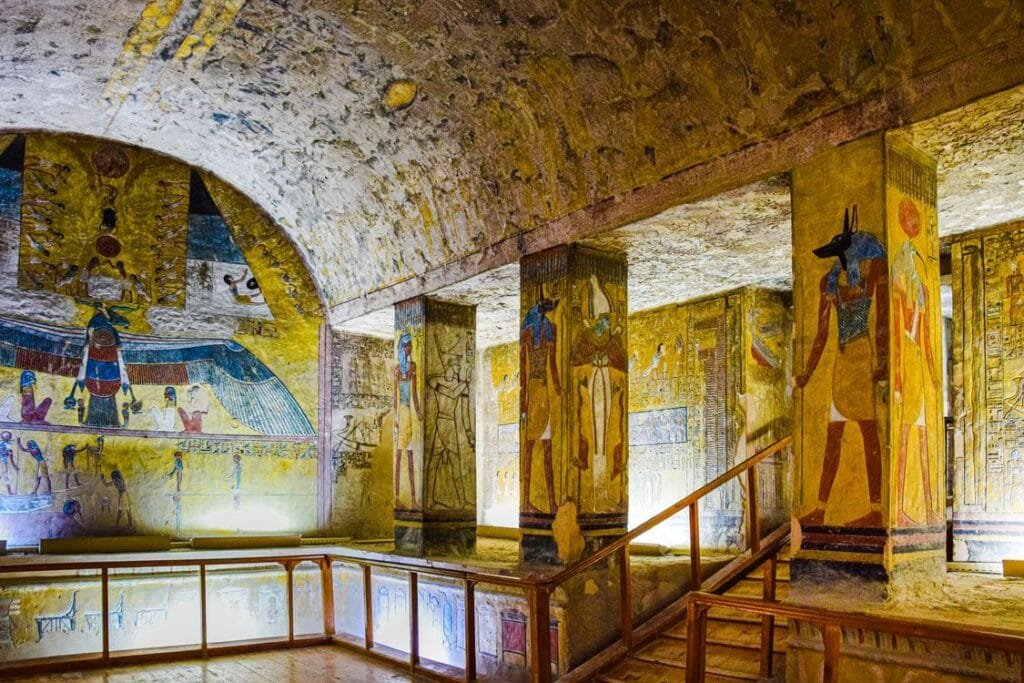
Egyptians even pictured Anubis, the jackal-headed god of embalming, personally overseeing the ritual, which is why embalmers sometimes wore an Anubis mask while working on the body.
What Are the 7 Steps of Mummification?
Mummification followed a fixed sequence, refined over centuries into a near-industrial routine. Embalmers rarely skipped a step, since each one served a specific religious purpose.
By the New Kingdom, roughly 1550 to 1070 BC, the sequence had become so standardized that embalmers worked almost like a specialized guild, passing techniques down through generations of the same families.
- Purification: the body was washed with wine and Nile water
- Organ removal: lungs, stomach, intestines, and liver were removed through a small incision and stored in canopic jars
- Brain removal: extracted through the nostril and discarded entirely
- Desiccation: the body was packed in natron salt for about 40 days
- Reshaping: linen, sawdust, or resin restored the body’s natural form
- Anointing: oils and resins were applied to the skin
- Wrapping: hundreds of yards of linen, with protective amulets tucked between layers
Curious to see the real tools embalmers used? Our Cairo tours include the Egyptian Museum’s mummy rooms, where the evidence still sits under glass.
The Body Part Egyptians Threw Away Completely
Not every organ made the cut for canopic jars. Embalmers considered the brain useless, so they broke it apart with a long hook inserted through the nostril, then simply discarded it.
The heart, believed to hold memory and personality, was the only organ always left inside the body, ready to be weighed against a feather in the afterlife.
One of our Egyptologist-trained guides likes to point out that this is exactly why so many mummies in Cairo’s Egyptian Museum have empty skulls on X-ray, a detail most visitors walk straight past without noticing.
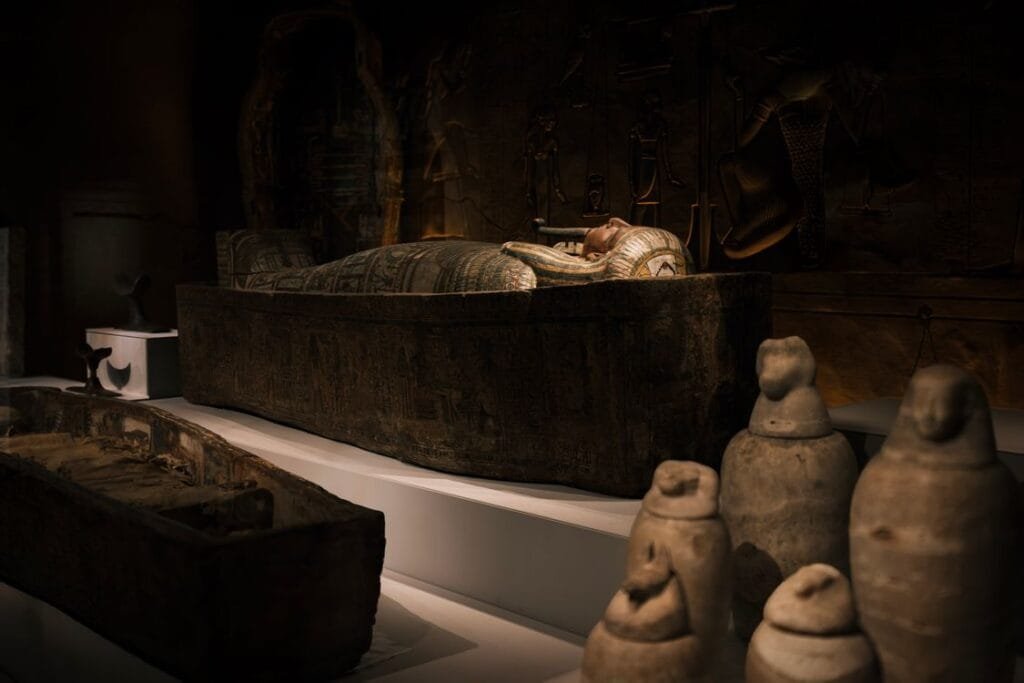
How Long Did Mummification Actually Take?
The full process took about 70 days from death to burial, split across two very different phases: active preparation and a long, patient drying period.
| Stage | Duration |
| Purification & organ removal | 4 days |
| Natron drying (desiccation) | 40 days |
| Oiling, stuffing & wrapping | 15 days |
| Final rites & burial prep | 11 days |
| Total | ~70 days |
Mummification vs. Decomposition: Why Egypt’s Climate Did Half the Work
Mummification vs. decomposition comes down to moisture. Egypt’s hot, dry sand pulled water out of buried bodies long before anyone invented natron-based embalming, which is why the earliest, simplest burials sometimes preserved bodies by accident alone.
Once Egyptians noticed this natural effect, they spent centuries refining it into a deliberate ritual, adding salt, resin, and linen to control what nature had already started. In wetter climates, moisture and microbes break a body down within weeks, which is exactly why Egypt’s arid conditions made it the ideal birthplace for this entire practice.
Ready to see the desert that became nature’s first embalmer? Our Luxor day tours cross the same sands where some of the earliest preserved remains were found.
Where Can You See Real Mummies in Egypt Today?
Cairo and Luxor hold the two best collections. The Egyptian Museum’s Royal Mummy Hall in Cairo displays actual pharaohs, while Luxor’s Mummification Museum walks through the tools and techniques step by step, close to the Valley of the Kings tombs where many were originally found.
For a deeper look at one royal case study, our guide to the King Tut tour covers what his mummy revealed to modern researchers. The Met Museum’s essay on mummification is a solid academic starting point if you want the full scholarly detail.
Book your Cairo & Luxor tour package and stand steps away from bodies preserved for 3,000 years.
Frequently Asked Questions
What was the purpose of mummification in ancient Egypt?
Answering what is mummification really comes down to purpose: preserving the body so the soul had a home to return to in the afterlife. Without a recognizable body, Egyptians believed the Ka and Ba could never reunite.
Wealthier families paid for the full 70-day process, while poorer Egyptians often relied on simple salt burials in the desert to achieve a similar result.
Could a body mummify naturally, without any embalming at all?
Yes. Hot, dry desert sand can dehydrate a buried body quickly enough to prevent normal decay. Egypt’s earliest preserved remains happened this way, before natron-based embalming was ever developed.
Were animals ever mummified alongside humans?
Regularly. Cats, ibises, and even crocodiles were mummified as offerings to gods like Bastet and Thoth. Many families also mummified pets to accompany them symbolically into the afterlife. Archaeologists have found entire underground galleries at Saqqara packed with millions of mummified ibises and dogs, offered by pilgrims rather than buried as personal pets.
How can travelers see real mummies in Egypt today?
Cairo’s Egyptian Museum and Luxor’s Mummification Museum both display genuine remains. Most Nile itineraries, including our Cairo and Luxor packages, include time at one or both.
What is mummification, in the end? A 70-day answer to a very human fear, built from salt, linen, and a belief that identity could outlast the body itself. That belief still draws millions of travelers to Egypt every year.
Few other ancient practices blend religion, science, and craftsmanship as visibly as this one, which is exactly why the mummies on display in Cairo and Luxor still stop visitors mid-step.
Ready to see it in person? Explore our Egypt tour packages and get closer to the real thing.
