

Ancient Egyptian Coffins & Sarcophagi: What Burial Rituals Reveal About Rank
Did a farmer get the same burial as a pharaoh? Not close. Ancient Egyptian coffins & sarcophagi reveal a burial system built entirely around rank, wealth, and belief.
Egyptian Burial Practices Weren’t the Same for Everyone
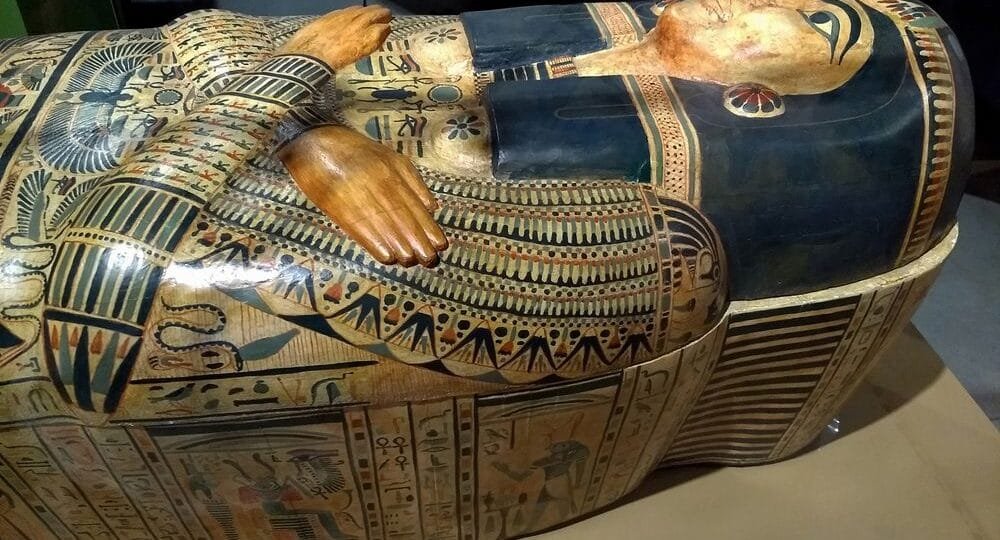
Ancient Egyptian burial practices depended heavily on money. Royalty received nested coffins and a carved stone sarcophagus. Nobles got a single painted wooden coffin.
Farmers and laborers often received nothing more than a linen wrap and a shallow pit in the sand. Rank decided almost everything about death in Egypt, just as it did in life.
Archaeologists estimate that a royal burial could involve dozens of specialists, while a farmer’s burial might involve only two or three family members and a borrowed shovel.
Which Classes of Egyptians Participated in Death Rituals?
Every class took part, just at a different scale. Pharaohs commissioned priests, artisans, and entire workshops. Farmers relied on family members alone.
Even the simplest burials followed one shared belief: prepare the body, protect it, and send it toward the afterlife. That belief held steady for roughly three thousand years, surviving dynasty after dynasty with remarkably little change.
-
- Priests led the religious side of every funeral, rich or poor
- Skilled artisans built coffins, painted scenes, and carved sarcophagi for those who could pay
- Poorer families handled burial themselves, with no priest or artisan involved
Even skilled workers occupied a strange middle ground. The tomb builders of Deir el-Medina were laborers by trade, yet many received painted coffins and small decorated tombs of their own, funded partly by the state that employed them.
Curious how these rituals still shape Egypt’s sacred sites? Step inside real tombs on our Luxor day tours.
Why Some Coffins Have Eyes Painted on the Side
Middle Kingdom coffins often carry two painted eyes near the head. The eyes let the deceased look east, toward the rising sun. Egyptians believed sunrise meant rebirth.
A coffin without eyes, in their belief, left a soul blind in the dark forever. Coffin makers usually painted these eyes on the east-facing side, lining up the burial itself with the direction of the sunrise.
The Ritual That Happened Right Before a Coffin Was Sealed
Priests performed the Opening of the Mouth ceremony moments before burial. A priest touched special tools to the mummy’s mouth and eyes. The ritual supposedly restored breath, sight, and speech for the next life. Without it, Egyptians believed, a body stayed lifeless forever, coffin or not.
One of our guides likes to point out the exact tool replicas used in this ceremony inside the Egyptian Museum, a detail most tours walk straight past.
The ceremony borrowed its tools from metalworking and butchery, oddly enough, since Egyptians believed those trades already knew how to “open” solid materials.
Burial Practices by Social Class, Side by Side
Rank shows up clearly once you compare burials side by side. Here’s how it broke down in practice.
| Social Class | Typical Burial |
| Pharaoh | Nested coffins, stone sarcophagus, tomb in the Valley of the Kings |
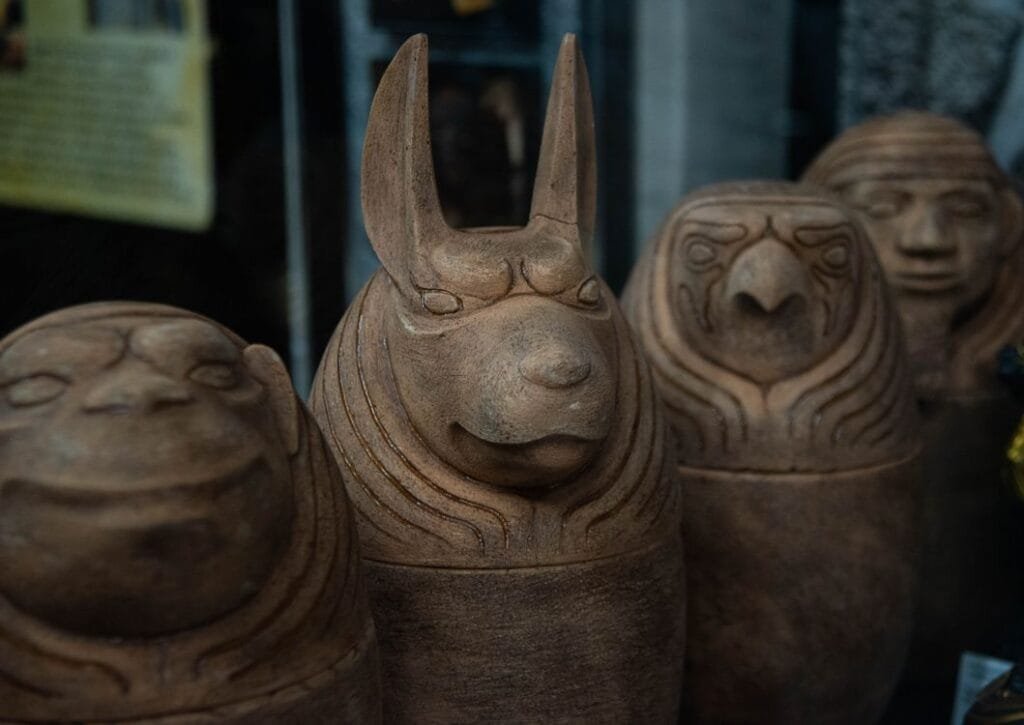
| Noble | Painted wooden coffin, canopic jars, private tomb chapel |
| Farmer or laborer | Linen wrap, shallow desert pit, no coffin at all |
Egyptian Funerary Beliefs: What Families Buried With the Dead
Egyptian funerary customs didn’t stop at the coffin. Families added objects meant to help in the next life.
- Amulets for protection along the journey
- Shabti figures to work on the deceased’s behalf
- Food and beer offerings for the afterlife
- Book of the Dead scrolls, mainly for wealthier families
Even a single amulet mattered. Egyptians believed each object carried real protective power, not just symbolic value, which is why tomb robbers targeted these small items as often as gold.
Ready to see these offerings up close? Book Your Cairo Museum & Pyramids Tour and stand before objects buried 3,000 years ago.
Where Can You See These Burial Rituals Preserved Today?
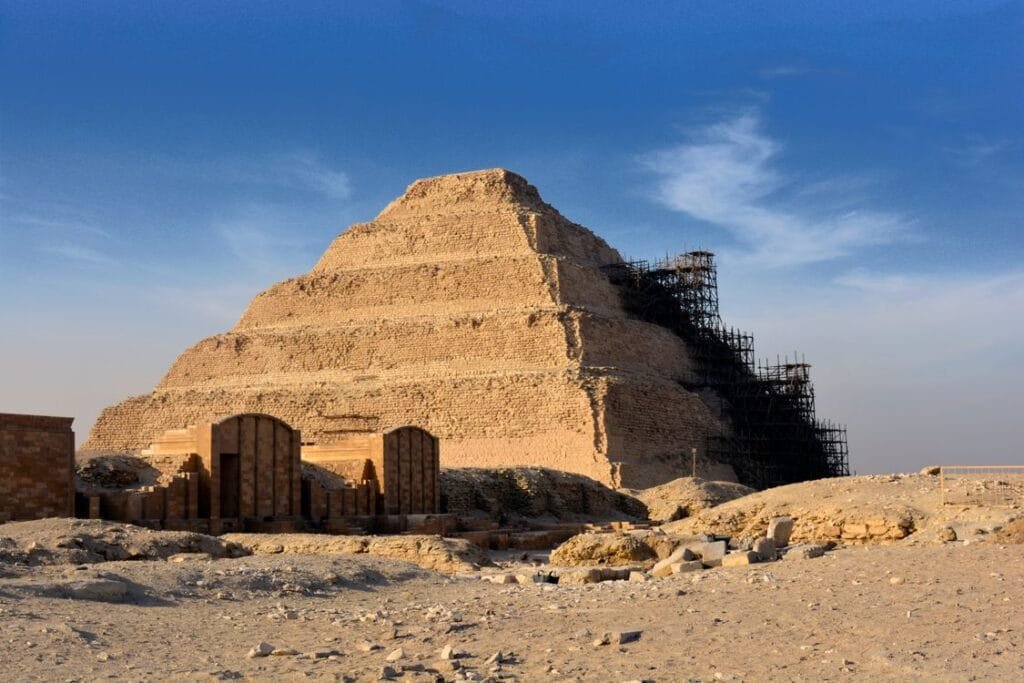
Saqqara’s necropolis holds Egypt’s earliest large-scale tombs, spanning nearly every rank of ancient society. Luxor adds the Valley of the Queens and the workers’ tombs at Deir el-Medina, where ordinary laborers were buried with surprising care.
Cairo’s Egyptian Museum ties it together with real coffins from every class on display. Walking all three in one trip gives a rare side-by-side view of how burial changed from royal tomb to worker’s grave.
For the full scholarly picture, UNESCO’s listing for Memphis and its Necropolis covers the tombs, mastabas, and pyramids that built this entire tradition.
Explore our Egypt tour packages and walk through burial sites built for every rank of ancient society.
Frequently Asked Questions
Did every ancient Egyptian receive a proper burial?
Most did, in some form. Wealthy families paid for coffins, priests, and tombs. Poorer families still followed burial customs, just with far simpler means and no coffin at all. Even without a coffin, most families still performed basic rites, since abandoning the dead entirely was considered deeply shameful.
What did poorer Egyptians use instead of an expensive coffin?
Many were wrapped in linen and buried directly in the desert sand. The hot, dry conditions preserved bodies naturally, without any coffin or embalming required. This natural process worked so well that some of Egypt’s oldest preserved bodies predate formal embalming entirely.
Were ancient Egyptian coffins and sarcophagi always buried underground?
Not always. Many stone sarcophagi sat inside chambers, not open ground. Wooden coffins were more commonly placed underground or inside rock-cut tombs. Some royal sarcophagi remained visible within tomb chambers for centuries before robbers or archaeologists ever moved them.
What do ancient Egyptian coffins and sarcophagi reveal about a person’s social rank?
Quite a lot. Ancient Egyptian coffins & sarcophagi vary by material, decoration, and burial location, and each detail reflects exactly how much wealth and status a family held. A single glance at the materials used usually told ancient Egyptians everything they needed to know about who was inside.
Ancient Egyptian coffins & sarcophagi were never just containers. They were rank made visible, belief made physical, right down to painted eyes and sealed lips. Ready to see that belief carved in stone? Book your Egypt tour package today.
