


What to See in Luxor: East | West Bank Travel Guide 2026
Forget the dusty glass cases of traditional museums. In Luxor, history isn’t something you look at—it’s something you walk through. From the rhythmic chaos of the East Bank to the golden silence of the West, Luxor is the only place on Earth where 5,000-year-old sandstone still feels warm with the breath of pharaohs, so you can’t imagine what to see in Luxor.
Luxor in 30 Seconds:
- The Vibe: An open-air time machine split by the Nile.
- The East Bank: Land of the Living. Grand temples, bazaars, and sunset vibes.
- The West Bank: Land of the Afterlife. Royal tombs, desert valleys, and hidden history.
- The “Must-Do”: Sunrise hot air ballooning and a private tour of the Valley of the Kings.
Thebes Reborn: Why Luxor Still Rules the Nile?
If you think seeing the Pyramids is the “end” of Egypt, you’ve only read the first chapter. While Cairo is impressive, Luxor is immersive. This is ancient Thebes—the powerhouse of the New Kingdom. Here, the pharaohs didn’t just build monuments; they built a legacy that turned an entire city into a UNESCO masterpiece.
It is a landscape of massive temples, silent royal tombs, and vibrant local life spread across the fertile Nile banks. Today, that allows you to experience history in motion—not under glass. You’ll see farmers tilling soil next to thousand-year-old colonnades and feel the pulse of a city that has watched the Nile flow for millennia. This isn’t just sightseeing; it’s an invitation to step into the world’s most epic story.
Read More: Luxor Trip from Hurghada: Karnak Temple & Valley of the Kings
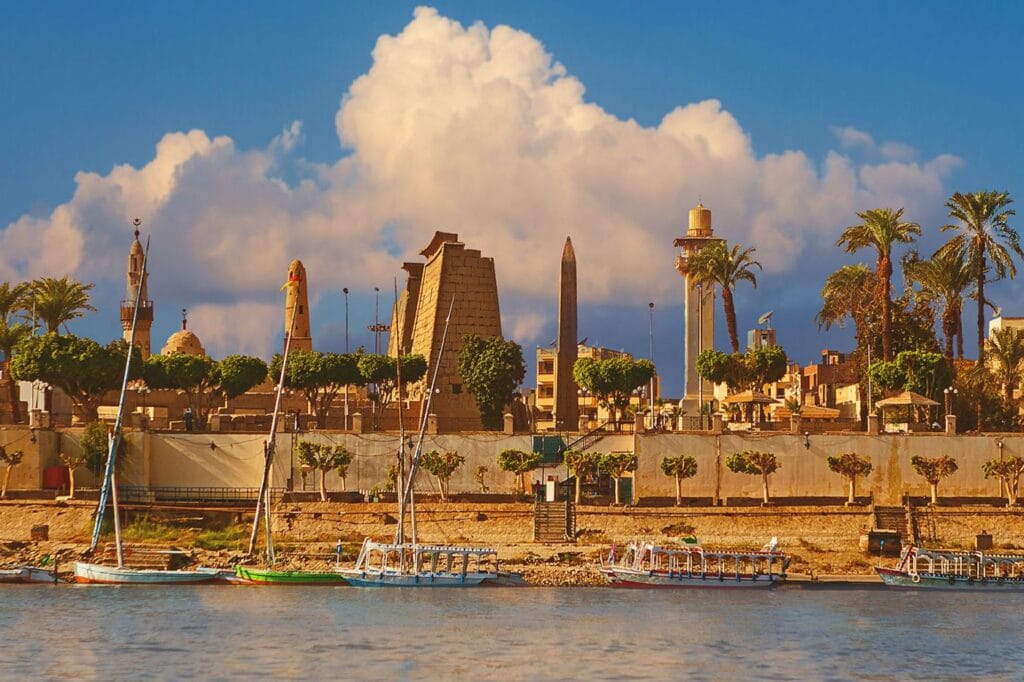
A Tale of Two Banks: Decoding Luxor’s Geography
The Nile isn’t just water here; it’s a border between two worlds. Understanding this “split personality” is your secret weapon for a perfect trip:
- Luxor East Bank (The Pulse): This is where you sleep, eat, and worship. It’s home to the giant temples meant for the living and the gods.
- Luxor West Bank (The Mystery): This is where the sun sets, and the afterlife begins. It’s a silent necropolis of rock-cut tombs and mortuary temples hidden in the desert cliffs.
🚀 Don’t rush both in one day, and let our experts at Nile Travel Machine craft your perfect private itinerary to bridge both banks seamlessly, as it’s recommended at least 48 hours to let the magic sink in without “Temple Fatigue.”
Where Gods and Giants Lived? at The East Bank
Karnak Temple: The Greatest Temple Complex on Earth
Karnak isn’t just a temple—it’s a vast sacred city built over nearly 2,000 years with architectural obsession. The moment you walk in, the sheer ambition of ancient Egypt is on full display. Every pharaoh wanted to outdo the last, resulting in a complex so massive you could fit ten European cathedrals inside.
- The Great Hypostyle Hall: 134 stone giants (columns) that make you feel gloriously small.
- Hatshepsut’s Obelisk: A towering monolithic stone representing divine authority.
- The Sacred Lake: Wander off the main axis to find the smaller chapels—where the silence of the ancients still lingers.
Luxor Temple: The Gold Standard of Nighttime Magic
While Karnak is grand, Luxor Temple is cinematic. Located right in the city’s heart, it served as the stage for the Opet Festival.
- The Avenue of Sphinxes: Imagine 3 kilometers of sphinx-lined road connecting the two great temples.
- The “Timeline” Walls: Look for the layers—Pharaonic carvings, Roman frescoes, and an active Islamic mosque (Abu Haggag) perched atop the ancient ruins.
✨ Why visit at night? Luxor Temple is beautifully illuminated after sunset, bringing out warm gold tones in the stone that you won’t see during the day.
The Museums: Small but Mighty
- Luxor Museum: Highly curated and calm. It houses high-quality statues and ritual objects found locally.
- Mummification Museum: A fascinating look into the science of the afterlife, explaining tools, organs, and the spiritual steps of embalming.
The West Bank: Crossing into the Land of Shadows and Gold
If the East Bank is a grand festival of life, the Luxor West Bank is a masterpiece of silence. As the sun dips behind the Theban hills, you cross the Nile into a world where the pharaohs sought eternal life. This isn’t just a cemetery; it’s a high-stakes engineering marvel carved into the limestone heart of the desert.
Valley of the Kings: A Descent into the Divine
Forget what you’ve seen in Hollywood. The Valley of the Kings is a sun-scorched canyon that hides some of the most vibrant art ever created by human hands.
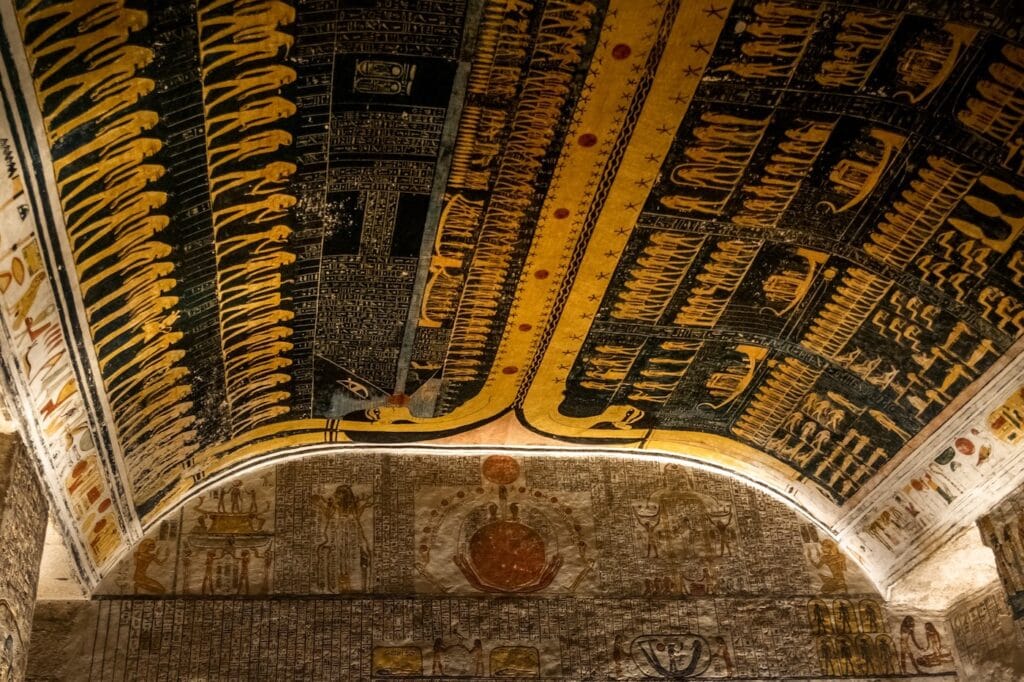
- The Experience: You walk down steep ramps, leaving the heat behind, to find walls covered in “The Book of the Dead”—bright yellows, deep blues, and reds that look like they were painted yesterday, not 3,000 years ago.
- The Strategy: Your ticket usually covers three tombs. Ramesses VI is a must for its ceiling of stars, while Seti I (extra ticket) is the undisputed heavyweight champion of Egyptian art.
Take a moment to stand still in a tomb when the crowds move on. The absolute silence and the smell of ancient stone are things no photo can capture.
The Woman Who Would Be King: Hatshepsut’s Masterpiece
Rising in three elegant terraces against the sheer cliffs of Deir el-Bahari, the Temple of Hatshepsut is a lesson in power and symmetry.
- The Story: This is a monument to a queen who dared to rule as a pharaoh. Look for the “Punt Expedition” reliefs—they show the first recorded trade mission, complete with exotic trees and animals.
- The View: Stand on the top terrace and look back toward the Nile. You’ll see exactly what the ancients saw: the green ribbon of life fighting against the golden desert.
Medinet Habu: The “Underdog” of Luxor
If you want to escape the tour buses, Medinet Habu is your secret weapon. It’s the mortuary temple of Ramesses III, and it’s arguably the best-preserved site in the country.
- Why it’s special: The carvings here aren’t just lines; they are deep trenches in the stone. The colors are still vivid, and the massive mud-brick walls make you feel like you’ve stumbled upon a lost city.
- The Insider Vibe: It’s quiet enough to hear your own footsteps. It’s the perfect place for “The Photo” without a hundred strangers in the background.
📢 **Stop Guessing, Start Exploring. Seeing the stones is one thing; hearing them speak is another. We connect you with Egyptologists who turn ruins into legends. Explore our Private Luxor Day Tours.
The Cultural Mosaic: Experiencing Modern Luxor
Beyond the towering pylons and silent tombs, Luxor is a vibrant, pulse-racing modern city. It’s a place where the ancient “Waset” (The City of the Scepter) meets the contemporary “Al-Uqsur” (The Palaces). To truly understand what to see in Luxor, you must step off the temple grounds and into the rhythm of daily life.
- A Journey Through Time: Luxor’s many names reflect a rich cultural heritage shaped by countless civilizations. A visit here isn’t just a checklist of ruins; it’s a chance to witness the wonders of ancient Egypt firsthand while seeing how that legacy still shapes the daily life of modern Egyptians.
- The Modern Pulse: Spend an hour in the local markets (Souqs) or visit contemporary galleries where local artists blend Pharaonic motifs with modern flair. The city’s restaurants and riverside cafes offer more than just a meal; they offer a taste of traditional Egyptian hospitality—think aromatic coffee and fresh bread served with a view of the very river that sustained the pharaohs.
- A Destination for Everyone: Whether you are a dedicated history buff or a traveler simply looking for an unforgettable vacation, Luxor never fails to impress. It is a city situated in the south that remains the heart of the country’s cultural identity.
For more tips: Best Egypt Tours with Nile Cruise: Top Packages Reviewed 2026
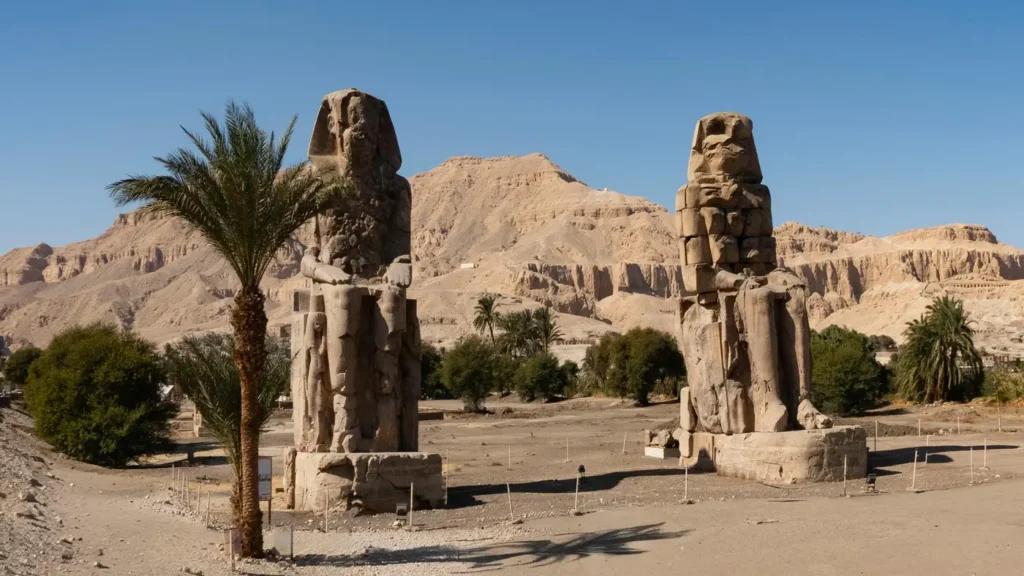
The Colossi of Memnon: The Lonely Sentinels
You’ll see them before you arrive—two massive, faceless giants sitting in the middle of green fields. The Colossi of Memnon are all that remain of a temple once even bigger than Karnak. They’ve stood there for millennia, watching the Nile flood and recede. It’s a quick 10-minute stop, but the scale is haunting.
The 4:00 AM Wake-up Call (And Why You’ll Love It)
A Hot Air Balloon ride at sunrise is the crown jewel of any Luxor trip. The Feeling: Watching the sun climb over the East Bank while you drift silently over the Valley of the Kings is an emotional experience. You see the “Green vs. Gold” divide of Egypt perfectly from 2,000 feet up.
Felucca at Sunset: The Ultimate “Slow Down”
After a day of hiking through tombs, nothing beats a Felucca (traditional sailboat). No engine, no noise—just the wind and the Nile. It’s the best way to process everything you’ve seen.
Planning Like a Pro: Practical Wisdom
- When to Go: October to April is “Goldilocks” weather (just right). If you visit in summer, be at the Valley of the Kings at 6:00 AM sharp to beat the 40°C heat.
- How to Move: On the West Bank, distances are deceptive. Don’t try to walk it. A private driver is your best friend here.
🌟 Ready for the adventure? Book your Private Luxor Experience
Navigating the City of the Sun: How to Get Around
Luxor isn’t just a place on a map; it’s a living, breathing landscape. Getting from a 7,000-year-old tomb to a modern riverside café requires a bit of strategy:
- The Nile Ferry (The Local Way): For a few Egyptian pounds, the public ferry is a fun, breezy way to cross between the East and West Banks. You’ll be sharing the ride with locals, school kids, and perhaps a basket of fresh oranges.
- Bicycles (The Adventurous Way): Many travelers love renting bikes on the West Bank. It’s flat, scenic, and takes you through lush banana groves. Just avoid doing this at high noon!
- Private Drivers (The Nile Travel Machine Way): To truly maximize your time and stay cool, a private, air-conditioned vehicle is the only way to go. No haggling, no waiting—just seamless transitions between wonders.
The Luxor Survival Kit: What to Pack
The Egyptian sun is generous, but it demands respect. To stay comfortable while exploring, pack these essentials:
- Breathable Fabrics: Linen and light cotton are your best friends. Think “loose and long” to protect your skin from the sun.
- The “Temple Shoe”: You’ll be walking on uneven stone and desert sand. Leave the flip-flops for the pool; bring sturdy, comfortable walking shoes.
- A Light Scarf: Perfect for sun protection, or for covering shoulders when visiting local areas or the mosque inside Luxor Temple.
- Hydration is Key: A refillable water bottle is a must.
- Small Cash (Le): For tips (Baksheesh), small souvenirs, or that life-saving glass of fresh sugarcane juice.
Your Luxor Roadmap: Suggested Itineraries
Don’t have much time? Or have all the time in the world? Here is how to structure your visit:
| Duration | The Focus | Highlights |
| 1 Day | The “Icons” | Morning: Valley of the Kings & Hatshepsut. Sunset: Luxor Temple at night. |
| 2 Days | The “Deep Dive” | Day 1: East Bank (Karnak & Museums). Day 2: West Bank (Kings, Habu, & Colossi). |
| 3 Days | The “Slow Burn” | Add a sunrise Hot Air Balloon, the Tombs of the Nobles, and a long sunset Felucca ride. |
Heading south after Luxor? About an hour away, the Temple of Khnum at Esna hides painted columns nine metres below the street. It is a quiet stop before Edfu.
Frequently Asked Questions
Q: Is Luxor worth it if I’ve already seen the Pyramids in Cairo?
A: Absolutely. If the Pyramids are the “body” of ancient Egypt, Luxor is the “soul.” The level of detail, color, and immersion you get in the Valley of the Kings is unlike anything in Cairo.
Q: Can I take photos inside the tombs?
A: Yes, but rules change. Most tombs allow photography with a smartphone (no flash), but some premium tombs may require a special permit or forbid it entirely to preserve the colors. Always check the signs!
Is one day enough for Luxor?
Honestly? No. You’ll see the highlights but miss the soul. Two days is the minimum to enjoy both banks without collapsing.
Final Thoughts: Why Luxor Stays With You
Luxor isn’t just a stop on an itinerary. It’s the smell of jasmine tea in a riverside café, the sound of the evening call to prayer echoing off temple walls, and the humbling sight of a sunset that hasn’t changed in five thousand years.
When you stand in the shadow of a Karnak column, you aren’t just a tourist; you are part of a human chain that has marveled at these stones for millennia.
Explore Luxor with the Experts
At Nile Travel Machine, we don’t just show you the sites; we introduce you to the stories. Our licensed Egyptologists and local staff are passionate about making your journey as smooth as the Nile itself.
Ready to write your own Egyptian story? Plan Your Custom Luxor Tour with Nile Travel Machine.
