
Egypt Philae Temple Tour: The Sacred Island That Never Surrendered
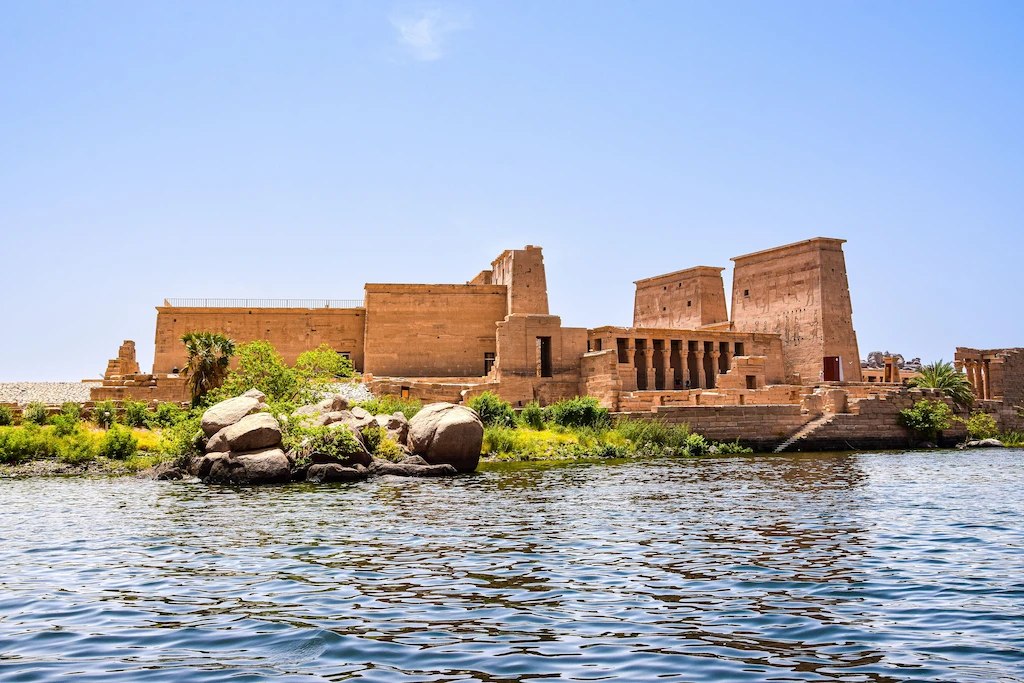
Why Every Egypt Philae Temple Tour Starts With a Boat Ride — And Ends With Awe. Picture yourself gliding across the turquoise waters of the Nile near Aswan, watching a sandstone temple complex slowly rise from an island ahead. That first glimpse — the one that makes travelers reach for their cameras mid-sentence — is what an Egypt Philae Temple tour delivers before you even step ashore.
What You Will Actually See: A Practical Walkthrough
Most visitors have 1.5 to 2 hours on site. Here is what to prioritize and in what order:
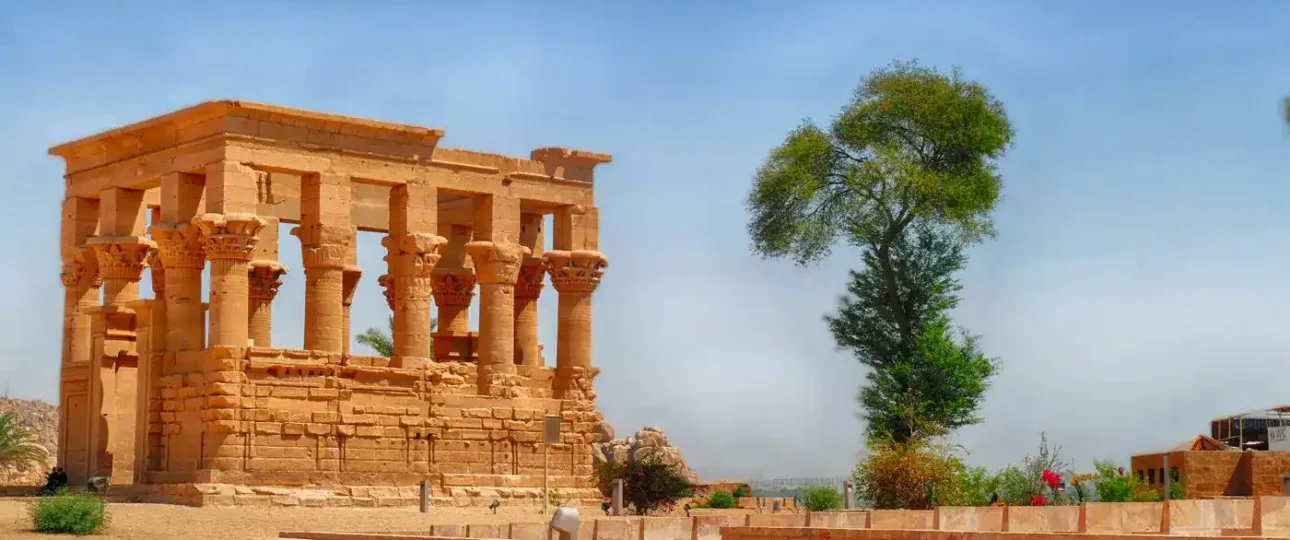
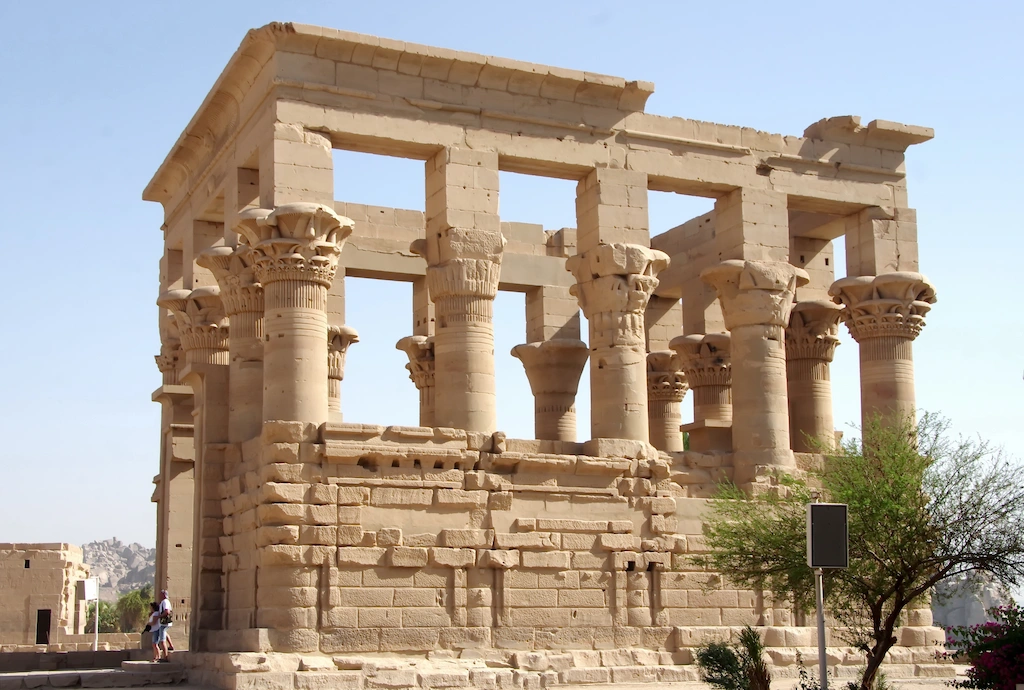
- The Kiosk of Trajan (also called “Pharaoh’s Bed”) — the most photographed structure on the island, a Roman pavilion with open columns overlooking the Nile. Arrive here last for golden-hour light.
- The First Pylon — the towering gateway where Ptolemy XII smites his enemies. Look for the carved falcon heads at the base, which are easy to miss.
- The Outer Colonnade — a double row of columns leading to the main temple. Each column capital is different — no two are identical.
- The Birth House (Mammisi) — detailed reliefs depicting the divine conception and birth of Horus. Essential for understanding Ptolemaic religious thought.
- The Inner Sanctuary — originally housed the sacred barque (boat) of Isis during festivals. The walls here show the finest quality of relief carving in the complex.
- The Coptic Church Chapel — a small room where the transition from ancient Egyptian to Christian use is physically visible on the walls.
Philae Temple: Key Visitor Facts at a Glance
| Detail | Information |
|---|---|
| Location | Agilkia Island, 12 km south of Aswan city center |
| How to reach | Short motorboat from Shellal Dock (south of Aswan High Dam) |
| Opening Hours | 7:00 AM – 4:00 PM (extended in summer); Sound & Light Show at dusk |
| Entry Fee (approx.) | from EGP 360 for foreigners (subject to change; check before visiting) |
| Best Time to Visit | October to April (cool season); early morning for fewer crowds |
| Recommended Duration | 1.5 – 2 hours on site |
| Guided vs. Solo | A licensed guide adds significant value — many reliefs are misread without context |
| Photography | Permitted; no tripods inside the inner sanctuary |
A Guide’s Note: What Most Tourists Miss Entirely
Ahmed, a licensed Egyptologist guide based in Aswan with over 15 years of experience leading tours to the temple, shares this insight with his groups: “Most tourists spend their time at the first pylon and the Kiosk of Trajan — they are beautiful, yes. But they miss the back of the complex entirely. There is a small Hathor Chapel with musicians carved into the columns — a harpist, a flutist, even Bes, the dwarf god of music. This is where ancient Egyptians came to celebrate. It changes how you understand the whole site.”
The Hathor Chapel is often bypassed because it sits away from the main path. It takes five minutes to reach. It rewards every second.
Planning a full Aswan experience? Our private Dahabiya Nile cruises include Philae, Kom Ombo, Edfu, and Luxor in a more intimate setting than large cruise ships.
The Sound and Light Show: Philae After Dark
The nightly Sound and Light Show at Philae is one of the most dramatic in Egypt. The temple is illuminated in shades of gold, orange, and deep blue while narrated scenes from the myth of Isis and Osiris play out across the stone walls.
There are three shows per evening in different languages — check the schedule in advance, as English shows can sell out during peak season.
Seeing Philae at night, after you have already walked its corridors by day, is a different experience entirely. The darkness hides the tourist infrastructure and returns the island to something close to what it once was.
The Island That Refused to Be Silenced
The Temple of Isis at Philae was the last ancient Egyptian temple to fall silent. While Rome converted to Christianity and other temples closed one by one, Philae’s priests kept the sacred flame burning until 537 CE — nearly 200 years after the rest of Egypt had moved on. That stubbornness is written into every carved wall on Agilkia Island today.
The temple complex sits not on its original island — Philae Island was swallowed by the waters of Lake Nasser after the Aswan High Dam was completed in 1970. In one of archaeology’s greatest rescue operations, UNESCO and Egyptian authorities dismantled over 40,000 sandstone blocks, moved them to the neighboring island of Agilkia, and reassembled the entire complex between 1972 and 1980. It is the same temple. Every relief, every column, every hieroglyph — just 12 meters higher than before.
Who Built the Temple of Isis at Philae — and When?
Construction began under Nectanebo I (380–362 BC) of the 30th Dynasty, making the outer temple court one of the last purely Egyptian royal building projects before the Ptolemaic Greeks took control.
But the main temple you walk through today was largely built and decorated by the Ptolemies — rulers who were Greek by blood but fiercely devoted to Egyptian gods by policy.
The Romans added their own mark too: Emperor Augustus, Tiberius, and Hadrian all contributed chapels and gateways. The result is a layered masterpiece where Greek proportions, Egyptian mythology, and Roman ambition coexist on the same colonnaded walkway.
Ready to explore Egypt’s sacred south? Browse our Nile cruise packages that combine Philae, Luxor, and the Valley of the Kings in one journey.
The Goddess at the Center: Why Isis Made Philae Her Home
Isis was not simply a goddess — she was a brand. By the Ptolemaic period, her cult had spread from Egypt to Rome, Greece, and across the Mediterranean. She was the divine mother, the healer, the mistress of magic, and the guide of souls. And Philae was her headquarters.
The island’s isolation in the Nile made it feel sacred — a liminal space between the human and divine worlds. According to legend, nearby Biga Island (just across the water) held the tomb of Osiris himself, Isis’s husband.
Priests on Biga were forbidden to speak aloud, and no birds could fly overhead. Philae, by contrast, was where pilgrims came to be heard — to pray, to grieve, and to seek healing from the goddess who had reassembled her murdered husband’s body and brought him back to life.
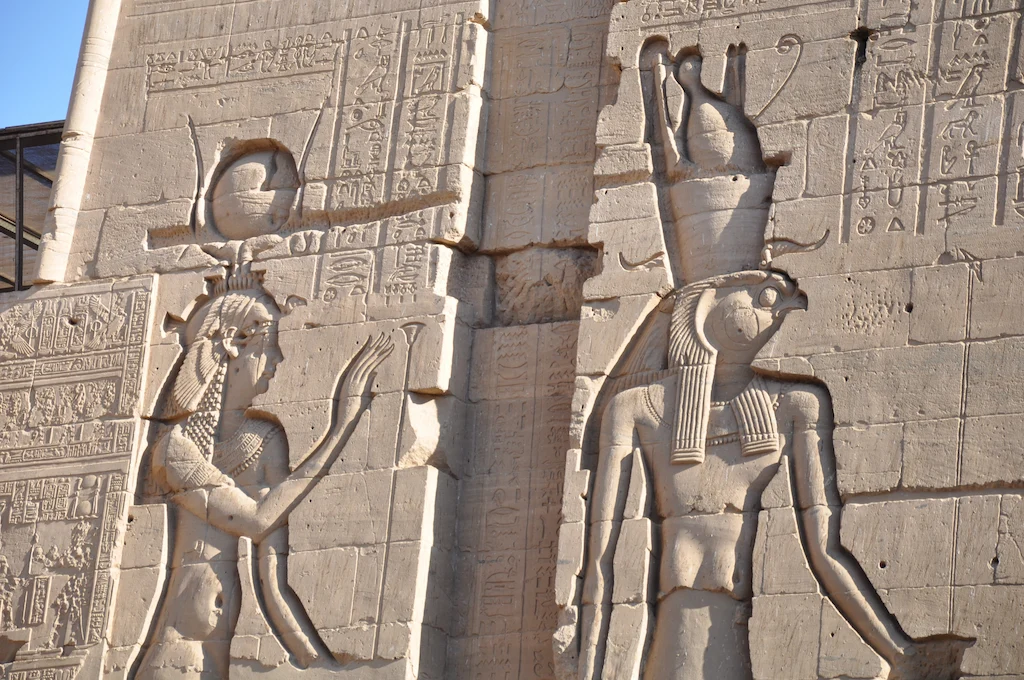
That myth — Osiris dismembered, Isis searching, Horus born — is illustrated across the temple walls in extraordinary detail. Egyptologists consider the birth house (mammisi) here one of the finest examples of Ptolemaic sacred architecture in Egypt.
The One Carving That Still Troubles Scholars: The “Farewell Relief” of Room 17
Most of the temple’s reliefs are well-understood. But in a small inner chamber near the sanctuary, archaeologists have documented a Coptic cross scratched directly over the face of Isis — a deliberate act of religious erasure by early Christian monks who briefly inhabited the temple in the 6th century.
What makes this particular defacement unusual is what wasn’t erased: the full body of the goddess, the hieroglyphic texts surrounding her, and the offering tables below were left completely intact.
Scholars debate whether this was a calculated compromise, a sign of respect for the artistry, or simply a lack of resources to continue. It is a small detail — but it tells the story of an entire civilization’s transition in a single wall.
FAQ About the Egypt Philae Temple Tour
What makes Philae different from other Egyptian temples — why is it worth a dedicated visit?
Unlike most temples that were built in desert or urban settings, Philae sits on a Nile island you access only by boat. That approach was intentional in antiquity and remains powerful today. An Egypt Philae Temple tour gives you this arrival experience, plus some of the best-preserved Ptolemaic art in the country, all in under two hours.
Was the temple really moved? Will I be seeing the original stones?
Yes — every block you see is original. Between 1972 and 1980, UNESCO coordinated the dismantling and relocation of the entire complex from the original Philae Island to nearby Agilkia Island, which was shaped to resemble Philae. The carvings, columns, and paving stones are all authentic; only the ground beneath them is new.
When did ancient Egyptians stop worshipping at Philae, and why?
The temple officially closed in 537 CE under Byzantine Emperor Justinian, who ordered the suppression of all remaining pagan cults. Philae was the last temple in Egypt to cease operations — the priests of Isis had maintained their rituals there for decades after Christianity became the state religion, making it a remarkable holdout of ancient Egyptian faith.
Can I combine a Philae Temple visit with other Aswan attractions in one day?
Yes — Aswan’s main sites are well-grouped for day trips. A typical itinerary combines Philae with the Unfinished Obelisk, the High Dam viewpoint, and a Nubian village visit. For those who want to extend further, our Luxor day tours from Aswan can be added as a second day, covering the Valley of the Kings and Karnak Temple before you fly home or continue your cruise.
Conclusion
The Temple of Isis at Philae is not simply ancient — it is the distilled result of three civilizations building on the same sacred ground across 900 years. The boat ride in, the layered architecture, the carvings still sharp enough to read, the light on the stone at dusk — it earns its place on any serious Egypt itinerary. Let Nile Travel Machine plan your Aswan visit and make sure Philae is more than a checkbox.