
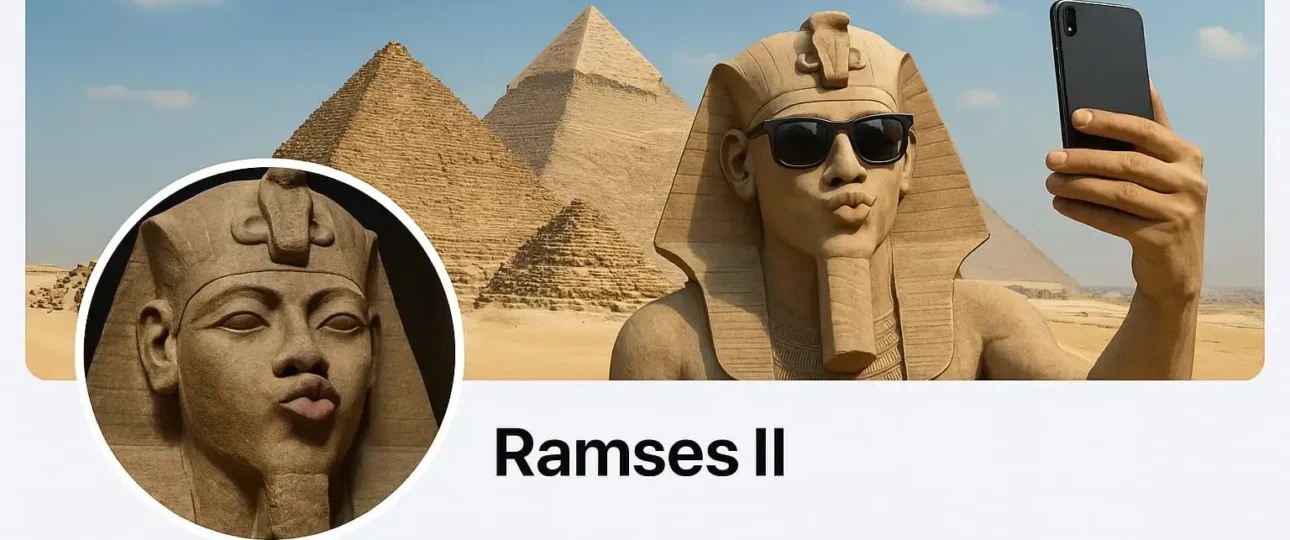
Social Media in Ancient Egypt: Temples, Propaganda, and the First Influencers
What if the pharaohs had Instagram? They wouldn’t need it — they already had something far more powerful. Social media in ancient Egypt was carved in stone, painted in gold, and built to last 3,000 years. Long before hashtags and algorithms, Egypt’s temples were the world’s first content platforms.
Temples: The Original Social Media Platforms
Every ancient Egyptian temple was a carefully engineered broadcasting system. Pharaohs used towering walls, colossal statues, and layered hieroglyphic text to control exactly how the world perceived them — and how history would remember them. These weren’t just sacred spaces. They were personal brands, built from sandstone and ambition.
The parallels with modern social media are striking:
| Modern Social Media Feature | Ancient Egyptian Equivalent | Famous Example |
|---|---|---|
| Profile Picture | Colossal entrance statues | Ramses II’s four statues at Abu Simbel |
| Cover Photo | Battle murals on temple pylons | Medinet Habu — Battle of the Delta |
| LinkedIn Bio / About Section | Hieroglyphic royal titles & birth myths | Hatshepsut’s divine parentage murals at Deir el-Bahari |
| Timeline / Status Updates | Inner temple wall annals | Thutmose III’s military campaigns at Karnak |
| Tagging Friends | Gods depicted alongside the pharaoh | Amenhotep III with Amun at Luxor Temple |
| Blocking / Deleting | Damnatio memoriae (erasing names and statues) | Thutmose III erasing Hatshepsut’s image |
| Shadowban / Account deletion | Full monument erasure after death | Akhenaten’s temples demolished by successors |
Ready to walk through the world’s oldest content studio? Explore our Luxor Day Tours and stand inside temples that were engineered to impress for eternity.
Profile Pictures: Divine Selfies Carved in Stone
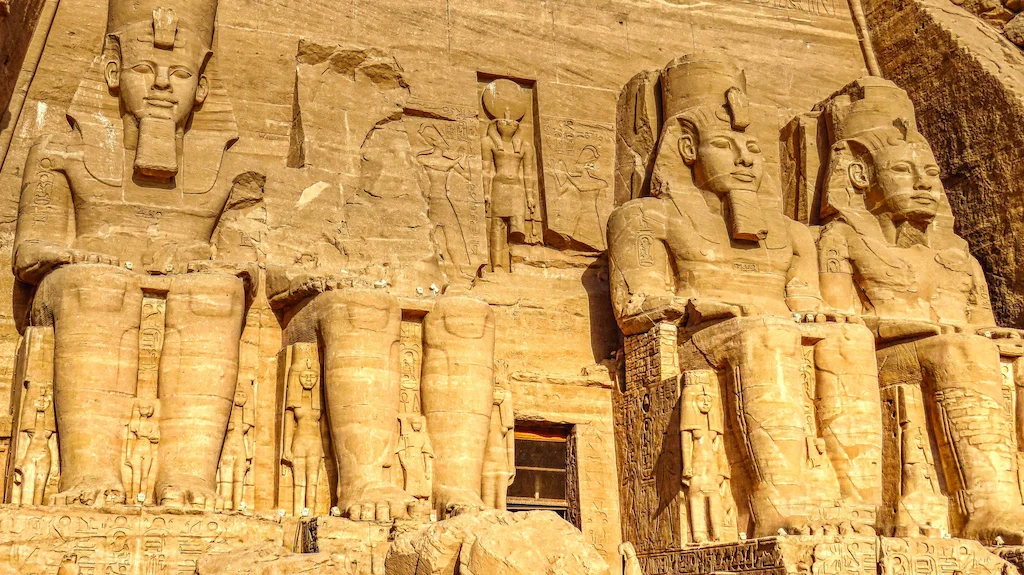
Before the selfie stick, there was the chisel. Pharaohs immortalized their image with 60-foot statues flanking temple entrances — their eternal profile pictures, airbrushed to divine perfection.
At Abu Simbel, Ramses II had four colossal seated figures carved directly into a cliff face. This wasn’t modesty. Each statue declared, in unmistakable sandstone: “I am literally built different.” The carvings were scaled to be visible from the Nile — designed for maximum reach, like a pinned post that every traveler on the river could not miss.
Hatshepsut played the algorithm differently. Her Deir el-Bahari temple depicted her with a male physique and ceremonial beard — a Bronze Age image filter to legitimize her reign in a world that expected a king, not a queen. It worked. She ruled for over 20 years and built some of Egypt’s most enduring monuments.
“When visitors stand before the Abu Simbel façade for the first time, they go silent. It’s not just the scale — it’s the intention. Ramses II wanted you to feel small. That was the whole point.”
— Ahmed Karim, senior Egyptology guide, Aswan
Cover Photos: Battle Murals as Ancient Clickbait
Scroll past the profile statue and you hit the pylon — the massive gateway to any Egyptian temple. This was prime cover photo real estate, and pharaohs used it for maximum visual impact.
At Medinet Habu, Ramses III commissioned a wall-to-wall mural of the Battle of the Delta — a brutal, detailed depiction of him destroying the Sea Peoples. Ancient clickbait at its finest. The implicit caption: “Just saved Egypt again. Don’t @ me.”
Pious kings took a softer approach. Hatshepsut’s pylons showed her offering wine to the god Amun — the equivalent of a LinkedIn banner reading “Grateful for my mentor’s guidance.” Both strategies served the same purpose: signal power and alignment with divine authority before anyone even entered the temple.
Visiting Medinet Habu is one of Luxor’s most underrated experiences. Browse our Luxor West Bank Tours to see these ancient cover photos in person.
The ‘About’ Section: God-King Bios Written in Hieroglyphs
Every pharaoh had a hieroglyphic bio that would make any LinkedIn influencer envious. Titles like “Son of Ra,” “Lord of Two Lands,” and “He Who Unites the Hearts of the Gods” weren’t casual — they were carefully crafted personal branding, etched permanently into temple walls.
Thutmose III’s Karnak Temple bio listed over 350 conquered cities. Relationship status? Married to Egypt. Divine parentage? Non-negotiable. Hatshepsut took it further: her temple at Deir el-Bahari features a full origin story, showing the god Amun himself fathering her and handing her the crown. This was ancient nepotism elevated to cosmological art — and it was wildly effective.
These bios blended myth and résumé in a way no modern platform allows. The result was an identity so thoroughly constructed that even enemies couldn’t fully erase it — as Hatshepsut’s rediscovered legacy proves today.
Timeline Posts: Hieroglyphic Status Updates That Lasted Millennia
Inner temple walls functioned as a pharaoh’s personal timeline — a scrollable feed of victories, offerings, divine encounters, and political alliances, carved for eternity rather than cached for 30 days.
Thutmose III’s annals at Karnak read like a military travel blog: campaign by campaign, city by city, loot by loot. His post after the Battle of Megiddo essentially reads: “Conquered the north. Took 924 chariots. Views: fire. No retreat.”
Amenhotep III’s Luxor Temple documented his Sed Festival — a massive royal jubilee — in obsessive detail. Thousands of guests, elaborate rituals, offerings to every god imaginable. The ancient equivalent of live-posting a sold-out event with full production value.
Unlike Instagram stories that vanish in 24 hours, these posts were carved to outlast civilization itself. Modern influencers could never.
Tagging Gods and the Ancient Follower Economy
No pharaoh posted alone. Every major relief showed them alongside gods — Amun, Osiris, Horus, Ra — tagged in every scene for divine credibility. This wasn’t just art. It was strategic association: align yourself with the most powerful beings in the cosmos and let the imagery do the persuasion.
When Amenhotep III married a Mitanni princess, he didn’t just celebrate — he updated his geopolitical status across multiple temples. Followers included priests (the content admins), citizens (who “liked” posts with grain offerings and temple visits), and the occasional graffiti artist — like Khaemwaset, who left his name scratched into older monuments. The original comment section.
Drama was inevitable. Thutmose III had Hatshepsut’s statues smashed and her name chiseled out of inscriptions — the ancient world’s definitive block. Akhenaten’s entire monotheistic revolution was later scrubbed from official records, his temples demolished, his name erased. History’s most dramatic shadowban.
Want to trace this divine social network through the temples of Upper Egypt? Our Aswan Tours take you through Philae Temple, where the gods’ stories are still alive on every wall.
Why Did Ancient Egyptian Propaganda Work So Well?
Because it combined three things modern platforms still chase: visual dominance, emotional resonance, and permanence.
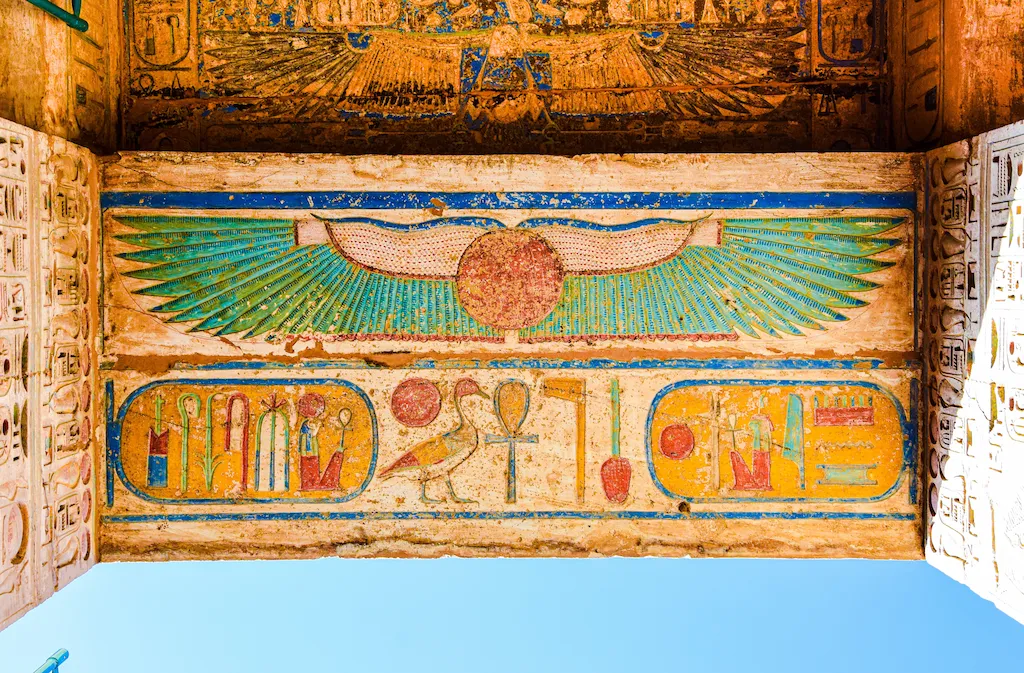
Temple art wasn’t random decoration. Every scene followed strict rules of scale (the pharaoh is always the largest figure), placement (gods always face inward toward the sacred), and color (red for enemies, gold for divinity). This was a fully developed visual grammar — a design system that made Egypt’s brand instantly recognizable across thousands of miles and hundreds of years.
According to The Metropolitan Museum of Art, Egyptian royal imagery was deeply connected to the concept of Ma’at — cosmic order and truth — giving pharaonic propaganda a spiritual authority that pure force could never achieve alone.
Legacy: The Engagement Metrics That Never Expire
TikTok fame fades in hours. Pharaohs played the long game.
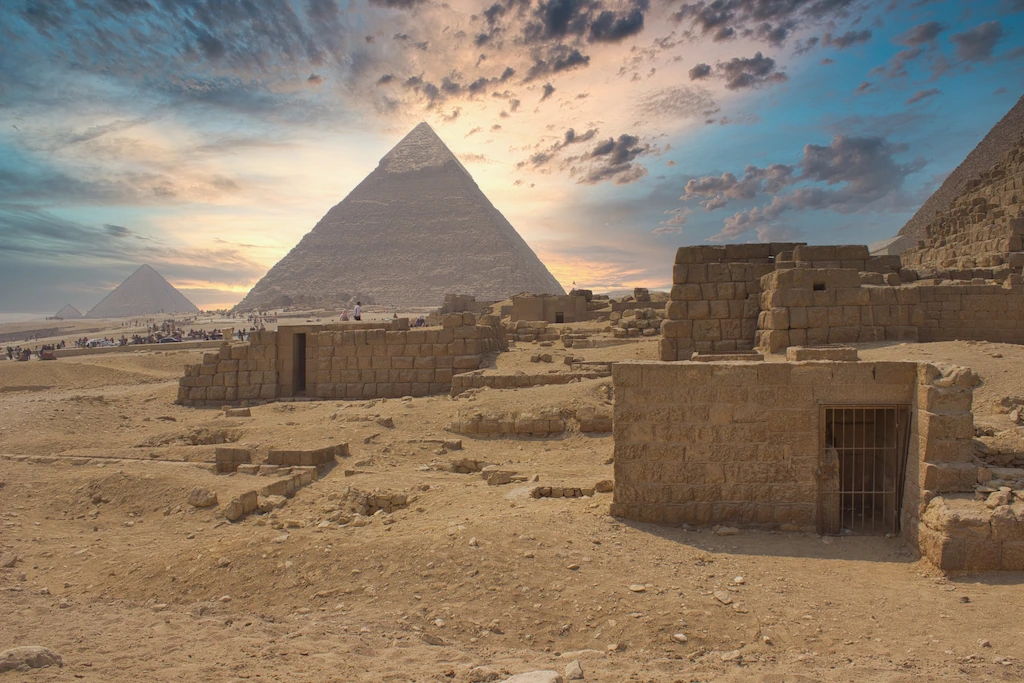
Karnak Temple has been “engaging” visitors for over 4,000 years. The Great Pyramid — built with no social media team, no ad budget, and no algorithm — remains one of the most photographed structures on Earth. That’s an engagement rate no platform can replicate.
Hatshepsut’s erased legacy is perhaps the most poignant lesson: even the most aggressive takedown campaign in history couldn’t permanently silence a great pharaoh. Modern archaeologists restored her story. Her content survived the delete.
Akhenaten’s radical rebranding — replacing all gods with a single sun disc — was too disruptive for the existing network. His successors deactivated his account entirely. His temples were dismantled brick by brick. And yet, we’re still talking about him 3,300 years later.
Frequently Asked Questions
Did ancient Egyptian pharaohs deliberately use temples as propaganda tools?
Absolutely — and with sophisticated intent. Every element of temple design, from statue scale to wall placement, was engineered to project divine authority. Social media in ancient Egypt worked through controlled visual storytelling, not accident. Pharaohs had teams of priests, scribes, and artists dedicated to curating their public image across every monument.
How did Hatshepsut manage her image as Egypt’s female pharaoh?
Hatshepsut used her temples — especially Deir el-Bahari — to rewrite her own narrative. She depicted herself with male attributes, claimed divine parentage from Amun, and documented her trade expeditions in vivid detail. Her image management was so effective that it took Thutmose III decades after her death to attempt erasing it.
What made Karnak Temple Egypt’s most “viral” content hub?
Karnak was built and expanded by over 30 pharaohs across 2,000 years, each adding their own inscriptions, halls, and obelisks. It became the ancient world’s most layered content platform — a living, growing timeline of Egypt’s royal history. Every pharaoh who added to Karnak was essentially boosting their own post on the highest-traffic wall in the ancient world.
How is social media in ancient Egypt relevant to visiting Egypt today?
Understanding the propaganda behind temple art completely transforms how you experience sites like Abu Simbel, Karnak, and Medinet Habu. You stop seeing walls and start reading intentions — the rivalries, the divine alliances, the image wars. Egypt’s monuments become a 3,000-year social feed, and every carving is a post waiting to be decoded.
Pharaohs didn’t just build monuments — they built narratives. They understood that controlling your image, your story, and your audience’s perception is the real source of lasting power. Social media in ancient Egypt wasn’t a metaphor. It was a fully functioning system of mass communication, influence, and legacy — executed in stone instead of pixels. Ready to read the oldest feed in the world? Explore our Egypt Tour Packages and experience ancient influence firsthand.