

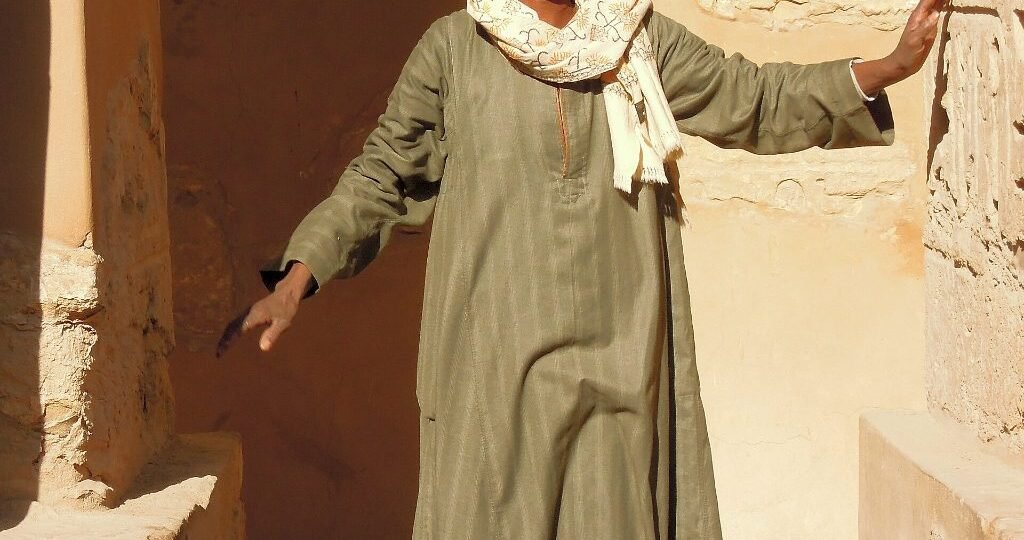
Egyptian Traditional Clothes: What Egyptians Wear Every Day
What do Egyptians actually wear every day? Egyptian traditional clothes are not costumes. They are everyday dress that shifts from region to region, and this guide shows you what to look for.
What Do Egyptians Wear Every Day?
Three things decide the outfit: the region, the job and the weather. Business districts lean Western. Villages, old quarters and relaxed evenings lean traditional.
- At work in the city: shirts, suits and modern dresses.
- After work: a light cotton galabeya, a coffee shop and friends.
- In the countryside: traditional robes and head cloths all day.
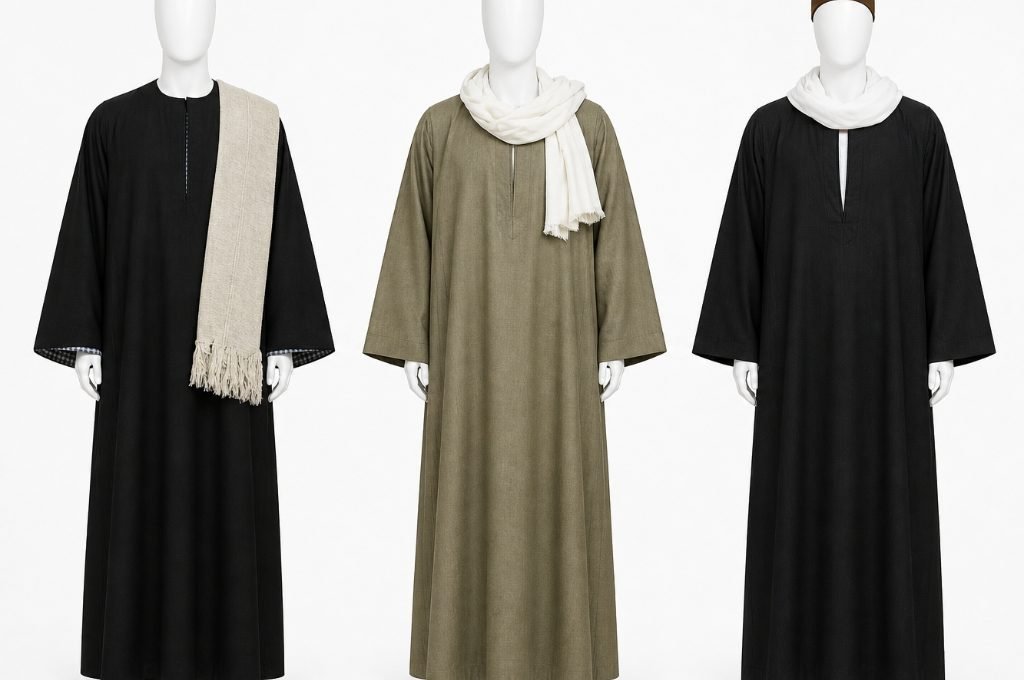
Why Is the Galabeya the Heart of Egyptian Traditional Clothes?
Because it is built for heat. The long, loose robe hangs from the shoulders, so air moves freely around the body. A scooped neck, wide sleeves and an open hem do the cooling. Cotton and linen suit summer. Heavier cotton or wool suits winter.
How Do Men Wear the Galabeya?
In villages and across Upper Egypt, it is daily dress for farming, shopping and business. In cities, men change into a light galabeya after work. They meet friends at the local coffee shop (ahwa) or walk to Friday prayers. Many add a belt, a skullcap or a turban.
How Do Women Wear It?
Women wear it as comfortable home and hosting dress. Colourful, embroidered versions come out for family visits and holidays. In the countryside, layered fellaha dresses allow easy movement during daily tasks. The black melaya leff, a wrap once common in big cities, is now rare.
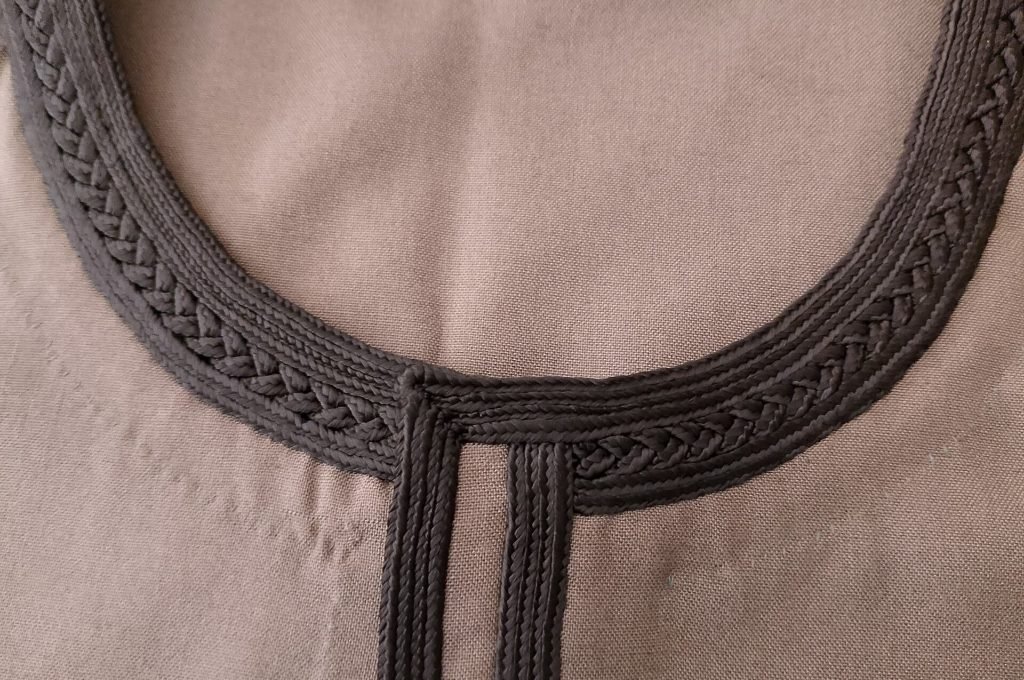
Field tip from our guides: look at the collar first. Plain stitching means everyday wear. Braiding means the owner is dressed for an occasion.
Ready to see these robes in their natural habitat? Explore our curated Egypt day tours and walk a real souk beside a local guide.
Egyptian Traditional Clothes at a Glance: Who Wears What Today?
| Piece | Who wears it today |
|---|---|
| Galabeya | Men and women, from village lanes to city coffee shops. Cotton or linen. |
| Emma (turban) | Men in Upper Egypt, wound around the head against the sun. |
| Tarboosh (fez) | Rare now. It arrived with Muhammad Ali’s military uniforms, and the first Egyptian-made one dates to 1825. |
| Tarha | Women in the Delta and Cairo. A 2.5–3 m chiffon or crepe head cloth, draped over the head. |
| Melaya leff | A wrap-around outer cloth, once a modesty staple in big cities. Rare today. |
| Jarjar | Nubian women. A sheer black overdress with a hem that trails behind. |
| Al-duss | Nubian brides. A wedding dress in red, green, fuchsia or pink. |
| Nahuwak | Siwan brides. The “dress of a thousand buttons,” trimmed with mother-of-pearl. |
| Kaftan | A belted, ankle-length robe, often in striped cotton and silk. |
How Does Everyday Dress Change From Cairo to Aswan?
Dramatically. Egypt is long and narrow, and each stretch of the Nile has its own look. Once you know the clues, every one of them is easy to spot.
Cairo and the Delta: Head Cloths and Fezzes
In the Delta, many women wear a narrow black tarha, sometimes with a folded kerchief beneath. In the capital, the tarboosh (fez) once defined a gentleman’s outfit. Spot these layers while you wander Islamic Cairo’s medieval alleys, or pair them with our Cairo tours.
Luxor and Upper Egypt: Black Robes, Red Thread
Saidi women traditionally wear large T-shaped robes in black or dark blue. Red silk or metallic-thread embroidery frames the neckline, sleeves and seams. Men pair a heavier galabeya with a turban to shield their heads from the southern sun.
Festival days show everyday and festive dress side by side. The Mouled Abu El-Haggag festival in Luxor is a good example, and our Luxor tours can be timed around it. Heading further south? Our Upper Egypt travel guide maps the route.
Aswan and Nubia: Tulle, Gold and Bright Wedding Colours
Nubian dress is the most distinctive in Egypt. Men wear a white jellabiya with a neck scarf and turban. Women wear long, wide dresses with woven patterns, topped by the jarjar.
Nubian brides go further. The al-duss dress comes in vivid red, green, fuchsia or pink, and the bride is covered in gold, from head bracelets to anklets.
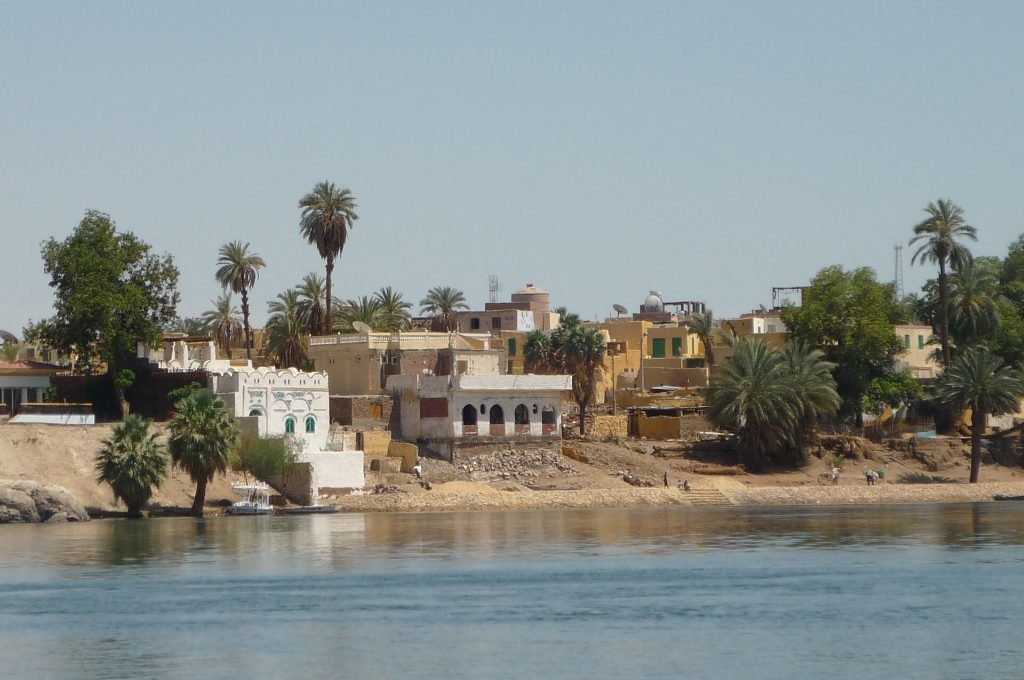
Field tip: Nubian villages are living neighbourhoods, not stage sets. Greet first, then ask before you photograph anyone.
Ready to sail the river of the gods? Book your Aswan and Luxor Nile cruise and slow down on the Nubian shores. Our guide to a felucca ride in Aswan shows how.
Siwa and Sinai: Buttons, Amulets and Beads
The Siwan bridal tunic called the nahuwak is known as the “dress of a thousand buttons.” Its mother-of-pearl buttons make it unmistakable. Necklines mark a woman’s life stage: square for married women, slit for unmarried girls. Amulet-case pendants and the hand of Fatima protect brides and children.
In Sinai, the signature is jewellery. Bedouin women wear gold nose rings with dangles and coloured beads, and blue is a favourite. If you are pairing beach days in Hurghada with a cultural leg, ask for a tailor-made itinerary that includes both.
Can Tourists Wear Egyptian Traditional Clothes?
Yes, if you wear them respectfully. A plain cotton galabeya bought locally is usually met with a smile. Three field rules help:
- Keep it simple. A plain cotton galabeya, worn loose, is welcome almost anywhere.
- Leave ceremonial dress alone. Bridal and wedding garments belong to ceremonies.
- Ask before you photograph. A smile and a question open more doors than a lens.
Packing for a boat? Our Nile cruise wardrobe guide explains the galabeya party.
Where Can You Buy Egyptian Traditional Clothes?
In the souks of Cairo, Luxor and Aswan. Buy from a shop, not a street pitch, and ask what the fabric is.
| Where | What to look for |
|---|---|
| Khan El Khalili, Cairo | Cotton galabeyas, kaftans and scarves |
| Luxor souk | Everyday robes, shawls and turban cloth |
| Aswan souk | Nubian crafts, robes and scarves |
| Upper Egypt workshops | Handwoven cloth (ask a guide to arrange a visit) |
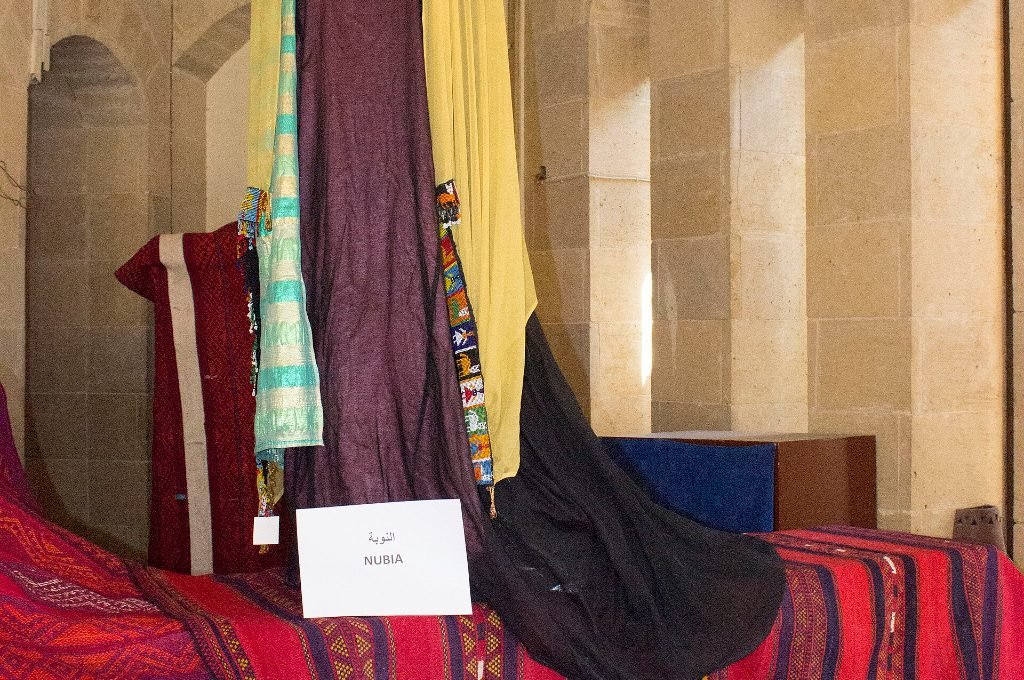
Handwoven pieces are worth the extra. UNESCO placed handmade weaving in Upper Egypt (Sa’eed) on its list of intangible heritage needing urgent safeguarding in 2020. A handwoven scarf or galabeya is a skill, not just fabric. Our guide to what to buy in Khan El Khalili covers the Cairo bazaar.
FAQs About Egyptian Traditional Clothes
Are Egyptian traditional clothes still worn today?
Yes. The galabeya is by far the most common piece, especially in villages, in Upper Egypt and at home. Women also wear tarha head cloths and long abayas. Many Egyptians mix traditional and Western pieces.
What are Egyptian traditional clothes made from?
Mostly cotton and linen for the summer heat, with heavier cotton or wool in winter. Special pieces use silk, tulle and metallic thread.
What is the difference between a galabeya and a kaftan?
A galabeya is a loose pullover robe, usually cotton or linen. A kaftan is a belted, ankle-length robe, often in striped cotton and silk, with long sleeves.
Is it disrespectful for tourists to wear a galabeya?
No. A simple galabeya bought locally is generally received with a smile. Avoid wedding or ceremonial garments, which belong to special occasions.
The Last Thread
Egyptian traditional clothes work like a map you can wear. The robe, the head cloth and the embroidery each point to a place and a story. See them in context and they make sense instantly. Plan your Nile and village days with us: request your tailor-made Egypt itinerary today.
Photo credits: Luxor man in jellabiya by Güldem Üstün (CC BY 2.0); Nubian village on Elephantine Island by Rémih (CC BY-SA 3.0); Egyptian dress display by Mohamed Ouda (CC BY-SA 4.0); galabeya styles by عبدالرحمن (CC0); galabiyyah close-up by Pashonti (CC0). Via Wikimedia Commons.
