

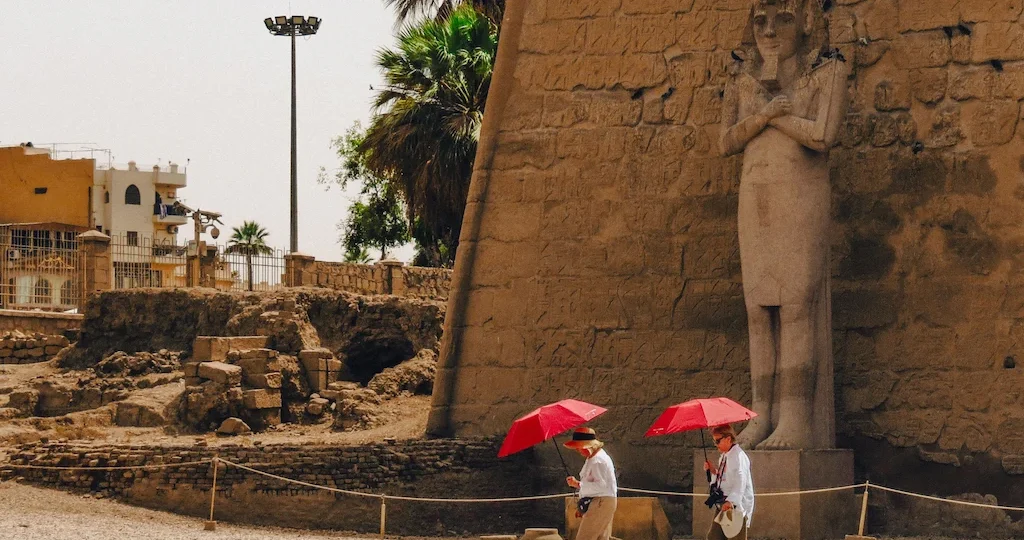
The Complete Upper Egypt Travel Guide: Luxor, Aswan & the Nile Valley
Which temple actually deserves your first morning in Egypt — Karnak or Abu Simbel? Ask ten travelers and you’ll get ten different answers, which is exactly why this Upper Egypt travel guide exists: to turn four thousand years of scattered history into one clear, walkable, sailable itinerary.
Upper Egypt vs. Lower Egypt: Getting Your Bearings First
Confusingly, “Upper” Egypt is the south — named for the Nile’s upstream flow, not its position on a map. It stretches roughly from Luxor down to Aswan, and it holds a denser concentration of intact temples and tombs than anywhere else on Earth.
If Cairo is where Egypt’s story begins with the pyramids, Luxor and Aswan are where it’s told in full, chapter by chapter, temple by temple. For nearly 1,500 years, Thebes — modern Luxor — was Egypt’s religious capital, and almost every New Kingdom pharaoh left a monument here to prove it.
How to Get to Luxor and Aswan?
Most journeys south start with a short domestic flight from Cairo to Luxor or Aswan, taking around 90 minutes. From there, you have three practical ways to link the two cities:
- By overnight train: a comfortable, budget-friendly sleeper option connecting Cairo, Luxor, and Aswan directly.
- By private car: faster and more flexible, with stops at Edfu and Kom Ombo along the way — roughly a 3 to 4 hour drive between the two cities.
- By Nile cruise or dahabiya: the slowest option and, for most travelers, the best one — the river becomes part of the itinerary rather than just a way to cover distance.
Travelers based on the Red Sea coast can also reach Luxor directly by road from Hurghada, making a day trip or multi-day extension easy to combine with a beach stay.
Best Time to Visit Upper Egypt
Temperature, not tourist season, should drive your planning here — Upper Egypt runs noticeably hotter and drier than Cairo or the Delta year-round.
| Months | Conditions | Good For |
|---|---|---|
| November – February | Mild days, cool evenings | Peak season — comfortable temple walking, book early |
| March – April | Warm, occasional dust winds (khamsin) | Fewer crowds, still comfortable mornings |
| May – September | Very hot, often 40°C+ | Lowest prices, early sunrise visits essential |
| October | Cooling down, pleasant evenings | Good transition month, moderate crowds |
For Aswan specifically — which runs a few degrees hotter than Luxor year-round — our dedicated Aswan weather and best time to visit guide breaks the numbers down month by month.
East Bank Luxor: Where Karnak Still Rules the Skyline
Luxor’s East Bank is where the living city and the ancient one share the same street grid. Our detailed guide to what to see in Luxor breaks down both banks in full, but the East Bank highlights alone justify a full day:
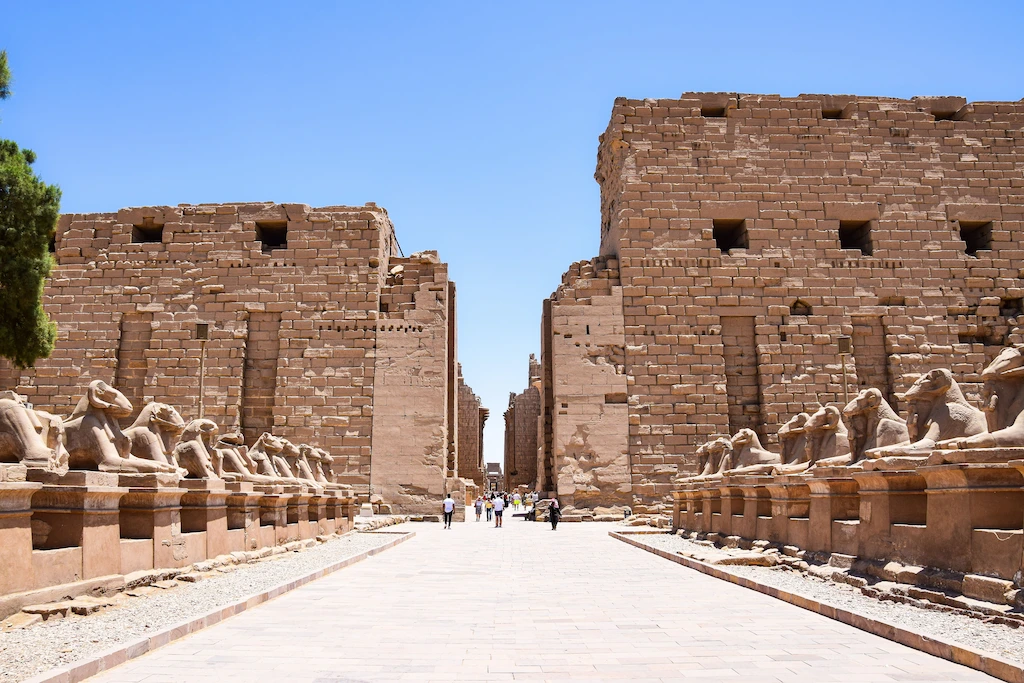
- Karnak Temple: the largest religious complex ever built, still expanding across 2,000 years of pharaonic additions.
- Luxor Temple: uniquely lit for evening visits and connected to Karnak by the restored Avenue of Sphinxes.
- The Mouled Abu El-Haggag festival: a living Sufi tradition held literally inside Luxor Temple’s grounds — proof this city’s spiritual life never stopped.
- Yaccub’s coffee shop: a local institution where our guides send travelers who want Luxor without the tour-bus crowd.
Ready to step into Egypt’s best-kept secrets? Explore our curated Luxor Day Tours before the morning heat sets in.
Crossing the River: The Valley Where Pharaohs Chose to Disappear
The West Bank is a different Luxor entirely — a desert necropolis, not a city. This is where kings deliberately hid their tombs from robbers, and mostly failed.
- Valley of the Kings: burial site of Tutankhamun and Ramesses II.
- Valley of the Queens: home to Nefertari’s tomb, arguably the most beautifully painted burial chamber in Egypt.
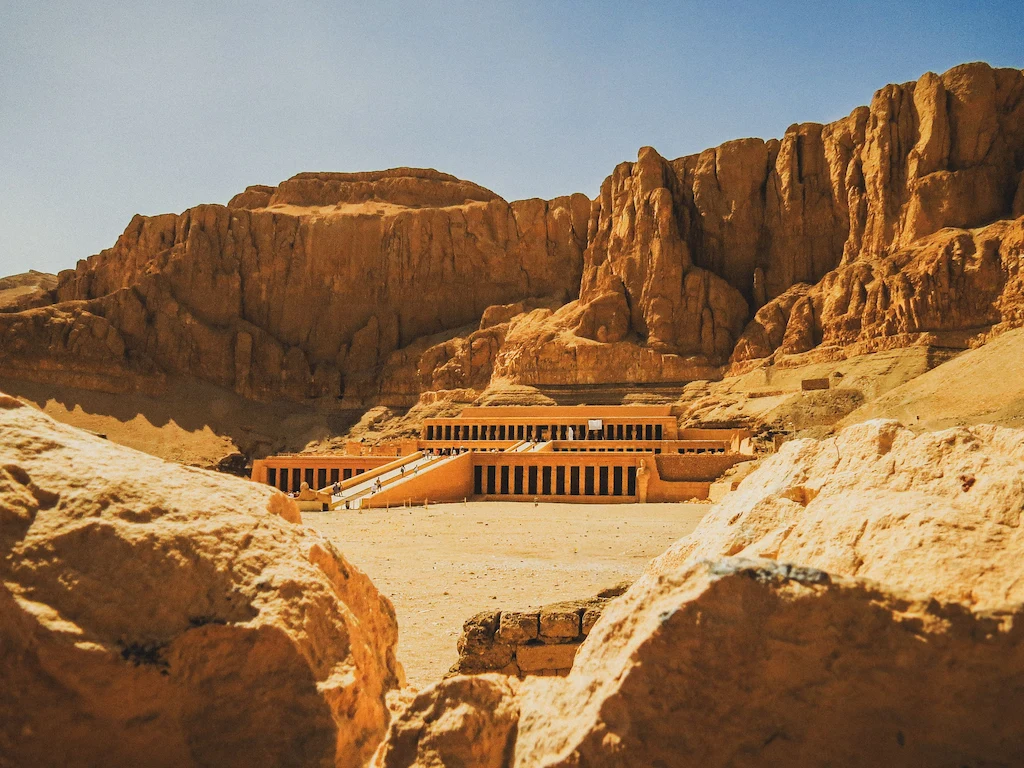
- Temple of Hatshepsut: built by Egypt’s most powerful female pharaoh directly into the cliffs.
- Deir el-Medina: the actual village where the tomb-builders lived — and once staged history’s first recorded labor strike.
- Tombs of the Nobles: quieter and often more colorful than the royal tombs, without the crowds.
One of our Luxor-based Egyptologist guides puts it simply: “Most people rush the West Bank in three hours. Give it a full morning, and you’ll understand why Egyptians believed the sun itself died here every night.” For a different perspective entirely, a sunrise hot air balloon flight over Luxor lays out the entire valley in one view.
Sailing South: Choosing the Right Way to Cross the Water
Between Luxor and Aswan, the river isn’t just scenery — it’s transport, accommodation, and a slow-motion history lesson combined.
Ancient Egyptians called the Nile’s life-force Hapi; our piece on Hapi, the god of the Nile, explains why every temple along this stretch was built facing the water. Not every boat experience is the same, though, and picking the right one changes the whole trip:
| Option | Typical Length | Best For |
|---|---|---|
| Large Nile cruise ship | 4–7 nights | Comfort, amenities, group travelers |
| Dahabiya (sail boat) | 3–5 nights | Small groups, quieter ports, slower pace |
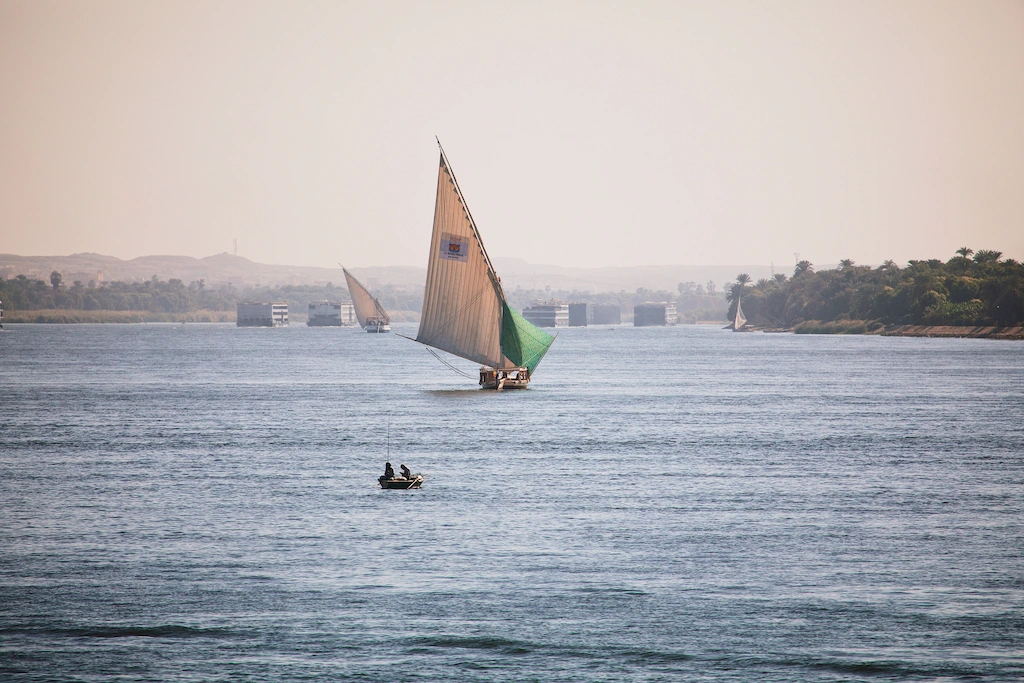
| Felucca (short sail) | A few hours | Sunset trips, budget travelers, add-on experiences |
We compare these styles in depth in our guides to Egypt tours with Nile cruise, the best Egypt tours with Nile cruise, and — for couples — our Egypt honeymoon Nile cruise packages.
Ready to sail the river of the gods? Book the 5-Day Dahabiya Nile Cruise from Luxor to Aswan and see the temples the way pharaohs did.
Most boats and road transfers also pass Esna on the way. It is easy to overlook, yet its sunken hall of painted columns rewards a short stop. Our Esna temple guide explains what you will see.
Edfu and Kom Ombo: The Two Temples Most Cruises Rush Through
Every Luxor-Aswan cruise stops here, yet most itineraries allow barely an hour each — not enough for either site.
- Temple of Edfu: the best-preserved temple in Egypt, still holding its original roof.
- Temple of Kom Ombo: a rare double temple dedicated to two gods at once, split perfectly down its central axis.
An Optional Detour: The Temple of Dendera
If your route starts north of Luxor, the Dendera Temple Complex makes a strong add-on before boarding your cruise — dedicated to Hathor and famous for its zodiac ceiling, it’s one of the best-preserved Ptolemaic-era sites in the entire Nile Valley.
Aswan: Where Pharaonic Egypt Meets Nubia
Aswan feels different the moment you arrive — granite hills, Nubian villages painted in blue and ochre, and a slower rhythm shaped by the First Cataract. Our full guide to what to see in Aswan covers the city in depth; two sites stand out for first-time visitors.
- Temple of Philae: dedicated to Isis and relocated stone-by-stone to save it from the Aswan Dam’s floodwaters — a story tied closely to our piece on Isis and Osiris, Egypt’s most enduring myth.
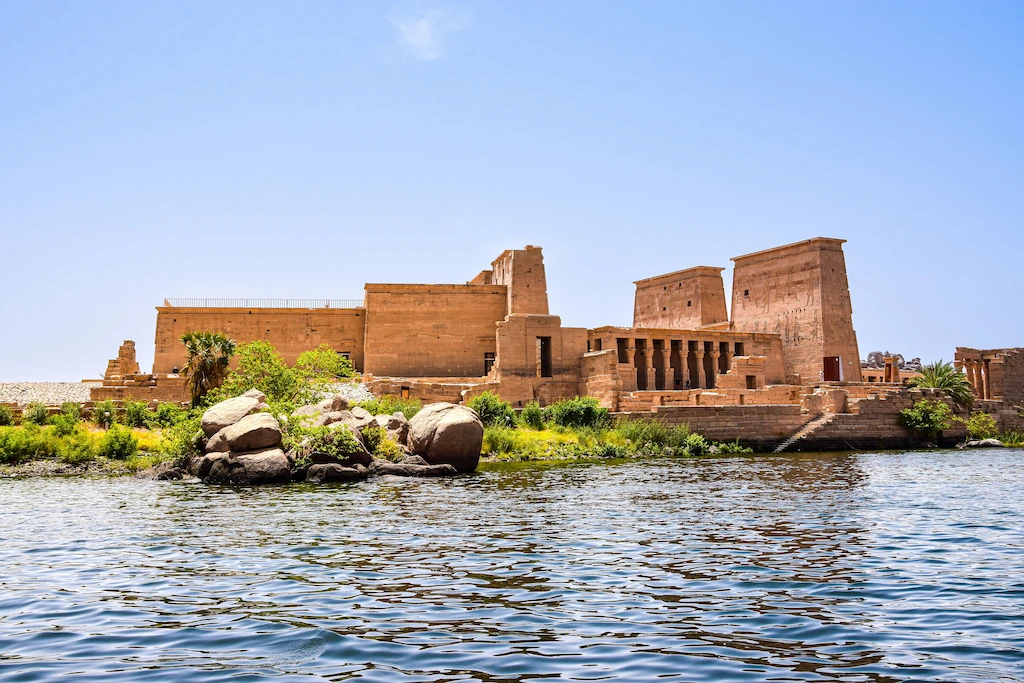
- Aswan’s Nubian villages, best explored by boat between islands.
Nubian Culture, Food and Crafts in Aswan
Nubia isn’t a footnote to pharaonic Egypt — it’s a distinct culture with its own language, music, and cuisine that predates and outlasts many of the temples visitors come to see. A stop in a Nubian village usually means:
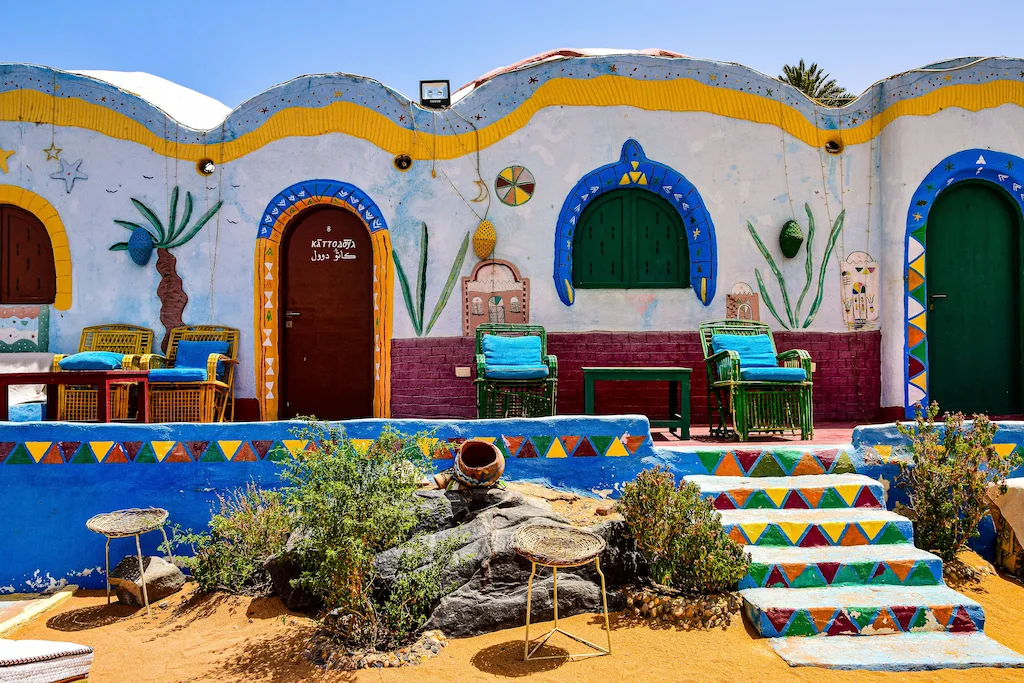
- Food: dishes built around dates, okra, and Nile fish, alongside karkade (hibiscus tea), a Nubian specialty served hot or cold across Aswan.
- Crafts: handwoven baskets, beadwork, and hand-painted pottery, often sold directly by the families who make them.
- Architecture: domed, brightly painted mudbrick homes, built to stay cool through Aswan’s long summers.
- Music: tanbura and percussion rhythms distinct from the music heard further north in Luxor or Cairo.
Beyond Aswan: The Day Trip Nobody Regrets
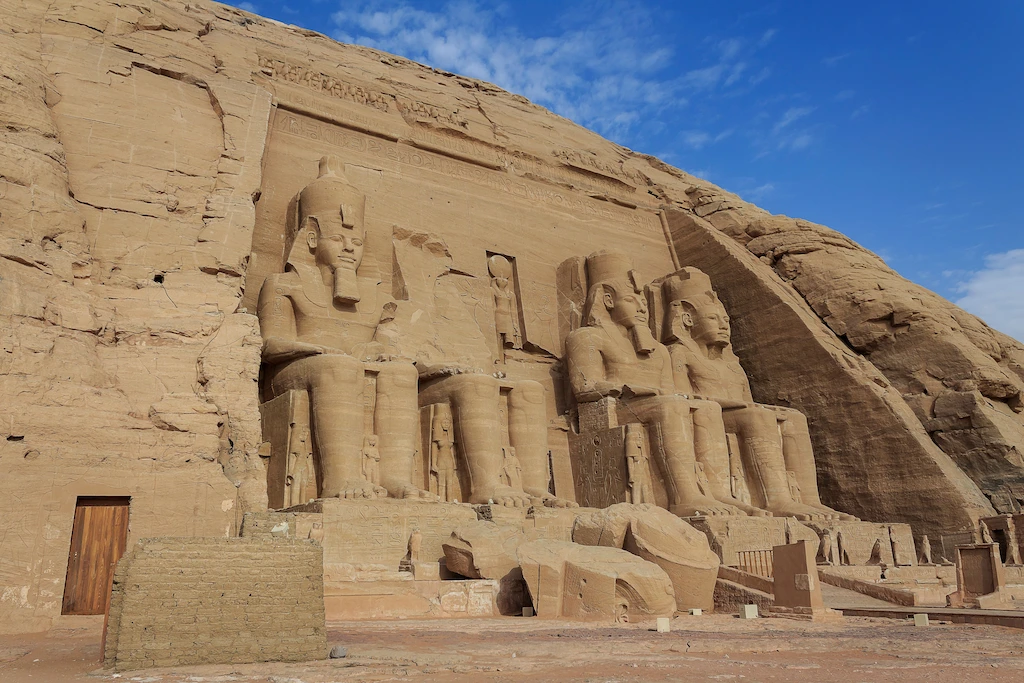
No Upper Egypt itinerary is complete without Abu Simbel, Ramesses II’s colossal monument to himself, moved in one of the 20th century’s greatest engineering rescues. It’s a long day from Aswan — roughly three hours each way by road, or a short flight — and worth every hour.
Craving that once-in-a-lifetime sunrise over Ramesses’ colossi? Add a private Abu Simbel day tour to your Aswan itinerary.
What to Pack and Temple Etiquette in Upper Egypt
A few practical habits make temple-hopping here noticeably easier:
- Wear closed, comfortable shoes — temple floors are uneven sandstone, not paved paths.
- Bring a hat, sunglasses, and reef-safe sunscreen; shade is rare inside open temple courts.
- Carry small notes for optional tipping (baksheesh) for guards who open side chapels or offer to take photos.
- Flash photography and tripods are restricted inside most painted tombs to protect the pigments — check locally before shooting.
Planning Your Days: Sample Upper Egypt Itineraries
| Itinerary Length | Route | Best For |
|---|---|---|
| 4 Days | Luxor (East + West Bank) → Edfu → Kom Ombo → Aswan | Short trips, connecting flights |
| 5 Days | Luxor → Dendera add-on → Nile cruise → Aswan → Philae | First-time visitors wanting balance |
| 7 Days | Luxor → full West Bank → Dahabiya cruise → Aswan → Abu Simbel | Travelers who want depth, not just highlights |
According to UNESCO’s listing for Ancient Thebes with its Necropolis, the Luxor region alone contains one of the most significant concentrations of monuments anywhere in the world — a fact that becomes obvious the moment you stand between Karnak’s columns.
Frequently Asked Questions
What’s the difference between Upper Egypt and Lower Egypt?
Upper Egypt is the southern Nile Valley — Luxor to Aswan — named for the river’s upstream direction. Lower Egypt refers to the north, including Cairo and the Nile Delta.
What is the best way to travel between Luxor and Aswan?
A Nile cruise or dahabiya is the classic option, letting you visit Edfu and Kom Ombo en route. Private car transfers and short flights are faster alternatives for tighter schedules.
How many days should I spend exploring Luxor and Aswan?
Most of this Upper Egypt travel guide’s recommendations fit comfortably into 4 to 7 days, depending on whether you add Abu Simbel and Dendera to the core route.
Do I need a private guide for temples like Karnak?
It’s not required, but a licensed Egyptologist guide turns silent stone into stories — especially useful across a region with this many interconnected sites.
In Short
Upper Egypt isn’t one destination — it’s a chain of them, linked by a single river and four thousand years of continuous history, from Karnak’s columns to Nubia’s riverbanks.
Ready to connect all of it in one trip? Explore our Luxor and Aswan tour packages and let us build your itinerary.
